


Follow us: RSS Feeds Twitter Facebook
Search

Insect & Disease ID And Diagnosis Guide: Infestations

Diagnose pest and disease issues that manifest as deformities and stunted growth.

January 19, 2009

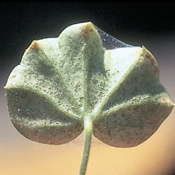
  •  Edema and webbing are clues to heavy spider mite infestation on this ivy geranium.  © 2009
    Edema and webbing are clues to heavy spider mite infestation on this ivy geranium.
  •  Sooty mold and cast skins on this celosia leaf indicate the presence of aphids. Sooty mold is a harmless fungus that grows on honeydew from aphids or other insects with piercing or sucking mouthparts.  © 2009
    Sooty mold and cast skins on this celosia leaf indicate the presence of aphids. Sooty mold is a harmless fungus that grows on honeydew from aphids or other insects with piercing or sucking mouthparts.

  •  Flecking on this poinsettia (the leaf on the left) indicates the presence of Lewis mite.  © 2009
    Flecking on this poinsettia (the leaf on the left) indicates the presence of Lewis mite.
  •  Yellow and dry brown patches on lower leaves of geraniums indicate spider mite feeding.  © 2009
    Yellow and dry brown patches on lower leaves of geraniums indicate spider mite feeding.
  •  Long-legged cast skins on this mum are evidence of an aphid infestation.  © 2009
    Long-legged cast skins on this mum are evidence of an aphid infestation.
  •  Verbena foliage fed on by thrips shows white scratched patches...and the culprits themselves!  © 2009
    Verbena foliage fed on by thrips shows white scratched patches...and the culprits themselves!

Seeing what might be an infestation on your crops? Take a look at these images of infestations.

Scouting tip: Don't forget the big picture. Do symptoms occur most often near doors, benches edges, where roof drips or where flood floors drain most slowly? If the answer to any of the above is "yes," cleaning up standing water might be a good start toward containing or even solving the problem.

Edema and webbing are clues to heavy spider mite infestation on this ivy geranium.

Sooty mold and cast skins on this celosia leaf indicate the presence of aphids. Sooty mold is a harmless fungus that grows on honeydew from aphids or other insects with piercing or sucking mouthparts.


Flecking on this poinsettia (the leaf on the left) indicates the presence of Lewis mite.

Yellow and dry brown patches on lower leaves of geraniums indicate spider mite feeding.

Long-legged cast skins on this mum are evidence of an aphid infestation.

Verbena foliage fed on by thrips shows white scratched patches...and the culprits themselves!

Leave a comment: (All fields are required)
Name:  E-Mail: 
Type only the numbers from the code into the textbox:
[ CAPTCHA ERROR ] (DO NOT enter the brackets [ ] )
Comments (0)