




New Orchid Enemy Found In Florida
 May 6, 2009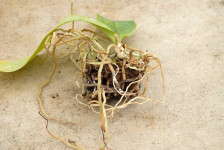
University of Florida Insect Diagnostician Lyle Buss collected a specimen of the orchid mealybug (Pseudococcus dendrobiorum) on Phalaenopsis orchids in a greenhouse in Gainesville on March 27. Not only is this the first find in Florida, it is the first finding of P. dendrobiorum in the Western Hemisphere.
According to Lyle Buss of the University of Florida, the plants originally came from several different orchid growers, so it has not been determined where the mealybugs came from originally.
Adults and immatures of this mealybug are grayish pink in color. Wax filaments are present around the entire body, with the two or three pairs of filaments at the tip of the abdomen being slightly longer than the rest. A patch of white, waxy secretion is often present on the roots surrounding the mealybug. Live specimens of P. dendrobiorum most closely resemble the pineapple mealybug in appearance.
P. dendrobiorum is native to warm climates and lives on the roots of orchids. Hosts include Ascoglossum sp., Cymbidium sp., Dendrobium sp., Phalaenopsis sp., Pholidota sp. and Promatocalpum species. Heavy infestations could cause dieback or death of host plants.





Click here for more information on the orchid mealybug.
Subscribe to eNewsletter