


Follow us: RSS Feeds Twitter Facebook
Search

Insect & Disease ID And Diagnosis Guide: Discoloration

Diagnose pest and disease issues that manifest as discoloration.

January 19, 2009

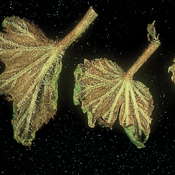
  •  Broad mite feeding causes bronzing on the underside of begonia leaves.  © 2009
    Broad mite feeding causes bronzing on the underside of begonia leaves.
  •  An overdose of a systemic insecticide caused this phytotoxic response in poinsettia leaf tissue.  © 2009
    An overdose of a systemic insecticide caused this phytotoxic response in poinsettia leaf tissue.
  •  Brown blotches and leaf drop can signal downy mildew on coleus.  © 2009
    Brown blotches and leaf drop can signal downy mildew on coleus.
  •  Fringed, purplish-brown to black, 1⁄4-inch spots appear in an established Cercospora leaf spot infestation on pansy. Examine older leaves to find the most characteristic symptoms.  © 2009
    Fringed, purplish-brown to black, 1⁄4-inch spots appear in an established Cercospora leaf spot infestation on pansy. Examine older leaves to find the most characteristic symptoms.
  •  Yellow lines perpendicular to veins may show in hosta leaves infected with HVX.  © 2009
    Yellow lines perpendicular to veins may show in hosta leaves infected with HVX.
  •  Blackened veins in this impatiens are not the result of virus infection, but are the response to root uptake of a dilute chlorine bleach solution.  © 2009
    Blackened veins in this impatiens are not the result of virus infection, but are the response to root uptake of a dilute chlorine bleach solution.
  •  Major element deficiencies of nitrogen and phosphorus may result in reddening or yellowing of portions of geranium leaves.  © 2009
    Major element deficiencies of nitrogen and phosphorus may result in reddening or yellowing of portions of geranium leaves.
  •  Tiny, rust-colored flecks and yellowing on geranium leaves beginning at leaf margins are symptomatic of iron or manganese toxicity, resulting from growing at a pH of 5.8 or below on sensitive cultivars.  © 2009
    Tiny, rust-colored flecks and yellowing on geranium leaves beginning at leaf margins are symptomatic of iron or manganese toxicity, resulting from growing at a pH of 5.8 or below on sensitive cultivars.
  •  Faint yellow stippling similar to mite injury signals downy mildew on impatiens — turn leaves over to see white sporulation.  © 2009
    Faint yellow stippling similar to mite injury signals downy mildew on impatiens — turn leaves over to see white sporulation.
  •  Powdery mildew can cause discolored patches on petals of gerbera.  © 2009
    Powdery mildew can cause discolored patches on petals of gerbera.
  •  Lower foliage yellowing on pothos signals the likelihood of Pythium root rot.  © 2009
    Lower foliage yellowing on pothos signals the likelihood of Pythium root rot.
  •  Ficus leaves infested with eriophyid mites may discolor and drop from the plant.  © 2009
    Ficus leaves infested with eriophyid mites may discolor and drop from the plant.
  •  Scorched dead areas along the outer edges of poinsettia leaves may indicate excessive levels of sodium or boron at the margin or, in some cases, zinc deficiency.  © 2009
    Scorched dead areas along the outer edges of poinsettia leaves may indicate excessive levels of sodium or boron at the margin or, in some cases, zinc deficiency.
  •  Pronounced scorching of leaf edges on this mum resulted from an accidental overdose of a slow-release fertilizer.  © 2009
    Pronounced scorching of leaf edges on this mum resulted from an accidental overdose of a slow-release fertilizer.
  •  Yellow mottling is typical of INSV on begonia leaves.  © 2009
    Yellow mottling is typical of INSV on begonia leaves.
  •  Whitened bracts or stem tissue on poinsettia may result from large Bemisia tabaci - B Biotype whitefly populations feeding on the plants.  © 2009
    Whitened bracts or stem tissue on poinsettia may result from large Bemisia tabaci - B Biotype whitefly populations feeding on the plants.
  •  Light-colored, serpentine mines through gerbera leaves signal leaf miner feeding. Look for miner frass, pupae, or larvae in the tunnels.  © 2009
    Light-colored, serpentine mines through gerbera leaves signal leaf miner feeding. Look for miner frass, pupae, or larvae in the tunnels.
  •  Browning at the base of these New Guinea impatiens leaves is caused by Rhizoctonia attacking tissue in contact with the rooting mix surface.  © 2009
    Browning at the base of these New Guinea impatiens leaves is caused by Rhizoctonia attacking tissue in contact with the rooting mix surface.
  •  Feeding by four-lined plant bug can resemble a fungal or bacterial leafspot.  © 2009
    Feeding by four-lined plant bug can resemble a fungal or bacterial leafspot.
  •  Angular, brown leaf spots on rudbeckia are caused by the fungus Septoria sp.  © 2009
    Angular, brown leaf spots on rudbeckia are caused by the fungus Septoria sp.

Seeing discoloration on your crops? Take a look at these pictures to see common diseases that can lead to discoloration.

Scouting tip: Consider the history of the crop and your operation's cultural practices. Have any materials been used on this crop for the first time, or have you recently used a familiar material at a higher rate than usual?

Broad mite feeding causes bronzing on the underside of begonia leaves.

An overdose of a systemic insecticide caused this phytotoxic response in poinsettia leaf tissue.

Brown blotches and leaf drop can signal downy mildew on coleus.

Fringed, purplish-brown to black, 1⁄4-inch spots appear in an established Cercospora leaf spot infestation on pansy. Examine older leaves to find the most characteristic symptoms.

Yellow lines perpendicular to veins may show in hosta leaves infected with HVX.

Blackened veins in this impatiens are not the result of virus infection, but are the response to root uptake of a dilute chlorine bleach solution.

Major element deficiencies of nitrogen and phosphorus may result in reddening or yellowing of portions of geranium leaves.

Tiny, rust-colored flecks and yellowing on geranium leaves beginning at leaf margins are symptomatic of iron or manganese toxicity, resulting from growing at a pH of 5.8 or below on sensitive cultivars.

Faint yellow stippling similar to mite injury signals downy mildew on impatiens — turn leaves over to see white sporulation.

Powdery mildew can cause discolored patches on petals of gerbera.

Lower foliage yellowing on pothos signals the likelihood of Pythium root rot.

Ficus leaves infested with eriophyid mites may discolor and drop from the plant.

Scorched dead areas along the outer edges of poinsettia leaves may indicate excessive levels of sodium or boron at the margin or, in some cases, zinc deficiency.

Pronounced scorching of leaf edges on this mum resulted from an accidental overdose of a slow-release fertilizer.

Yellow mottling is typical of INSV on begonia leaves.

Whitened bracts or stem tissue on poinsettia may result from large Bemisia tabaci - B Biotype whitefly populations feeding on the plants.

Light-colored, serpentine mines through gerbera leaves signal leaf miner feeding. Look for miner frass, pupae, or larvae in the tunnels.

Browning at the base of these New Guinea impatiens leaves is caused by Rhizoctonia attacking tissue in contact with the rooting mix surface.

Feeding by four-lined plant bug can resemble a fungal or bacterial leafspot.

Angular, brown leaf spots on rudbeckia are caused by the fungus Septoria sp.

Leave a comment: (All fields are required)
Name:  E-Mail: 
Type only the numbers from the code into the textbox:
[ CAPTCHA ERROR ] (DO NOT enter the brackets [ ] )
Comments (2)
(Thu Dec 22 02:15:14 2011)

about nutrient

(Mon Sep 26 17:43:37 2011)

about nutrient