


Addressing Common Trucking Challenges in the Greenhouse Industry
 June 17, 2025
 From finding reliable drivers to managing total shipping costs, getting plants and products from the greenhouse to your customers can be a major lift (pun intended), and a serious headache. We spoke to growers and greenhouse shipping experts about trucking challenges and some ways to mitigate them.
Finding Drivers and Keeping Them Happy
Growers are all too familiar with labor shortages in their own operations, but the trucking industry is facing the same problem. Greg Troeger, Senior Director of Global Logistics at EZRack, says the biggest challenge he sees in the U.S. trucking industry is a shortage of drivers. “With the bulk of the truck driver population continuing to age and retire, the availability continues to place constraints on the industry capacity. When the next economic surge occurs, the effect of the driver shortage will be severe.” While growers can’t solve labor issues directly, Troeger recommends looking for ways to improve load, route, and network optimization to best utilize the trucks that are available.
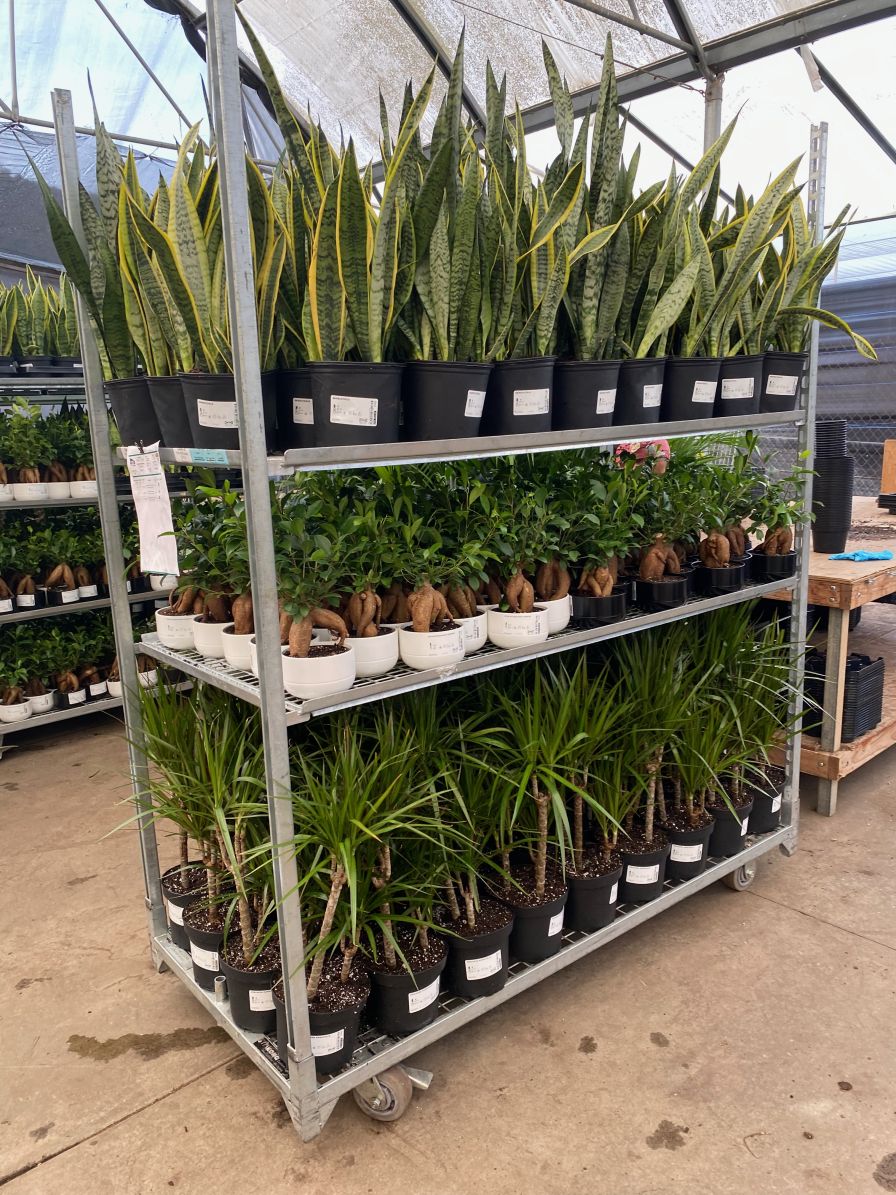
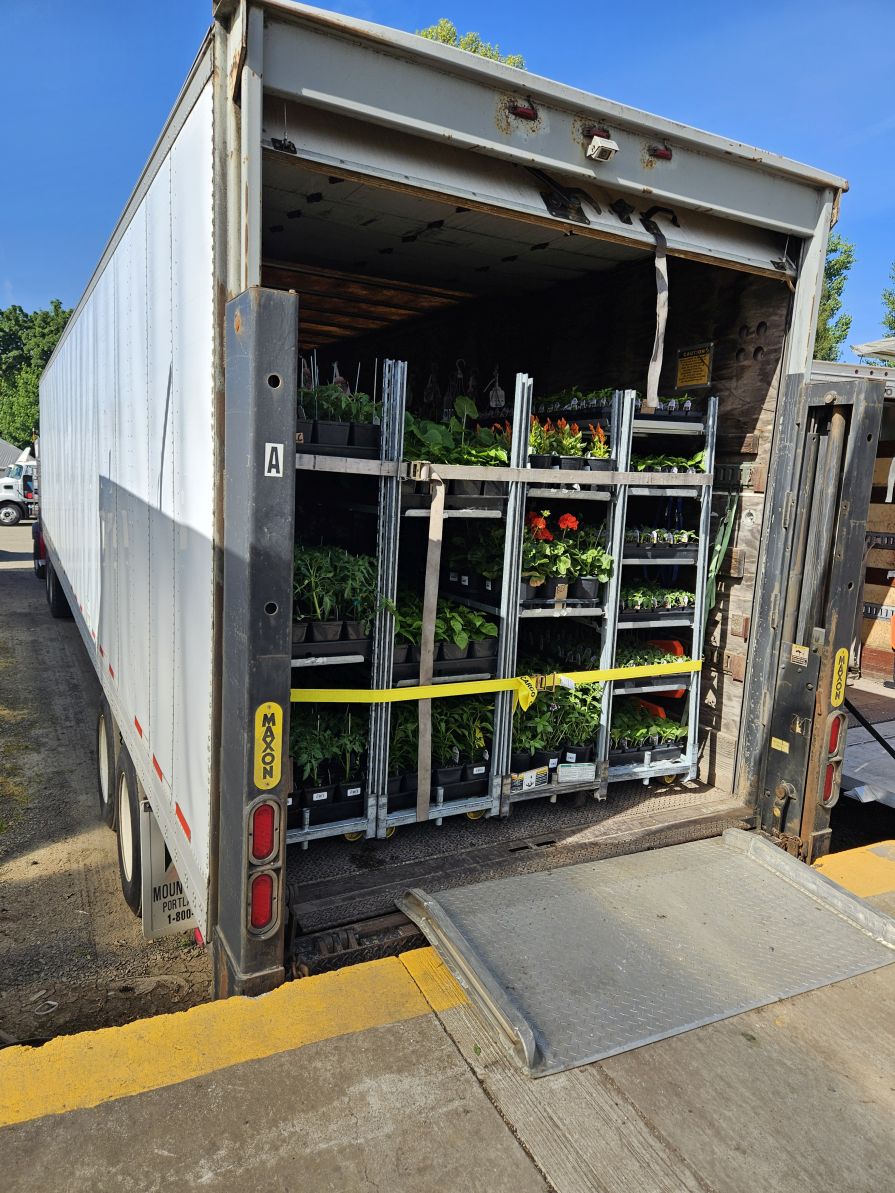
These racks are fully loaded with plants and ready to be shipped to their final destinations. | FlowVision
Gerson “Gary” Cortés, founding partner at FlowVision, explains that nursery growers often struggle to secure trucking companies willing to transport “live loads.” In the trucking industry, a live load doesn’t mean transporting living cargo like plants or livestock, it refers to situations where the driver must wait at the dock while freight is loaded or unloaded. That downtime can be unpaid, depending on the contract. “Products such as California stack, deck stack, and floor-loaded items are typically less favored by drivers. It’s not uncommon for drivers to arrive at a dock, recognize a live load, and decline the load,” Cortés explains.
Switching to a rack system can reduce load times for live loads to about 30 minutes and make unloading at delivery points more efficient. “Drivers have a choice of what locations they go to, and they talk to each other. There are forums, community pages, and the power of the grapevine (or CB Radio),” says Troeger. He explains that drivers quickly form opinions about shipping locations. “If a grower consistently takes a long time to load drivers, doesn’t have facilities on site they can use, has a difficult check-in process, overweighs trucks, or anything else not driver friendly, drivers will choose to take another load over yours. EZRack allows shippers to load the trucks in the fastest manner possible with palletized racks and they are easy for drivers to secure.”

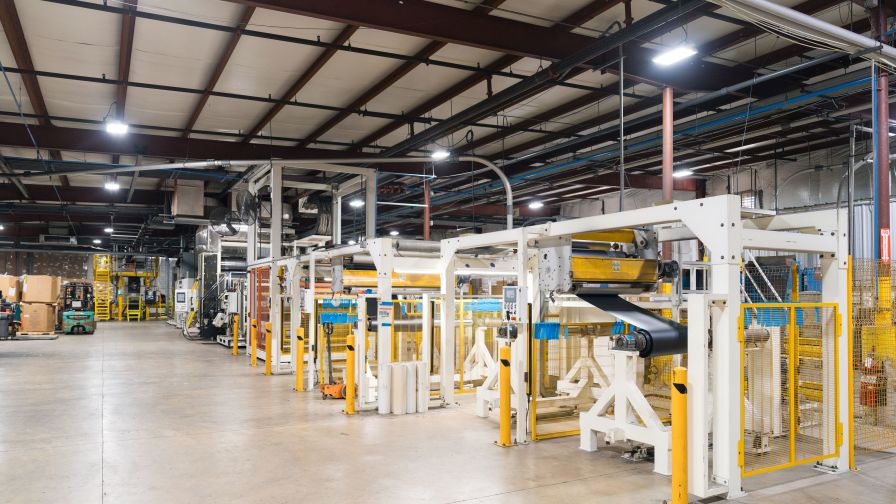
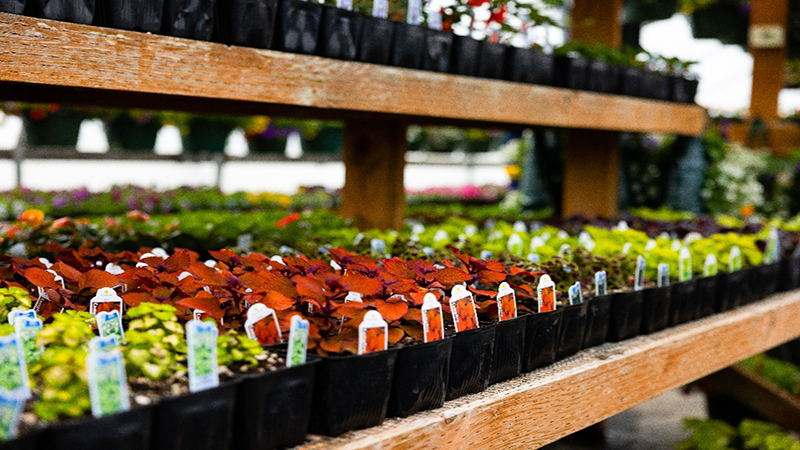
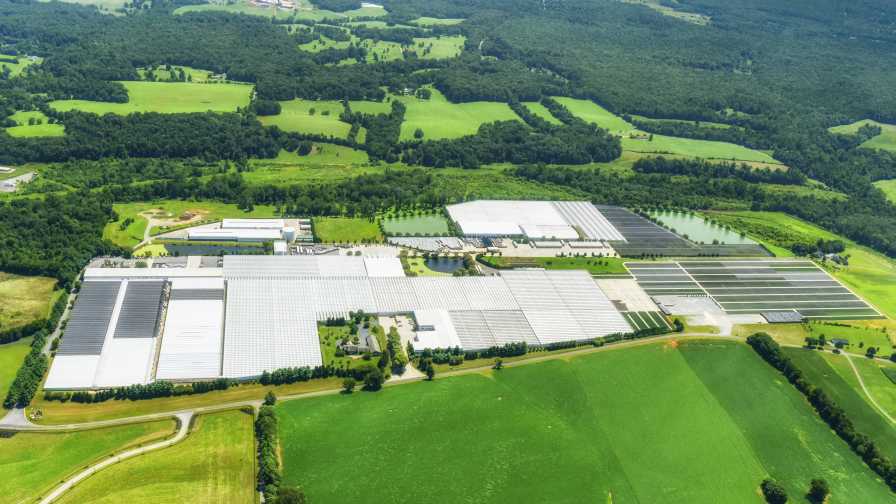

Cortés says that shifting from touch loads to rack loads has made it easier for growers to secure drivers willing to take their shipments. However, delays in brokered truck arrivals can create bottlenecks when dock space is tied up while loads wait to be assembled. Adopting a solution like FlowVision’s Supermarket Shipping system allows growers to efficiently assemble the entire truckload (40 – 45 CC type racks or 24 square racks) within 30 to 45 minutes. When the driver arrives, plants can be quickly picked up and loaded, freeing up dock space and getting the truck back on the road faster.
For growers who operate their own trucks and only ship for a few months each year, trucking becomes a seasonal hurdle rather than a constant strain. Finding and retaining experienced drivers for such a short window is a challenge. “It’s hard to find quality drivers willing to work only three to four months of the year,” says Renee Phelps, President of Spring Creek Gardens, Inc. “We’ve tried training regular nursery workers to drive, but once they switch roles, there’s often resistance to returning to nursery work when the driving season slows down.” That back-and-forth can lead to frustration and burnout. To address this, Spring Creek is now targeting retired drivers, who are experienced professionals who may be looking for part-time or seasonal work. It’s a talent pool more growers might consider tapping into.
Optimizing Loads and Driver Time
Renee Phelps says Spring Creek Gardens uses software to optimize routes and calculate the number of racks per load to make the most of every truck. | Spring Creek Gardens
As we mentioned in our previous article about saving money on shipping costs, inefficiently loaded trucks can significantly increase your cost per plant — and poorly planned routes don’t help either. Consolidation, route planning, and even hiring separate merchandisers (so the driver isn’t expected to do it) can all reduce trucking expenses. “To reduce the freight cost per plant, ensure the racks and trucks are full with little airspace,” says Cortés. Planning loads in advance, rather than scrambling during live loading, also makes the process more efficient.
Renee Phelps of Spring Creek Gardens says they use software to optimize routes and calculate the number of racks per load to make the most of every truck. They also hire merchandisers who arrive before the trucks to clean the stores, empty racks, and prepare for the delivery, which cuts down on driver workload. “By using merchandisers rather than drivers to clean up the stores and recover racks, we’ve improved the situation,” says Phelps. “We also have someone on the dock at the end of the day to unload and clean up after the drivers, so they’re not discouraged from bringing back racks — especially ones with dead plants or leftover plastic they might otherwise leave behind.”
Subscribe to eNewsletter
