




8 Steps to Prepare Your Greenhouse for Storms and Natural Disasters

 July 16, 2024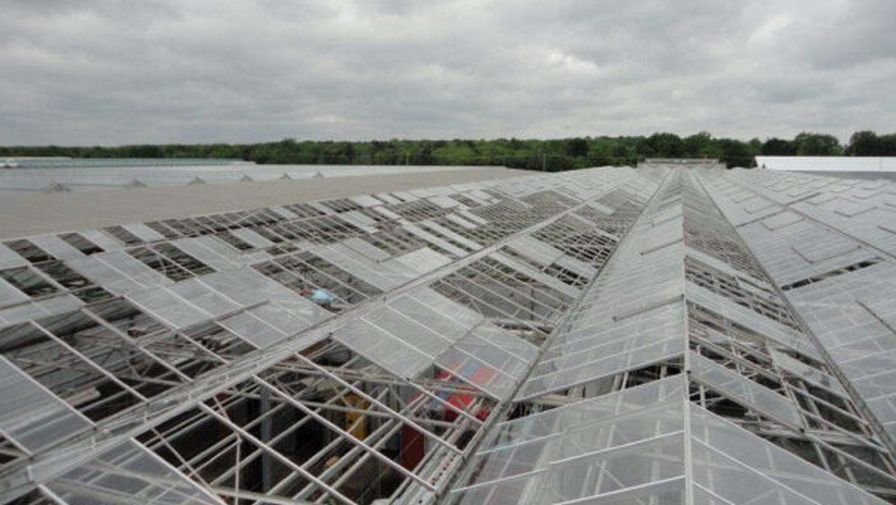
Broken panes show the random pattern of storm destruction | Midwest Growers
As a greenhouse contractor, I’ve walked through incredible, sprawling greenhouse structures throughout the U.S. Most facilities now function as their own finely tuned machines—designed and optimized for today’s production demands.
But even the best-built greenhouses are no match for Mother Nature. I’ve seen it firsthand in my role at LLK Greenhouse Solutions. Our team has helped repair and rebuild hundreds of greenhouses following severe weather damage.
With the summer storm season upon us, I wanted to share how you can prepare your greenhouse operation for severe storms. To provide a well-rounded perspective, I invited Traci Dooley from Hortica to team up for this article.
Together, Traci and I have personally witnessed the resilience of greenhouse businesses that have experienced substantial damages—sometimes reaching millions of dollars—to their properties.
It’s no accident when businesses bounce back from such events. Their recoveries have one thing in common: proactive planning. Here’s what that looks like.
1. Review and Update Your Insurance Policy
The first and most important step in storm-proofing your greenhouse is ensuring you have adequate insurance to safeguard your business against financial loss.
Conduct an annual or semi-annual review of your insurance to ensure every aspect of your business is covered for the weather risks you face (e.g., fire, wind, water, hail, or snow damage).
Our industry in particular relies on specialized structures, paneling, and equipment. For this reason, work with an insurance company that will both reimburse you and offer you a network of specialized suppliers to provide the materials and technology needed to resume operations quickly. Every day counts during recovery.
Given recent inflationary and supply chain challenges, reviewing your policy is critical for obtaining adequate coverage limits—particularly if you haven’t completed an updated property valuation recently.
Review the following areas of your policy:
- Commercial property insurance: The recent price spike of materials and labor makes rebuilding efforts more expensive after property damage. This change can apply to more than your outside structures—it also includes properties within your greenhouse like boilers, irrigation systems, generators, control computers, and more. If your policy hasn’t been updated recently, you may wind up underinsured in the event of weather damage. Your agent can help guide you through a revised valuation to help determine if your coverage reflects current replacement costs.
- Business interruption insurance: While the supply chain is improving, the horticulture industry continues to face lingering delays for specialized parts and equipment. If your business faces extensive damage after severe weather, fully repairing and replacing property can take months longer than just a few years ago. Business interruption insurance can help your company replace lost income, payroll, and expenses if you face extended downtime while you await repairs. Check with your agent to confirm the nature and scope of your coverage fits your needs.
2. Ensure Your Greenhouse Is Up to Code
Your greenhouse should meet the International Building Code (IBC) for your state. These regulations exist to preserve the safety of you, your workers, and your investment.
Don’t underestimate the significance of minor infractions like a lack of surge-protective devices or ground fault circuit interrupters (GFCI). Lightning can strike electrical systems, leading to fire, power outages, and monumental losses.
Always double-check that exhaust fans, roof vent systems, heaters, swamp coolers, and controls are clean and operating properly. Repair holes in shade systems and replace damaged or missing support wires.
Create a checklist and repair plan for areas where work is needed to meet codes.
3. Secure Loose Components and Structures
Before a storm hits, move all indoor furnishings, equipment, and plants away from walls. Relocate anything outside that could be susceptible to the weather. High winds can easily pick up lighter items, turning them into projectiles that can damage glazing and cause unrepairable damage to your greenhouse.
Inspect the vicinity for loose, weak, or low-hanging branches. Like unsecured pots or equipment, these limbs could be dangerous when caught in high winds. Take necessary precautions so the area directly above and surrounding your greenhouse is clear from debris.
Finally, keep all doors, vents, louvers, and openings tightly closed. Once inside your grow space, high winds can push down walls and blow roofs off with ease.
4. Prepare Glazing & Stock Up on Emergency Coverings
Regular maintenance of glazing materials is important for general operations—and even more critical during storm season.
Start by inspecting your greenhouse for cracks, discoloration, or gaps, as these can impact light transmission and interior temperature. Cultivators with glass greenhouses should immediately replace broken panes to prevent further damage and heat loss due to high winds, torrential rains, or hail.
Those with polycarbonate panels should follow suit, check for UV degradation, and replace these sections as needed.
Another expert tip is to have extra glazing materials readily available. Preparedness always pays off in the end.
5. Develop an Emergency Contact List
Gather contact information for any person or organization that can help in the aftermath of a storm.
Make sure the list includes your insurance agent. They can talk you through the next steps and provide valuable input about how to file a claim and document damage.
Another important contact to have readily available is a construction and service company specializing in emergency support and repair, particularly those with 10-plus years of experience constructing and renovating greenhouses.
These experts can assist in recommending equipment, products, or services to prioritize in the cleanup and/or restoration process if ever needed. Many times, your insurance company can help you contact these companies.
6. Obtain Generators for Backup
Power outages are a common companion of harsh weather. Stay prepared for power loss by storing enough generators—and fuel—to support environmental equipment and controls until service can be restored. This way, you can maintain ideal temperature and humidity levels to preserve plant health.
Calculate the area of your floor area to establish how much power is necessary. Typically, a greenhouse uses between 1 and 2 kilowatt hours (KWh) per square foot.
Vents, wall insulation, environmental controls, and energy screens can help decrease the amount of electricity needed, so include this equipment in your calculations for more accurate data.
7. Establish Pre- and Post-Storm Responsibilities
While we can always hope for the best when facing extreme weather, we must also prepare for the worst. Sit down with your team and develop a step-by-step plan for pre- and post-storm damage control. Designate specific people for tasks and ensure everyone understands their role.
Don’t leave your strategy in the meeting room—establish a written safety plan. Make copies for employees that provide a detailed guide to their responsibilities.
Below are just a few tasks to delegate for proper storm preparation:
- Clear drains of debris
- Contact insurance agent
- Initiate reconstructive work
- Perform crop mitigation
- Perform greenhouse mitigation
- Seal openings
- Secure loose objects
8. Keep Essential Supplies on Hand
Building a storm and wind-resistant greenhouse is a fantasy. No structure is completely immune to Mother Nature’s antics. Even after taking every precaution, you may need to employ recovery efforts to restore glazing or mitigate flooding.
Another reality is that storms can develop day or night. In the dark, addressing issues can be impossible without proper equipment. Gather enough light sources to ensure your team can see and assess affected areas.
However, don’t allow anyone to enter unsafe areas (including customers or vendors) or perform duties that put them at additional risk.
Storm-proofing your greenhouse is a top priority but should never overshadow your own well-being. Keep first aid supplies, water, and nonperishable food items on hand for your team if you’re confined to the property for the duration of a storm.
How to Handle the Claims Process
Dealing with severe weather is stressful enough. Going through the claims process shouldn’t cause additional headaches. Knowing what to expect once you file a property claim can clarify the steps toward your business’s recovery. Greenhouse Grower has already featured an excellent step-by-step guide to making a property insurance claim.
The most important advice is to act quickly and notify your insurer to begin the claims process. Photos, videos, receipts, and invoices can all help fast-track support. But don’t be afraid to lean on your insurer throughout the process. They can help answer any questions specific to your policy and recovery.
Stay Prepared
In the controlled environment industry, few things are more important than the property that protects and grows your products. The tips above can help you prepare ahead of time, but talking with local experts is best for designing a plan specific to your business.
In the meantime, if you have any questions, don’t hesitate to reach out to either one of us.
Subscribe to eNewsletter