Newsletter Benchrunner Friday Watch for Unusual Leaf Deformations in Poinsettias from Zinc Deficiency By Greenhouse Grower staff|November 12, 2026
Events Explore Cut Flower Growing Trends at the 2026 Michigan Greenhouse Growers Expo By Michigan State University|November 12, 2026
Management The Pennsylvania Horticultural Society Celebrates 200 Years and a New Website By Pennsylvania Horticultural Society|November 12, 2026
The Hidden Role of Greenhouse Fans in Downy and Powdery Mildew Outbreaks By Dramm|October 21, 2026 Many growers aren’t aware that their choice of fan air speed may be exacerbating the spread of mildew pathogens.
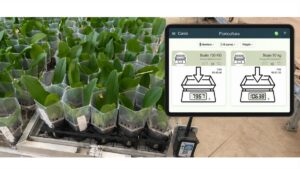
How Greenhouse Data Helps Grow Better Orchids By Gretchen Schimelpfenig, PE | Neda Vaseghi|October 20, 2026 See how Floricultura is using wireless sensors and crop-weight data to connect greenhouse conditions with orchid irrigation and crop response.
How to Better Protect Your Greenhouse Data By Greenhouse Grower staff|October 16, 2026 As greenhouses become more data-driven, operators must prioritize cybersecurity to protect production systems and operational data.
Can AI Run Your Greenhouse Business Now? By John Beauford, Silver Fren|September 30, 2026 AI can analyze data, answer questions and even build software, but that doesn’t mean it understands your greenhouse operation.
The Society of American Florists Launches New Mobile App By Society of American Florists|September 29, 2026 SAF Now provides users with industry news, business resources, educational opportunities, networking, and acts as an event hub.
European Research Aims to Use Sensors to Manage Fertilizer Waste By Greenhouse Grower staff|September 24, 2026 Researchers in Denmark and Germany plan to develop an automated sensor system that can measure individual nutrients in greenhouse water.
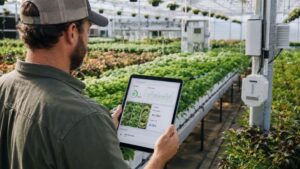
Ridder and Quantified Announce New Integration Partnership By Ridder|September 16, 2026 This new integration provides growers with real-time crop and rootzone data for improved performance and decision-making.
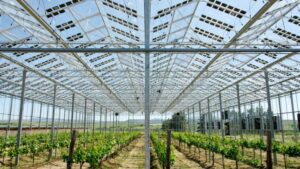
How Greenhouse Coverings Are Taking on New Roles By Andy Wilcox|September 11, 2026 New types of greenhouse coverings are giving growers more control over light, energy use, and crop conditions.
Executive Perspective: Why Automation Investment and Adoption Requires a Deliberate Approach By Bob West|September 10, 2026 TTA-ISO President Kris Nightengale says an automation journey starts by asking if you’re a grower or a manufacturer producing a living product.
How Growscape Is Going All-in on Sustainable Pots By Brian D. Sparks|September 10, 2026 A recent tour of Growscape’s facilities provided a closer look at ReTerra, a first-of-its-kind plantable bioplastic solution engineered for greenhouse and nursery applications.
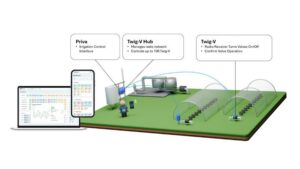
Priva and Nelson Irrigation Partner to Address Water Use Strategies By Greenhouse Grower staff|August 18, 2026 The partnership pairs Priva’s platform and sensor data with Nelson’s wireless valve technology to address common irrigation problems.
Right-Sizing Light: What Works in Today’s Greenhouses By Nicole Wisniewski|August 17, 2026 From ROI blind spots to retrofit surprises, avoid common mistakes when designing and managing supplemental lighting for greenhouse crops.
Watch Out for These Red Flags When Seeking Out New Greenhouse Technology By Nadia Sabeh|August 8, 2026 It’s very easy to be lured by the idea that technology will fix all our problems, make our lives easier, and give us a competitive edge.