


Can AI Run Your Greenhouse Business Now?
 September 22, 2026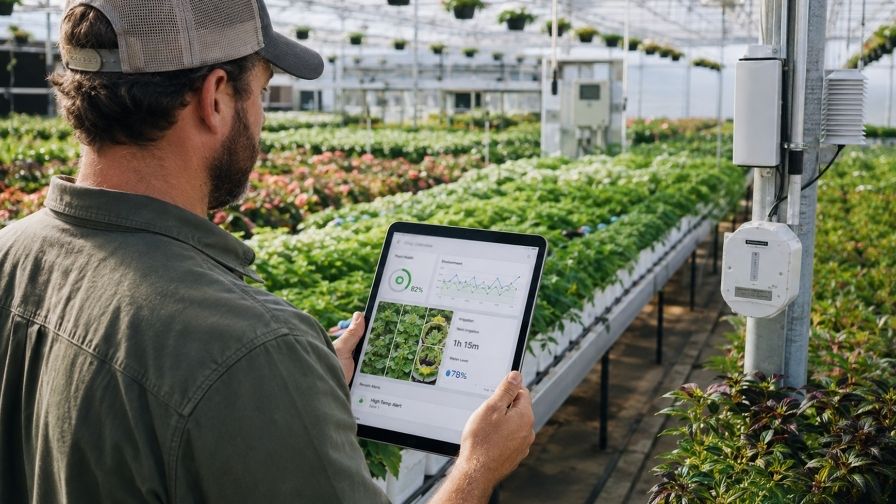
AI tools can help growers analyze crop and environmental data, but useful results still depend on the right context, data, and human oversight. | John Beauford
In February of 2024, I wrote an article asking a simple question: “Can ChatGPT Run Your Greenhouse Operation?” My answer at the time was no, not yet. But it was learning.
Fast forward to September 2026. Can ChatGPT — or your preferred AI platform — run your operation now?
Amazing Progress, but Not Perfection
Artificial intelligence capabilities have improved remarkably. Popular AI platforms have expanded well beyond the basic web-based chat interface. Many now include tools that allow users to work with documents, spreadsheets, images, software code, and other types of information.
Popular tools are much better at answering questions, analyzing information, and creating a wide range of content.
In many instances, using one of the better AI models can feel like chatting with an expert. But our team has compared AI tools that can help growers analyze crop and environmental data, and useful results still depend on the right context, data, and human oversight. AI-generated answers with responses from recognized plant and greenhouse experts, and the results have varied. In some cases, the model and the expert were in complete agreement. In others, the AI answer was wrong or incomplete.
The experienced human still has to adjudicate.
It Still Doesn’t Know Your Operation
While AI models have expanded their knowledge, they do not inherently know the specifics of your operation.
I have visited many nursery and greenhouse operations, and I have never seen two that are exactly alike. Even operations with similar field layouts or greenhouse construction have meaningful differences. Field orientation, greenhouse airflow, logistical paths, geography, nearby structures, loading docks, and production-line arrangements can all affect the correct answer.
An AI model trained on general information will not automatically know those details. A grower can provide additional context to generate answers better aligned with the operation. But the model does not inherently understand how your operation works. Assuming that it does is a recipe for mistakes.
The value of loyal, experienced employees cannot be overstated. The people who know your business, understand its history, and recognize the nuances of your operation cannot simply be replaced by an AI model.
That doesn’t mean AI isn’t useful. The key is giving it the information and direction it needs. In the right hands, with the right information and validation, these tools can significantly improve productivity for information-based tasks.
Provide the Right Context and Data
When asking an AI tool to answer a question or perform a task, give it enough background to understand your situation. Explain the problem, constraints, operational details, and what the model should consider. The more useful context you provide, the less the model has to infer.
If you want AI to answer questions about your business, it needs access to the necessary data. Many AI platforms can analyze Excel spreadsheets, CSV files, and other structured data.
Different platforms and subscription levels handle uploaded data differently. Before uploading business information, understand how the service stores and uses it and what privacy controls are available. Do not upload anything private, confidential, or proprietary unless you are comfortable with the platform’s protections.
Define the Result You Want
Be specific about what you want the AI to produce. If you ask it to “analyze this spreadsheet,” the model has to infer what matters. Instead, explain what you want it to identify, which information matters, and how you want the result presented. The more clearly you define the desired result, the more useful the output is likely to be.
The Elephant in the Grower Software Room
“Can’t the models just generate the software systems we want that exactly fit our business?”
AI models have become very good at generating software code. Simple programs, web applications, spreadsheet macros, and data-analysis tools can be created quickly.
But a working application is not the same thing as a reliable business system.
A grower ERP system, for example, can include hundreds of connected data views and workflows, from a sales forecast to a customer invoice.
I spent several years in cellular telecommunications software development. When I was a young engineer, our vice president would say, “Once your code works, you have solved 30% of the problem.”
Working code is only one part of creating a dependable software system.
Reliable business software also requires architecture and data planning, performance considerations, backups, security, safe user access, and long-term maintenance. It also has to adapt as the business changes. Creating something your business will depend on for years still requires software, systems, and development expertise.
Our industry is full of one-off systems, created by a relative, employee, or former employee, that became critical to the business but could no longer be maintained as technology and business needs changed.
Before allowing a staff member, friend, or AI tool to create a “solution,” think about who will maintain and adapt it long after the original creator is gone.
The End Result
My answer to the original question is still no, but AI has learned a lot. AI has graduated from curiosity to a highly capable assistant for information-based work.
It cannot replace the people who understand the day-to-day realities of your greenhouse operation. But with the right context, data, and oversight, AI can make them more effective.
Subscribe to eNewsletter