


What to Check Before You Drench Plugs and Cuttings With Microbes
 November 10, 2026
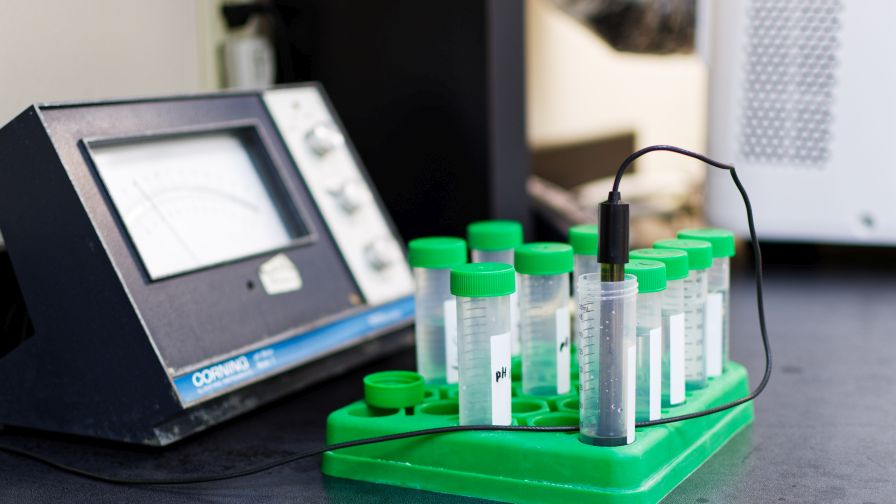
Checking pH on samples. Photo: Applied Biotech Industries
Greenhouse plant propagators drench plugs, liners, and cuttings with Bacillus and Trichoderma to get faster, more even rooting. Sometimes a house trial shows no difference between treated and untreated flats.
When a propagator tells us a drench did nothing, we can usually trace it back to storage, the water, or what else went in the tank.
Work the Label Down to the Plug
Labels give the count in colony forming units (CFU), the live cells and spores that can still grow. A dry Bacillus powder might carry 200 billion CFU per gram. Trichoderma powders run much lower, often around 15 billion. Many products sold for greenhouse use are diluted well below those levels, which is fine as long as the label rate makes up for it.
The headline number tells you little until you run it through your own drench. If 4 ounces of a 200-billion-CFU powder goes into 100 gallons, each milliliter of solution carries about 60 million CFU. Multiply that by the milliliters each plug actually receives, and you have the dose your plants get. At 5 mL per plug, that works out to about 300 million CFU per plug. A product with a bigger number on the bag can still deliver less if its label rate is lower. Run the same math for every product you’re comparing, then compare cost per flat at your rate instead of cost per pound.
Read the fine print on the count. Some labels, liquid or dry, give the count for the active ingredient alone rather than the whole product. If the active ingredient is 1% of the jug, what you pour carries a hundred times less.
Other labels give the count per pound instead of per gram. Six trillion CFU per pound sounds large, but it works out to about 13 billion per gram. Blends can list several strains under one total count. A cheap strain can carry most of that number while the others are present at low levels, so ask for the count of each strain.
The Headhouse is Hard on Stored Product
Every living product loses count over time, and heat speeds it up. Bacillus forms spores, a dormant stage that tolerates storage well. In our products, a dry Bacillus powder holds its count for about 18 months at room temperature (72°F) and two years or more in a cooler. Trichoderma holds its count for about six months at room temperature. We tested one Trichoderma strain both ways. After 12 months at room temperature, its count fell from 15 billion to 2.35 billion CFU per gram, about an 84% loss. Kept in a cooler at 39°F for the same 12 months, it lost nothing.
A headhouse in July, or a potting shed next to the boiler room, runs well above 72°F. Hang a min/max thermometer where the product sits and read it after a week. If the high is in the 90s, move the product to a cooler.
Humidity does its own damage. A greenhouse is a humid place to keep an opened bag, and dry carriers and freeze-dried powders both pull moisture from the air every time the bag is opened. Clumping means water got in. Buy a pack size you’ll finish within the season, write the open date on it, and reseal it right after each use.
Before you buy, ask the supplier whether the label count is guaranteed at the expiry date or only at manufacture, and at what storage temperature.
Check What is in Your Water
Most greenhouse water treatments kill beneficial microbes along with the pathogens they target. Chlorine, chlorine dioxide, hydrogen peroxide, peracetic acid, ozone, and copper ionization all leave residuals that cut live counts. UV treatment leaves no residual, so UV-treated water is safe to mix with once it has passed the lamp.
If your irrigation water is treated, mix the drench from an untreated source or a separate tank. Pool-supply chlorine strips will tell you within seconds whether there is a residual. Take the sample at the hose you fill from, since many systems add treatment after the source. Standing water loses free chlorine but not chloramine. Vitamin C (ascorbic acid) neutralizes both at about 1 gram per 100 gallons for each ppm of chlorine.
Flush the injector and lines after a peroxide or sanitizer clean-out before microbes go through them. If you acid-inject for alkalinity, check the pH of the finished drench. Trichoderma grows best on the acid side, about pH 4.5 to 6.5, and Bacillus on the neutral side, about 6 to 8. A drench between 5.5 and 7.5 suits both, and most propagation water already lands there. Below about 5 the cells start to suffer, and that is easy to reach when the injector is set for a high-alkalinity well and the batch you’re mixing has less alkalinity to neutralize. Fertilizer at stock strength is toxic to microbes, so don’t add them to a fertilizer stock tank. Mix them in a separate tank at working strength, or run them through the injector from their own stock tank.
Apply the mix the same day you make it, keep it agitated, and flush the lines afterward. A drench tank sitting in a hot headhouse warms up fast. In 100°F heat, six hours is about the limit, and sooner is better.
Keep the Drench Away From Fungicides
Many propagation programs include a fungicide drench at sticking or soon after. Trichoderma is a fungus, and most fungicides will kill it along with whatever they target. Some also affect Bacillus. Keep fungicides and microbes out of the same tank and the same drench cycle.
How long to wait between a fungicide drench and a microbial drench depends on the fungicide. Some break down within days, and others stay active in the media for weeks. Ask the microbial supplier for a compatibility list, and ask about the specific active ingredient before you set the schedule. Put both drenches on the same calendar so whoever runs the injector can see the gap.
Get the Microbes to the Roots Early
Bacillus and Trichoderma do the most good when they meet roots as they form. Common timings are mixing a dry product into the media before trays are filled, drenching at sowing or sticking, and drenching again at transplant into the next container. During active growth, a repeat drench every two to four weeks keeps populations up. With Trichoderma, we have seen split applications work better than one heavy dose.
Drench moist media rather than saturated media, so the solution stays in the plug instead of running out the bottom of the tray. Avoid scheduling a heavy irrigation right after the drench for the same reason.
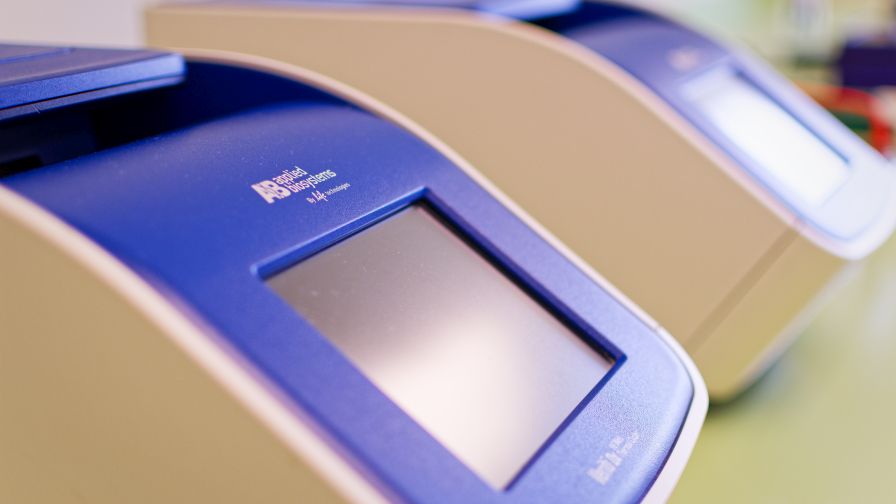
Every production lot should be DNA-tested with a PCR instrument to confirm strain identity. Photo: Applied Biotech Industries
Ask for the Certificate for Your Lot
A certificate of analysis is the lab report for one batch. Ask for it with every order. The lot number should match the bag you have, and the species should match the label. The live count should be stated per gram of finished product with a test date, and there should be a manufacture date or a guaranteed-through date so you know how old the lot is. A certificate only shows what the lab tested. It is fair to ask whether the identity was confirmed by DNA testing and whether contaminants such as E. coli and Salmonella were tested too. If a supplier can’t produce a certificate for your lot, you have no record of what is in the bag.
Prove it on Your Own Benches
Results vary with crop, media, water, and season, so test before you commit a whole crop. Split a bench into treated and untreated flats of the same crop and media on the same irrigation, at least three of each, alternated so one warm corner can’t decide the result. Label the flats before you start.
Decide what you’ll measure at the start. Days to a transplant-ready root ball, root ratings on 10 plugs per flat at a set day, and the share of flats ready to ship on the same date are all easy to record. Photograph root balls from both treatments on the same day. Write down the product cost per flat at the rate you used, plus the labor for each drench, so you know what the treated flats have to earn back.
If the treated flats don’t come out ahead by enough to cover the product and the labor, drop it. If they do, you have your own numbers to justify the cost.
Subscribe to eNewsletter