



Lessons Learned in Dynamic Lighting with Pleasant View Gardens
 October 2, 2025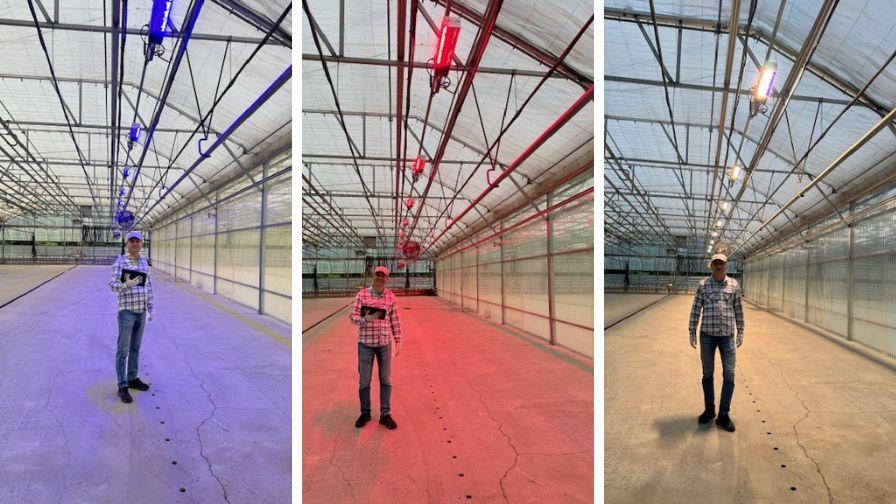
Dynamic lighting allows growers like Pleasant View Gardens to adjust blue and red light based on the crop’s needs. | Pleasant View Gardens
In this article, Greenhouse Grower Editor Brian Sparks talks with Mike Goyette and Aleksi Zosifov at Pleasant View Gardens in Loudon, NH, about their recent experience with Sollum Technologies’ dynamic lighting system.
A Pleasant Q&A with Pleasant View Gardens
Brian Sparks: What were your goals when starting this trial?
Mike Goyette: Like many growers, we had been using a lot of HPS lights, which were getting older and starting to lose intensity. We began shifting to LEDs, and then we heard about dynamic lighting. It seemed like a good fit for what we wanted to do here: add more light during the darkest months and adjust that to meet our needs. We also wanted the ability to dim the lights and shift the spectrum to be more cost-effective.
We are big on R&D, because it’s one thing to look at a chart that shows where the light falls within the spectrum, and another to apply it in real time. That’s why we decided to trial a dynamic lighting system from Sollum Technologies in our R&D area.
Brian Sparks: How did you track what you were seeing to make sure it was performing as you were hoping it would?
Aleksi Yosifov: We started with the R&D trial, testing different light spectrums for different purposes, including night interruption. We have two major crop categories: liners, where our goal is height control, and finished crops, where our goal is flower initiation. We wanted to learn how much blue light was needed to manage height, and how much red was needed in the finished plants to promote flowering.
Having the Sollum lights allowed us to adjust light conditions depending on the crop. For example, we saw that verbena responded strongly to light interruptions. Typically, we pinch them in the liner stage, using a balanced light recipe for the best results. Later, once the product is ready to ship out, instead of applying a lot of PGRs, this gives us an opportunity to increase the blue light even further. We can decrease the far-red light, which means the plant stays compact with fewer PGRs. It gives the plants a nice-looking finish at the end.
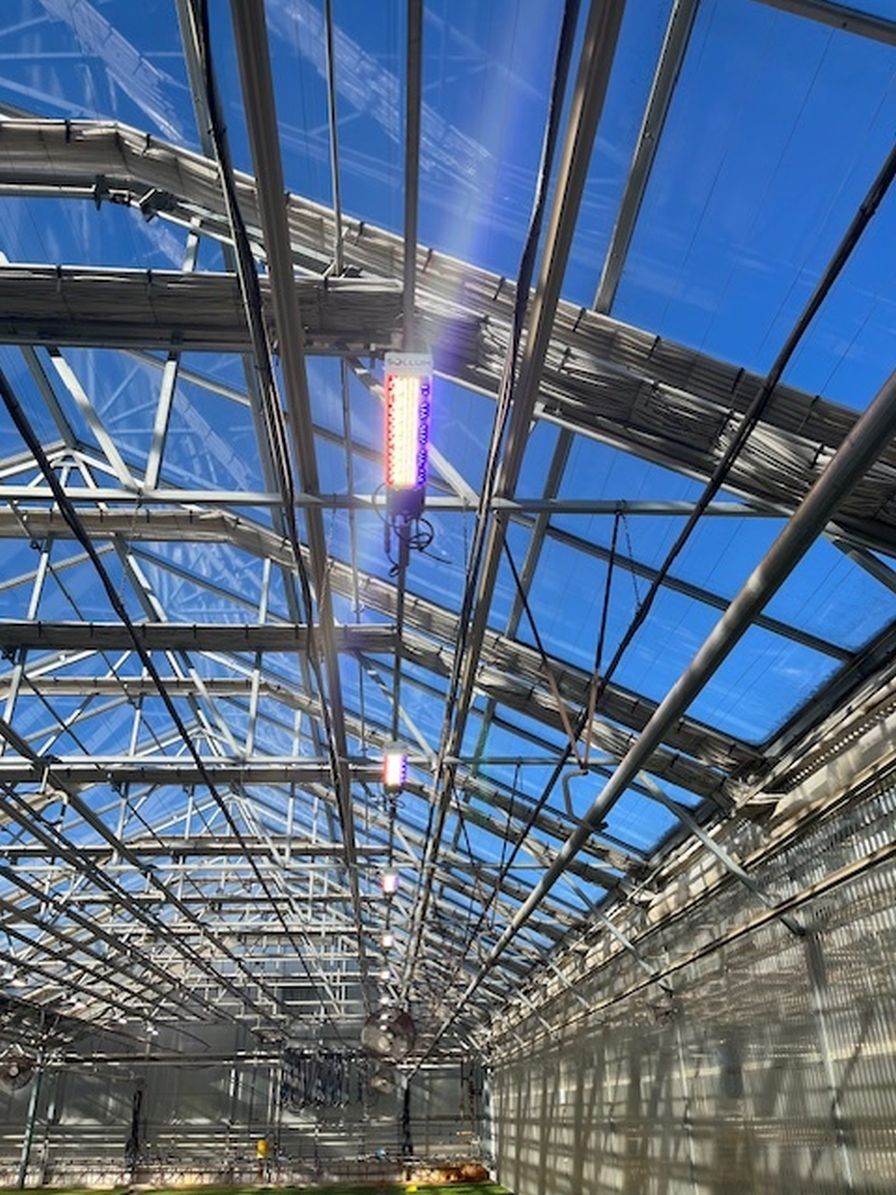
Pleasant View Gardens’ goal with dynamic lighting was to manage spectrums and add more light during dark months. | Pleasant View Gardens
Once we get to spring, our goals change: We want to get more foliage and faster flowering, so we use a location-based light recipe program where we increase the far-red rate from 1% to 10% to 50% red.
What I also like about these LED-based dynamic lights is that in the morning, they start up slowly rather than all at once. This means there’s not a spike in energy consumption. Then, if clouds move in, the light level slowly dims down instead of completely turning off.
Brian Sparks: What are some of the next steps in your trials?
Mike Goyette: Our top three or four genera make up about 80% of our revenue, so we are looking at how we can fine-tune those crops and reduce the use of PGRs.
Aleksi Yosifov: I think we learned a lot in our first year, but we still have a long way to go. I do think these lights really are next level. I like the output, and I like being able to adjust the spectrum when we need it. If crops are running behind, we can add more red light, reduce the blue, and push growth so foliage develops more quickly after the pinch. Once the plants reach the right size, we can flip the balance with more blue light, reducing red light, and start holding the crops back, together with conventional PGRs. I like those dynamic choices.
Mike Goyette: Right now, our understanding is probably like learning a foreign language. If you wrote it down and gave us time to look it over, we probably would understand it. But if you spoke it, we’d probably only catch one out of every five words. I would say that’s my analogy of where we’re at. But the Sollum team has been very good at helping us understand the language and build recipes.
Subscribe to eNewsletter