

How One Top 100 Grower Is Addressing Transportation Concerns
 December 16, 2025
 Transportation problems are often outside a grower’s comfort zone. They can’t be treated with a fungicide or fixed with PGRs, yet they can disrupt your entire business. Growers already face challenges like producing healthy plants on a schedule, keeping up with shifting regulations, and maintaining reliable supplier relationships. Add shipping issues to the mix, and the logistics can quickly become a swamp.
To learn how one operation is tackling those challenges head-on, we spoke with Dave Mast, co-owner of Andy Mast Greenhouses, a Greenhouse Grower Top 100 operation. Mast shared how his team is addressing driver shortages, lift-gate trailer logistics, and the complexities of routing and scheduling deliveries — along with the decision to hire a dedicated transportation manager to keep things running smoothly.
Finding and Keeping Drivers
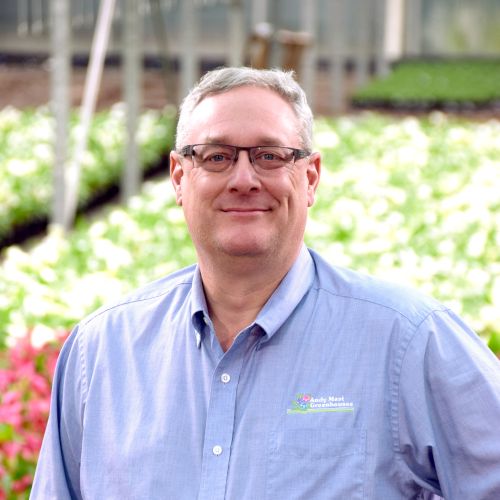
Vice President Dave Mast. | Andy Mast Greenhouses Inc.
When growers talk about transportation challenges, the first thing that often comes up is finding and retaining good drivers. The challenge gets even harder when loads require extra effort, such as live loading, using a lift-gate trailer, or making multiple drops.
Even if you believe driver shortages are overhyped, when it comes to specialized loads, Mast says it’s not easy to get drivers. “I don’t see anybody coming in the door looking for a job, and I’d hire five people if I could, right now. Send them my way if they want a job.”
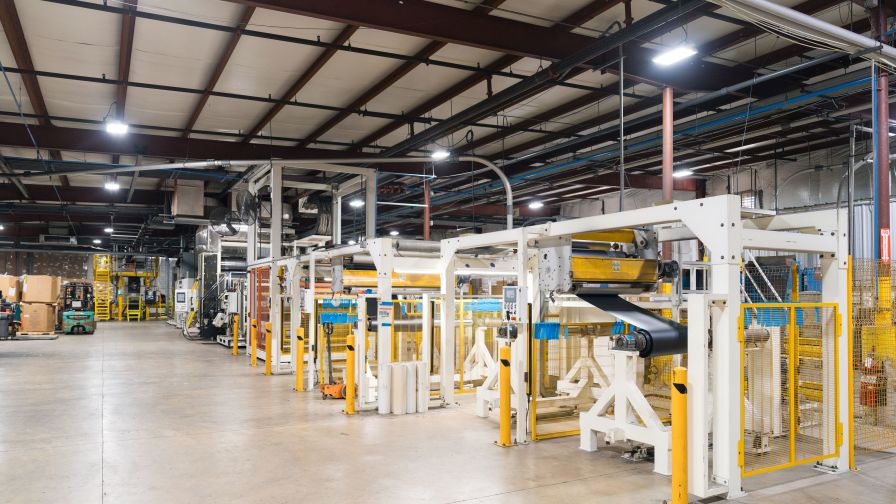


The lifestyle of truck drivers can be tough, and Mast’s team makes a point to support them. At its cross-dock facility, where loads are assembled, the company provides showers, restrooms, and a break room for rest and recovery. “Most of these guys are turning and burning during springtime,” Mast says. “Providing driver comforts is a way to help.”
Prompt payment is another simple but powerful incentive. NET 30 or NET 45 terms may work for other vendors, but for drivers, that kind of delay can create problems. Paying brokered drivers quickly builds trust and ensures they’ll want to haul your next load.
A well-maintained fleet also helps with driver satisfaction. The company works hard to maintain low CSA (Compliance, Safety, and Accountability) scores — the Federal Motor Carrier Safety Administration’s metric for fleet safety and reliability. “Our drivers are happy they don’t often have breakdowns because we have good mechanics that keep the trucks moving,” says Mast. “That’s a big deal.”
Managing Route Complexity
Have you ever seen a parking lot full of truck trailers and wondered who is scheduling drop-offs and pickups, organizing loads, setting up delivery times, and planning routes? Just keeping track of which trailer is where can be enough to cause a headache. The countless details involved, and the time required to schedule and route loads and drivers, can easily become overwhelming, especially when combined with running a greenhouse.
That’s why Andy Mast Greenhouses hired a dedicated transportation manager. The company also operates its own subsidiary freight division that handles routing, insurance, driver hiring, and compliance with ever-changing transportation regulations.
“The biggest thing is routing,” says Mast. “We’re doing so many stores now and so many deliveries that just routing is complex when it comes to making the routes efficient and keeping them on schedule. And, of course, all the stores want to know when their truck is coming.”
Routing software helps, but it’s still a big job. With so many moving parts, Mast says he’s glad to delegate that responsibility. “Regulations do change, and I’m not up to date on that, because that’s what our trucking manager does.”
Fleet Solutions
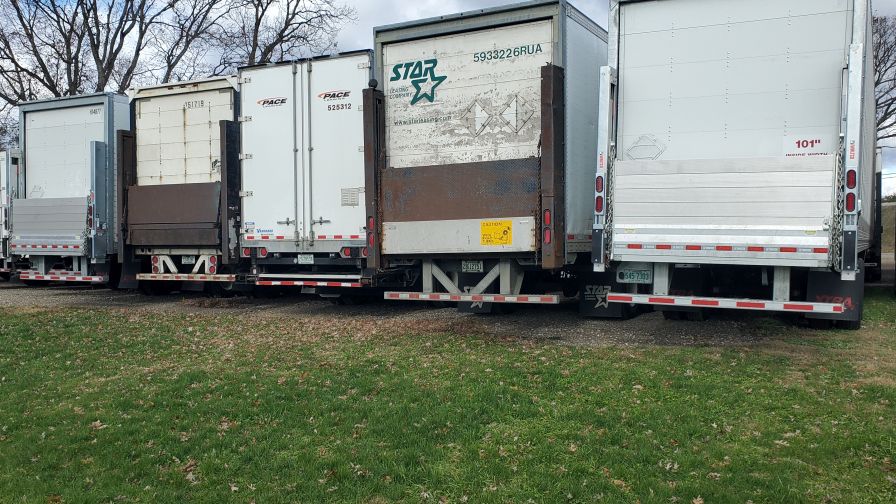
A lineup of lift-gate trailers, either rented or owned. | Andy Mast Greenhouses Inc.
Lift-gate trailers are essential for live plant deliveries, but in the broker market, they can be scarce and, depending on the season, nearly impossible to find.
To solve the problem, Andy Mast Greenhouses, through its own freight subsidiary, maintains its own fleet. “We have our own lift gate trailers,” Mast says. “I don’t know the exact number (another benefit of the trucking manager), but it’s more than 50. We need lift gates to deliver products to these stores. Finding brokers with lift gates is impossible.”
Owning the equipment also gives them flexibility. When brokered loads are needed, they can use their own trailers and simply hire a driver and tractor.
Leasing is another part of the strategy. Mast explains that leasing companies typically won’t rent a lift-gate trailer for just a couple of months during the busy season, but they will agree to long-term leases — an approach that helps alleviate shortages. “The lease is for seven years, generally speaking,” he says. “At the end of that, you have the opportunity to buy the trailer out.” Like a vehicle lease, the buyout price is often more favorable than what the same trailer would cost on the used market.
Technology Solutions
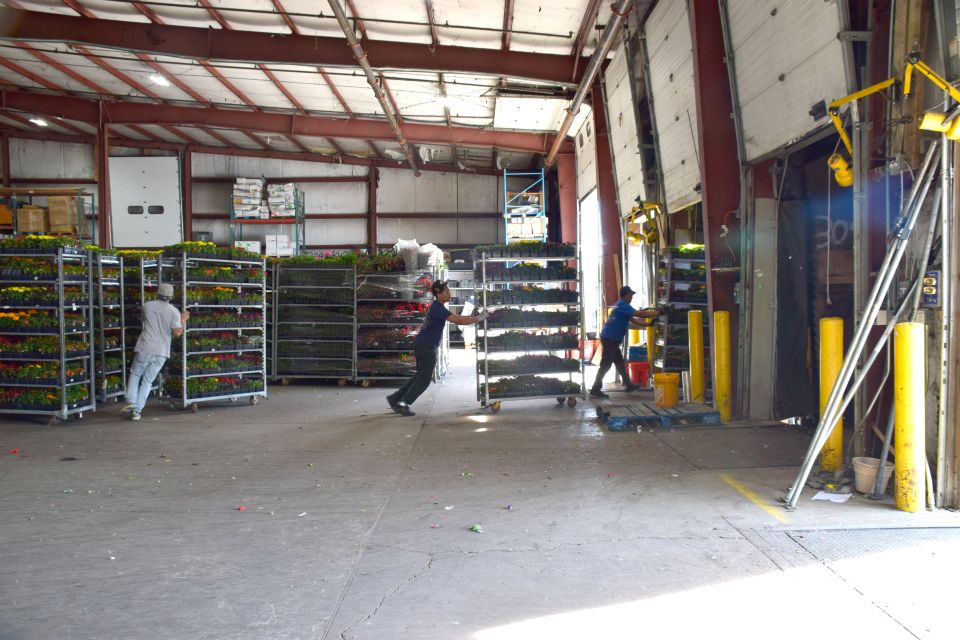
Workers loading trucks at Andy Mast Greenhouses’ cross dock facility. | Andy Mast Greenhouses Inc.
Live plant deliveries come with their own set of challenges, particularly around merchandising and product condition. How did the product look when it arrived? What’s the status once it’s on display at the store?
To help answer those questions, Mast says they’ve been using routing software for a few years, but this spring, the company transitioned to a new platform called Track-POD. The system integrates with their billing software, but its real value lies in its proof-of-delivery tracking, supported by photos.
Drivers use the app to snap several pictures of each delivery, showing both the delivery load and the current condition of the product in-store. “We get four or five pictures from every delivery now,” Mast says. “Someone has to manage that, but we have staff who go through the photos, scan for issues, and get better at spotting problems quickly.”
The concept is like a delivery driver photographing a package after dropping it off at your door — simple, but effective. The photos give Mast’s team immediate visibility into merchandising performance without needing to visit every store in person. “It’s been a good way to avoid visiting every single store and see what’s going on,” he says. If a problem is detected, staff can respond right away to fix it.
Even if your operation isn’t Top 100-sized, there are key lessons to take from this approach. Invest in routing software, consider dedicated in-house transportation management, and treat drivers well to improve retention. Smooth, well-managed deliveries not only reduce headaches, but they also strengthen your reputation with customers.
Subscribe to eNewsletter