



IR-4 Project Unveils Its New Executive Director
 February 24, 2026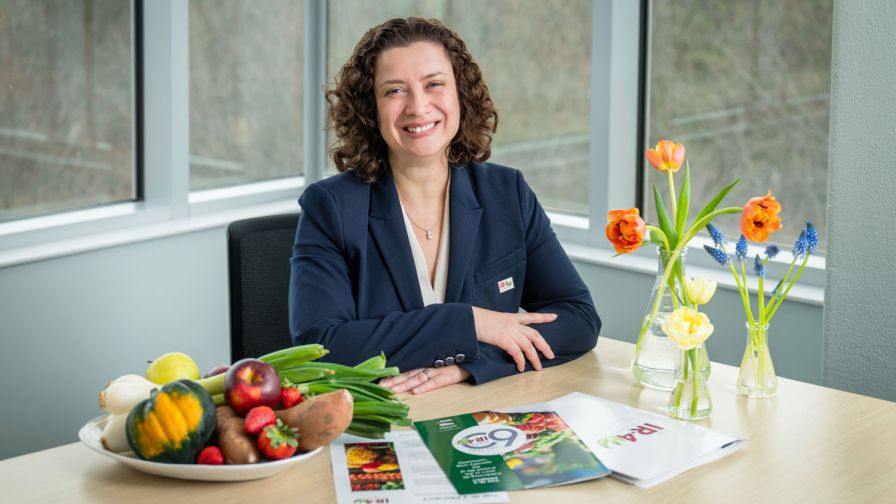
Lina Quesada-Ocampo; photo: North Carolina State University
Lina Quesada-Ocampo, a vegetable pathologist and Extension specialist at North Carolina State University (NC State), has been selected to lead the IR-4 Project as its next executive director, effective March 9.
IR-4, a federally funded program with headquarters at NC State, assists specialty crop growers with their pest management needs by facilitating safe and effective pest management tools and product registrations for fruits, vegetables, nuts, flowers, and nursery crops.
“Stepping into this role allows me to scale the work I have been doing alongside growers in North Carolina to a national level, and I am honored and excited to help lead that effort,” Quesada-Ocampo says.
She succeeds Jerry Baron, who retired in January 2026 after a distinguished 40-year career.

Quesada-Ocampo brings more than 15 years of experience in applied pest management research and Extension work to her new role. Most recently, she served as a William Neal Reynolds Distinguished Professor and Extension specialist for vegetable pathology at NC State, where she led the Quesada Lab and secured more than $55 million in career funding — including a $700,000 endowment set up by growers to support her work.
As executive director, Quesada-Ocampo is committed to advancing IR-4’s mission while safeguarding its focus and staying responsive to the needs of growers. Her vision includes strengthening collaborations, accelerating regulatory timelines, and ensuring that specialty crop growers have timely access to innovative and safe pest management tools.
“Dr. Quesada-Ocampo stood out during the search process with her demonstrated passion for specialty crop growers and her familiarity with IR-4,” says Matt Hengel, chair of IR-4’s Project Management Committee and director of the Western Region Laboratory. “The Project Management Committee excitedly looks forward to working with Dr. Quesada-Ocampo on this next chapter for the IR-4 Project.”
Quesada-Ocampo’s Specialty Crop Roots
As a longtime IR-4 collaborator, Quesada-Ocampo has cultivated deep relationships in the specialty crop community and delivered meaningful results to help growers produce healthy harvests and keep industries operating.
The Quesada Lab has developed improved disease management strategies for crops like cucurbits and sweetpotatoes in North Carolina and beyond. Researchers have generated data that the U.S. EPA required for pivotal product registrations, notably helping sweetpotato growers secure new tools to manage black rot following a devastating outbreak in 2015. Quesada-Ocampo also spearheaded efforts to resolve international trade barriers for growers looking to export sweetpotatoes, including securing a grant from the USDA’s Foreign Agricultural Service to help preserve sweetpotato exports.
The work of the Quesada Lab — much like IR-4’s research process — has stemmed directly from asking growers what their challenges are, what they need and how the lab can help. With a passion for Extension, Quesada-Ocampo is always on call for the growers she serves and sees this leadership role as a natural evolution of her work.
“I cannot think of a better platform to serve U.S. specialty crop growers than the IR-4 Project,” Quesada-Ocampo says.
IR-4’s Leadership Transition
IR-4 became a vital bridge between growers, researchers, registrants, and the regulatory system under the long-term leadership of Baron, the former executive director.
Quesada-Ocampo first had the opportunity to work with Baron and other IR-4 biologists during the 2015 outbreak of black rot in sweetpotato. She was only two years into her role at NC State when this disease hit packing houses across North America. Her lab had been conducting fungicide trials to control black rot effectively, but there was no product labeled for post-harvest use. Quesada-Ocampo worked with IR-4, growers and registrants to secure a Section 18 emergency label and then a Section 3 label for a fungicide that effectively helped the sweetpotato industry survive the outbreak and make a comeback.
This experience sparked a fruitful collaboration between IR-4 and the Quesada Lab over the last decade, with Baron as a trusted mentor. As Quesada-Ocampo submitted project requests to IR-4 and became more directly involved in regulatory work, she saw firsthand the power the organization has to serve growers and industries in times of need.
As she takes the helm of the IR-4 Project, Quesada-Ocampo is keen to serve growers on a national scale.
“Supporting growers has been the guiding force of my career, and IR-4’s impact — bringing safe, effective pest management tools to specialty crops nationwide — is extraordinary,” she says.
Subscribe to eNewsletter