



Out of the Black: The Search for Sustainable Plastic Alternatives
 November 23, 2025
 Ubiquitous black plastic pots and containers have long been a horticultural standard. But as the industry reckons with its environmental footprint, many are seeking more sustainable, and even compostable, alternatives to the hundreds of millions of plastic containers used each year.
“It’s a stain on the green industry, which does so much to support the environment,” says Toni Bailey, the principal at Silver Spring, MD-based Gracefully Green, and the chair of the Association of Professional Landscape Designers’ (APLD) Healthy Pots/Healthy Planet initiative. APLD launched the initiative in 2021 to confront the growing environmental problem posed by plastic hard goods.
Innovating the Next Generation of Containers
In response to this challenge, manufacturers have begun developing promising sustainable alternatives to traditional plastic containers. Many are experimenting with compostable and biodegradable materials such as coir fiber, rice hulls, peat, recycled paper, and plant-based plastics in new lines of pots and trays.
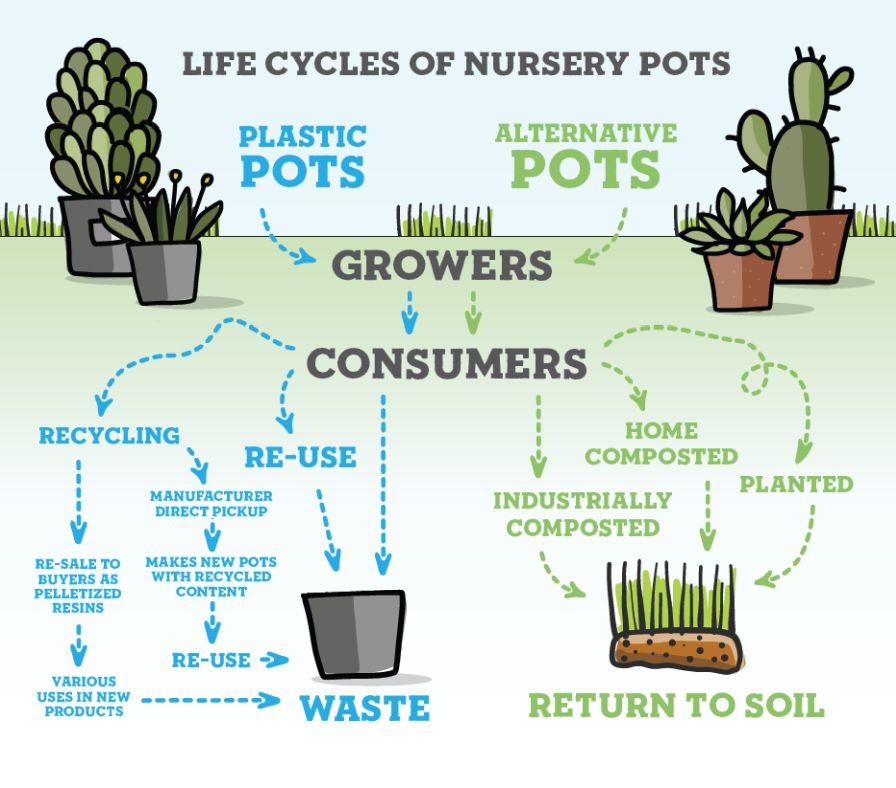
‘Life Cycles of Nursery Pots’ infographic. | Association of Professional Landscape Designers
However, Bailey notes that the transition is complex and far from an immediate fix. “We are seeing some interesting alternatives, and we believe manufacturers and growers really care about this issue,” she says. “So, everyone is trying, but it’s not just a simple switch.”

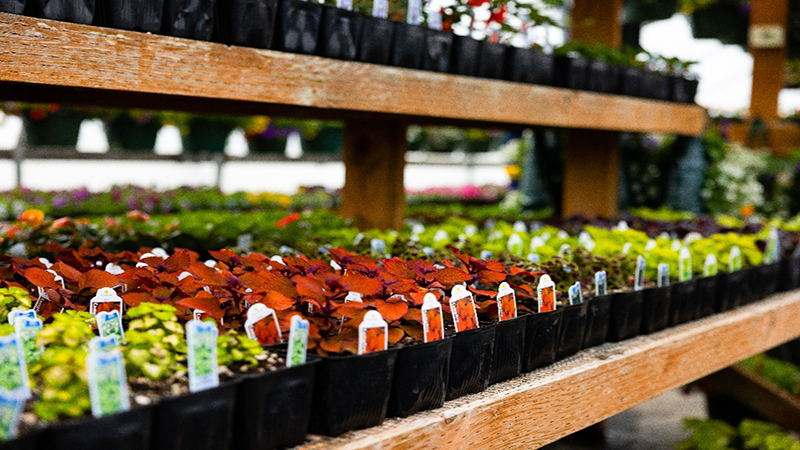
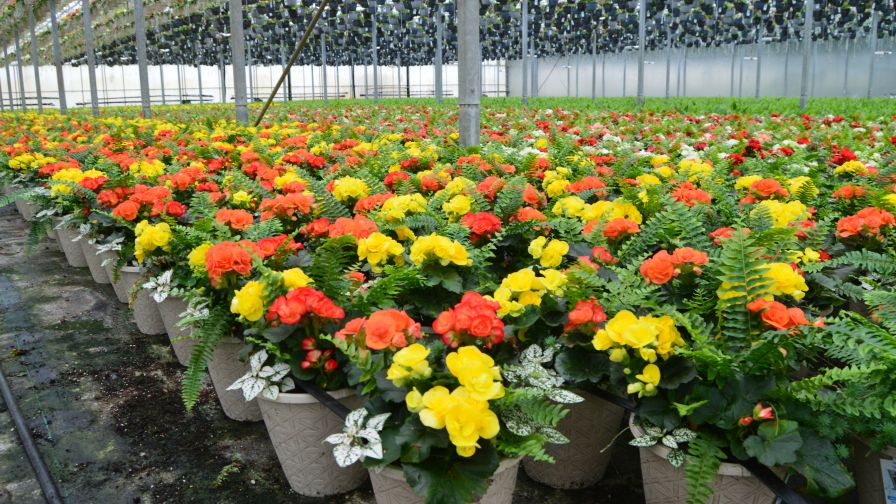

Despite difficulty, various greenhouses and nurseries have begun implementing sustainable options — often in smaller formats, such as plugs and trays used in early stages of production. These incremental steps, Bailey explains, give growers an opportunity to begin reducing their plastic reliance without overhauling operations. As long as stakeholders continue to advocate for change, she believes the momentum toward sustainable solutions will persist.
“We’d love to see sustainable alternatives readily available, affordable, and the norm,” Bailey says. “We’re definitely not there yet. We’re still looking at a lot of black plastic. I do think manufacturers are very aware and are taking steps to develop more alternatives. We feel like we can help them by being clear about what we’re looking for.”

“Is there a perfect sustainable pot?” she asks. “Maybe it’s not possible, but maybe we can get close.”
Policy Pressure and the Push for Change
Legislative momentum has added fuel to the search for sustainable alternatives. New Jersey was among the first to act, requiring that, as of 2024, at least 10% of the material in single-use plastics come from post-consumer recycled content, according to Danny Mishek, President of sustainable manufacturer VistaTek. That mandate has paved the way for a patchwork of similar policies in California, Oregon, Minnesota, Maine, and Maryland.
“People are just realizing the only reason that we have continued to use petroleum plastics in all of our products is price, and they add no value to our application outside of pricing,” says Mishek, whose White Bear Lake, MN-based company manufactures the Proven Winners Eco+ containers. Made from U.S.-grown, corn-based biopolymer polylactic acid (PLA), there are two versions of the Eco+ pot that perform like plastic. Both are designed to be industrially composted, but one version can also be planted directly in the ground. As heat and moisture break down the container into inert organic material, it releases built-in nutrients to the plant’s roots.
“We’ve found that petroleum-based materials aren’t being recycled, or can’t be recycled, and they’re producing microplastic pollutants in the water, in our landfills, and in the environment,” Mishek adds. “People are saying we’ve got to make some changes, some adjustments.”
Breaking Industry Habits
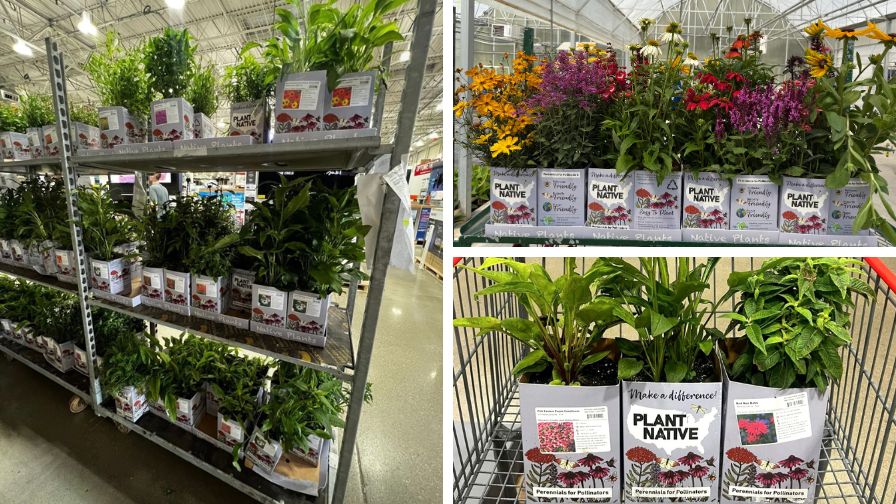
From greenhouse to retail, sustainable packaging initiatives are beginning to show up on store shelves. | Air Tray Technologies by Blackmore
A long-standing hurdle to adopting new technology has been the horticulture industry’s innate resistance to change, says Dave Dobos, Director of Client Relations at Blackmore Co. Still, he believes that mindset is beginning to shift.
“Folks need to be comfortable and open to it,” Dobos says. “We’ve let the plastic pot dictate operational flow from production to handling. We need to be open to change.”
It’s a complex proposition, adds Mads Jensen, Market Manager at Blackmore Co. Greenhouses and nurseries have invested heavily in automated equipment, creating a deeply integrated system built around conventional plastic containers. That level of investment, he explains, makes change exceedingly difficult for growers and effectively paints the industry into a corner.
Even so, Jensen predicts that market demand will soon increase momentum. “The market always wins,” he says. “In the next couple of years, I think the market is really going to start demanding less plastic at retail. Big-box stores have already started to do that, and that demand will increase.”
Programs and Partnerships Paving the Way
Dobos and Jensen explain that Blackmore is addressing this systemic change through its Plant-It-Friendly program — a sustainable retail solution that replaces traditional plastic pots and tags with a paper-based, custom-printable retail sleeve. The 95% plastic-free sleeve is UV-resistant, holds plants for up to 15 weeks, and aims to reduce both waste and cost.
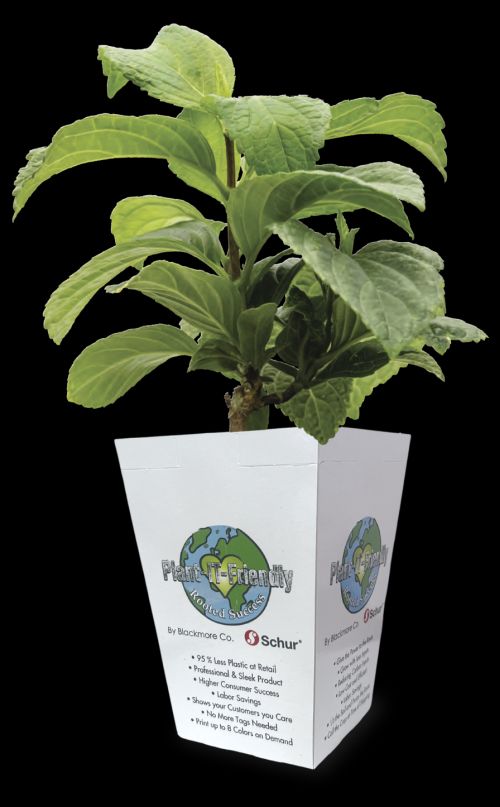
Blackmores Plant-It-Friendly Program offers a paper-based, 95% plastic-free sleeve that replaces plastic pots to cut waste and cost. | Air Tray Technologies by Blackmore
In addition, Blackmore utilizes Ellepot Organic propagation papers made from bio-based materials and approved for organic production, which degrade after 10 or 16 weeks. The company’s Air Tray Technologies use up to 90% recycled plastic and are designed for near-infrared (NIR) sorting, improving recyclability and end-of-life management.
As with many growers, the company’s internal commitment to sustainability is increasingly shaped by retail partnerships, says Eric May, Director of Supply Chain at Young’s Plant Farm in Auburn, AL. Young’s, an active participant in East Jordan Plastics’ recycling partnership, has trialed numerous alternative pots and containers at the request of retail partners.
However, May adds that cost remains the largest barrier. Sustainable alternatives for pots and trays can be two to three times more expensive than conventional options. With margins already tight, the added expense is difficult to justify.
“At the end of the day, growers, retailers, and consumers want to do what’s right,” says May. But the question remains: Who shoulders the cost? Unfortunately, it often falls on the grower.
“These inputs are adding five to 50 cents across the board to your product line,” May says. “And no one is budging on any retail compensation, so you can gain that margin back. And that’s the reality … we can’t keep margins up. So, it’s not a lack of willingness, but the real barrier to participating is always costs.”
Subscribe to eNewsletter
