



Protecting Greenhouses from Collapse in Severe Winter Weather
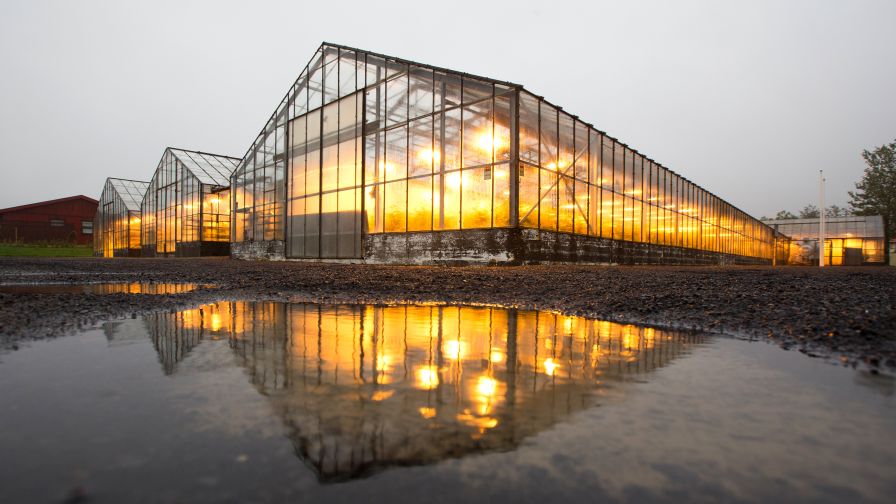
Icelandic greenhouse in winter with lights and heating from geothermal energy. | Pavel, via Adobe Stock
Greenhouses, high tunnels, and hoop houses warrant some advance planning to keep them from collapsing in winter storms. Many growers have learned the hard way that these investments are vulnerable to failure due to some combination of ice, rain, snow, and wind.
Much of the following information has been provided by John Bartok Jr., Agricultural Engineer and University of Connecticut Professor Emeritus. Some of the advice also comes from Ed Person of Ledgewood Farm Greenhouse Frames.
Move Stuff Out of Harm’s Way
Tidy up ahead of storms, so that in the event of high winds, items (such as trash bins, pots and trays, supplies, and the like) will not be blown into or through your greenhouses. To prepare for future snow removal, move all of the accumulated equipment and supplies out of the way along the sides and around the ends of your greenhouses and tunnels.
Know Snow
Snow can vary in consistency and weight. When light and fluffy, a foot of snow may only contain as much water as one inch of rain. However, when heavy and wet, it only takes 3 to 4 inches of snow to equal 1 inch of rain. For each inch of rainwater that snow is equivalent to it will load a structure with 5.2 pounds per square foot. This amounts to about 6.5 tons on a 25- by 96-foot greenhouse!



An uneven snow load makes a structure more likely to collapse because the pressure is not distributed evenly on the bows. This can happen if wind lifts snow and deposits it more heavily on one side of a greenhouse. The weight of snow may bend the side of a greenhouse frame if greenhouses are so close together that snow builds up between houses when it slides off the roof. If there is not enough space to get in with a plow or bucket loader to remove the snow, then cutting the plastic to let the snow fall into the greenhouse can relieve the pressure.
Plan for Wind
When heavy wind is expected, keep the plastic tight by increasing inflation; open the blower’s intake valve. Make sure any holes or rips are taped. Make sure the inflation fan intake won’t get blocked by snow. The effective force of the wind is doubled when it is allowed inside a greenhouse. Secure doors, vents, and shutters so that they cannot open. Roll-up sides should be completely closed and tightly secured.
Melt the Snow
If your greenhouse has heat, turn it on when heavy snow is predicted. Set the thermostat at 70°F or higher. The extra fuel you burn is less expensive than replacing a collapsed greenhouse. A portable propane heater (no power needed) is a good item to have on hand for unheated tunnels or if a furnace fails. They are pretty inexpensive and can run for a few hours off a small gas tank.
Snow Removal
A greenhouse is most stable when the snow is balanced on each side. Since houses are not as strong in the middle (because they do not have end wall construction for support), it makes sense to start at the middle and work in both directions if you are removing a lot of heavy snow. In this case, it is also important to unload the snow from each side as you go. If you clear one side and the other side is still loaded up, this causes uneven stresses in one direction on the bows.
Ice Removal
Sometimes ice accumulates on the plastic. The best way to deal with it is to melt it with a heat source. If you have double poly and it is not windy, shut off the inflation fan, and the heat from inside will be more effective. If you break the ice free mechanically, there is always the risk of the sharp edges of the ice cutting the plastic. Also, every time ice slides or you use a device on the outside of the plastic to pull snow or ice off the tunnel, you run the risk of abrasion, which makes the poly rough, so the snow won’t slide off as well in the future.

For additional tips on keeping your greenhouse safe during winter, including what to check your insurance policy for and greenhouse frame adjustments to make, please read the original article written by Vegetable and Berry Specialist Vern Grubinger on the University of Vermont Extension website.
Subscribe to eNewsletter