



How to Stop the Spread of Algae and Moss Inside Greenhouses
 May 13, 2024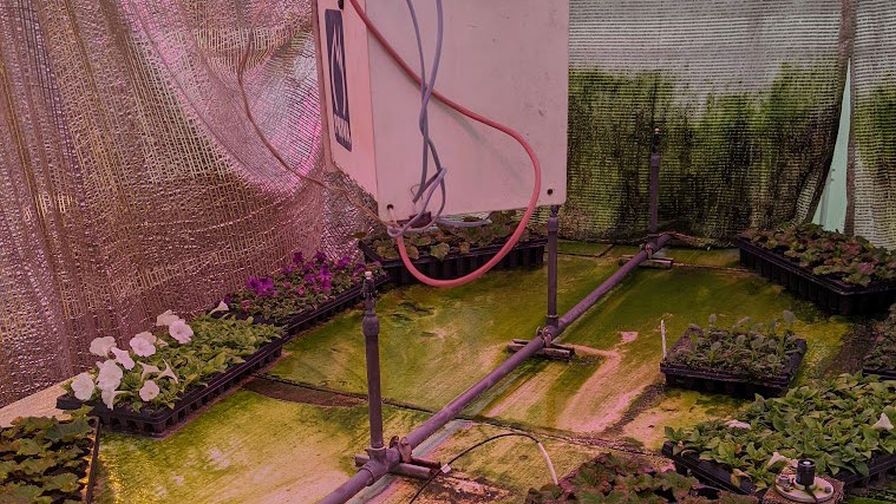
Algae covering a greenhouse interior | Charlie Smith, 2024
The unwelcome propagation of algae and moss within greenhouses is often overlooked to commit attention to more troubling weeds, such as crabgrass, dandelions, ivies, and thistles. However, certain greenhouse operations with humid and moist climate control conditions, as well as those that lean liberal in the case of (over)watering, create the perfect habitat for algae and moss to thrive and spread unmitigated. So, what is there to do about that?
What’s the Difference Between Algae and Moss?
One main point of confusion to many inside and outside of the horticulture industry is the differences between algae and moss.
Algae are eukaryotic organisms that can perform photosynthesis (autotrophic). However, algae lack true stems, roots, leaves, and other structures and tissues common in higher plants. Therefore, algae are classified as a lower group of plants.
In terms of habitats, algae can grow almost anywhere. That includes aquatic and terrestrial environments. In greenhouses, algae usually present as a coating or sheets that grow on a wet surface.





Moss, like algae, belongs to a lower group of plants. Mosses belong to a group known as bryophytes and reproduce by spores. While lacking roots like algae, moss features rhizoids that fasten it to a surface, such as the ground, walls, bark, etc.
Mosses only grow in terrestrial environments and ones that exhibit high levels of moisture and low levels of light. In greenhouses, areas that exhibit these traits for moss proliferation include corners, empty pot and container interiors, and the undersides of equipment and furniture.
The Problems Algae and Moss Cause in a Greenhouse
Depending on their location within a greenhouse environment, algae and moss can:
- Attract and provide food and shelter to pests
- Cause numerous safety issues (slippery surfaces, stained clothes, skin irritation, etc.)
- Limit lighting to (and reduce the yield of) crops and plants
- Lower the market/presentational value of the product (especially ornamentals)
- Steal nutrients from crops and plants
How to Mitigate the Spread of Algae and Moss in Greenhouses
To prevent algae and moss from taking hold in a greenhouse, the main area of concern should be that of the use and availability of water. Because algae and moss thrive in areas with wet conditions and high moisture levels, it’s important to ensure that overwatering isn’t taking place, excess water isn’t left on benches and walls, and that water from the irrigation system is only landing/going into the crop/plant. Additionally, exhaust fans to remove excess moisture from the air are recommended for humid conditions.
To get rid of existing algae and moss in a greenhouse, the first course of action is to let the environment dry out. The irrigation system should be limited or paused, in addition to the use of ventilation fans, to speed up this process. A future standard of thorough searches should also be put in place to keep an eye out for new cases of algae and moss proliferation within the greenhouse. Additionally, the delivery of materials to the greenhouse should be checked to ensure that algae and moss aren’t arriving (or rather sneaking in) this way, such as hitching a ride in/on containers, liners, and other equipment.
For more information, details, and tips on managing your wet weed problem, please read the full e-Gro (Electronic Grower Resources Online) alert “Managing Algae and Moss Inside Greenhouses.” Additional and current e-Gro alert pieces from Volume 13 (2024) can be found online.
Subscribe to eNewsletter