




The MVP of Insecticides Has Arrived
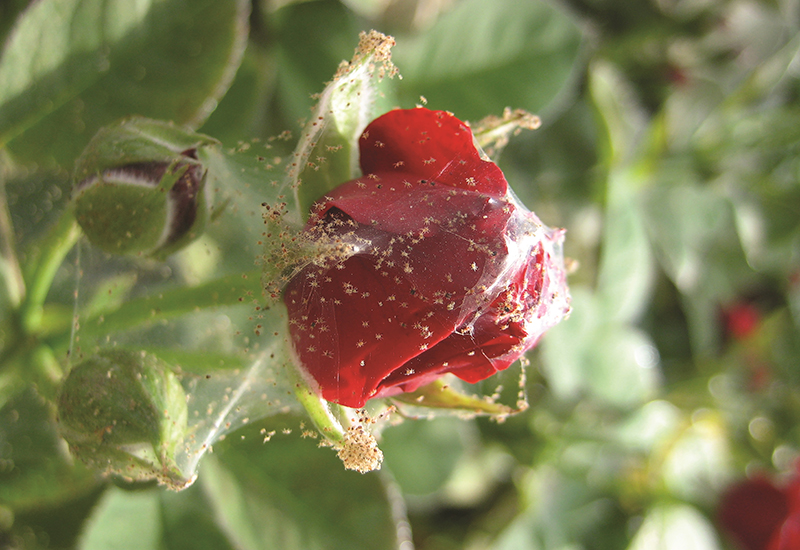
Enhance Your Defense Against Destructive Ornamental Pests
As operations prepare for spring, it’s important to consider not only optimal growing conditions but also the pest pressure that increases as temperatures rise. Many destructive insects emerge with warmer weather and can severely impact greenhouse and nurseries crops if left unchecked. Pest scouting, identification and prevention strategies are critical to stopping damage before it negatively impacts the value and sale of the crop.
Identify Common Insects and Early Signs of Damage
Mites
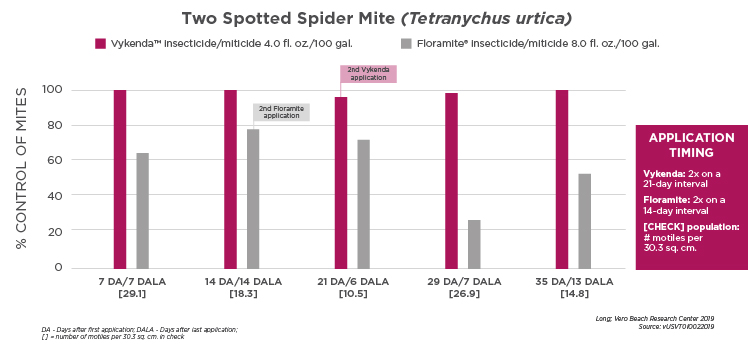
Mites are common spring pests that feed on plants. As the weather warms, two-spotted mites wake up and feed on the undersides of plant leaves. Additionally, broad mites emerge, feeding on the young tissue as its unfolding. Early symptoms appear as white-speckled stippling towards the top of plants. Since mites can overlap generations and developmental stages, they can be difficult to control once established and often require multiple insecticide treatments.
Thrips
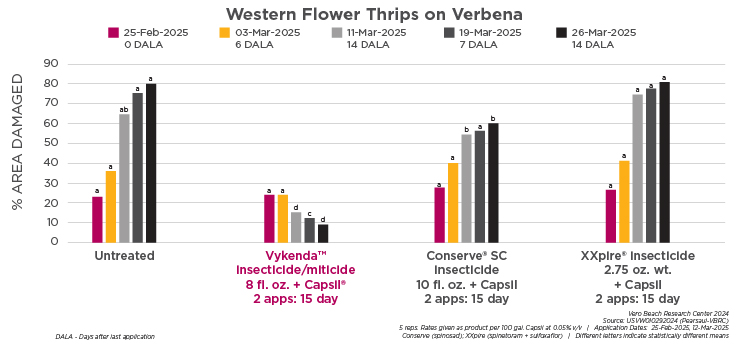
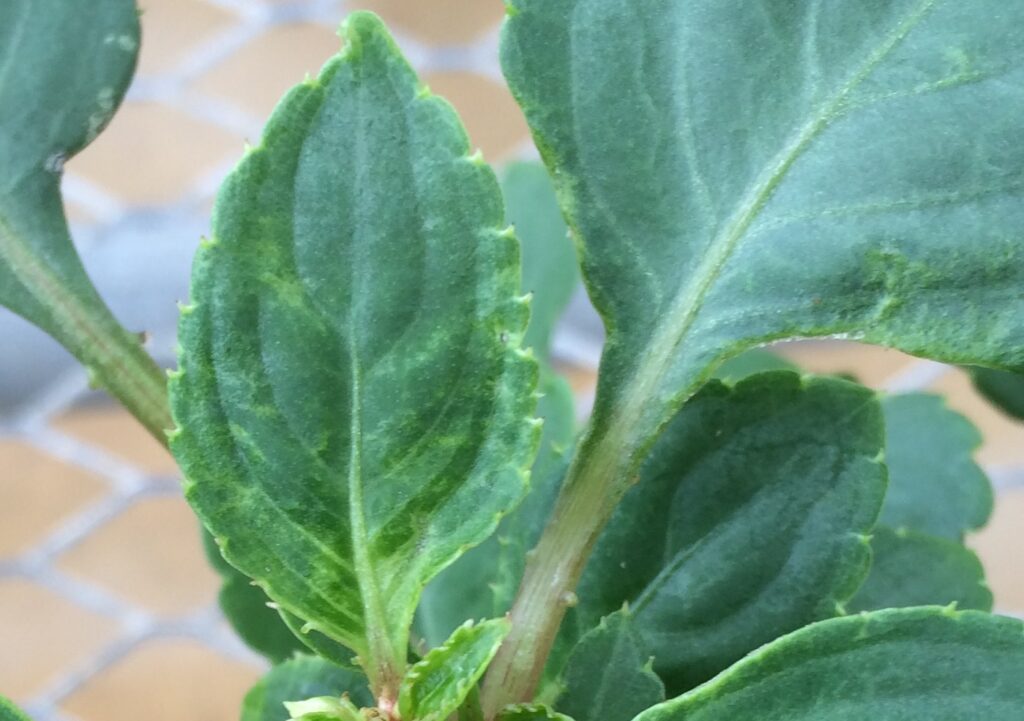
Thrips are tiny insects that feed on pollen, flower petals and tender plant tissue, causing leaf stippling, scarring and distortion. Some species transmit viruses like impatiens necrotic spot virus and tomato-spotted wilt virus. Due to their short lifecycles and ability to hide, preventive insecticide applications are recommended to manage thrips and prevent damage.
Leafminers
Leafminer larvae tunnel through leaves, creating translucent or discolored trails. Untreated damage reduces photosynthesis, weakens the plant and can lead to stunted growth, premature leaf drop and increased disease susceptibility.
Beetles
Leaf-feeding beetles, like Japanese beetles and red-headed flea beetles, become a larger threat as spring transitions to summer, causing destruction to plants and rendering crops unsaleable. . Active from May to August, they feed on over 300 plant species, creating a “skeletonized” appearance by chewing holes in leaves.
Get Ahead Before Populations Peak
Planning for spring pest activity helps ensure strong plant quality throughout the busiest part of the season. While cultural practices and diligent scouting are valuable, they may not be enough to manage high pest pressure once populations establish. Preventative and early-season insect control strategies can help stop damage before it happens.
The Top Draft Pick for Greenhouse Growers
Syngenta continually invests in researching plant protection products to stay ahead of new or invasive insects and diseases that threaten ornamental operations.
Powered by PLINAZOLIN® technology, Vykenda® insecticide/miticide features the first active ingredient for the ornamental market in a new class of chemistry, IRAC 30.
This broad-spectrum insecticide features a mode of action that acts through contact and ingestion to rapidly stop feeding and provide residual control of the most difficult-to-control insects, including:
- Black vine weevils
- Caterpillars
- Flea beetles (including red-headed flea beetles)
- Japanese beetles
- Leafminers (all life stages)
- Mealybugs (suppression)
- Mites (all life stages)
- Thrips
- Psyllids
Vykenda can be applied as a spray on all ornamental crops, including edible crops such as vegetables, fruit and nut trees, vines and small fruits grown for retail sales in greenhouses and nurseries. With no signal word on the label and minimal PPE required when making applications, Vykenda also provides growers with excellent worker safety.
Additionally, with no known resistance or cross resistance to other insecticides, Vykenda makes an excellent rotation partner with Mainspring® GNL insecticide, which is well-known for its proven control of sucking pests like whiteflies and aphids. The ability to rotate Vykenda with Mainspring GNL provides growers with a complete insecticide solution to control nearly all common insects.
Unexpected challenges can arise at any stage of ornamental crop production. Prepare ahead of time with an effective insecticide rotation that incorporates Vykenda for long-lasting protection and reliable control of difficult pests.
For more information about Vykenda including trial data and use rates, visit GreenCastOnline.com/Vykenda, or download any of our proven agronomic programs from GreenCastOnline.com/Solutions to learn how to incorporate Vykenda into your management program.
All photos are either property of Syngenta or are used with permission.
© 2026 Syngenta. Important: Always read and follow label instructions. Some products may not be registered for sale or use in all states or counties and/or may have state-specific use requirements. Please check with your local extension service to ensure registration and proper use. Mainspring®, PLINAZOLIN®, Vykenda® and the Syngenta logo are trademarks of a Syngenta Group Company.