



Cutting Planter Technology Continues to Expand
 November 19, 2024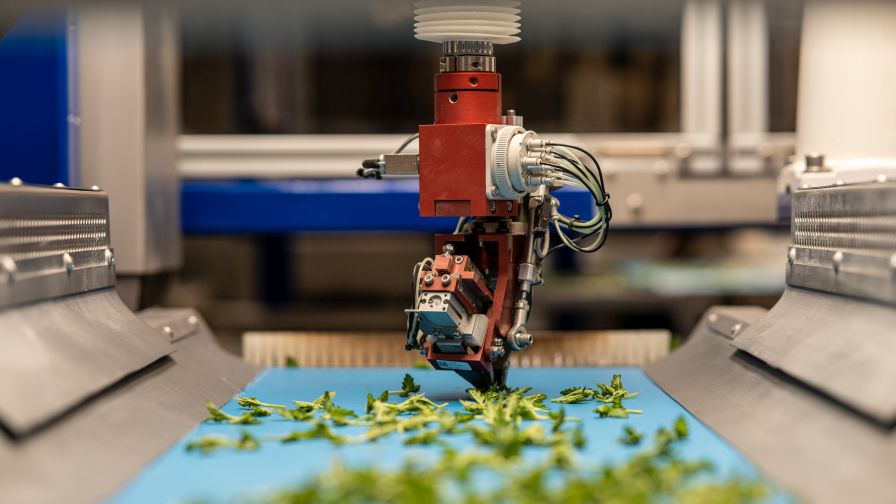
Photo; ISO Horti Innovators
The use of robotics is revolutionizing several industries, and both horticulture and forestry are no exception. As these industries face challenges such as labor shortages, higher operational costs, and environmental pressure, the need for automation has never been bigger. Among the key players driving this transformation is ISO Horti Innovators, with its ISO Cutting Planter. Initially designed for use in greenhouse horticulture, the Cutting Planter also shows promise for forestry applications, providing a scalable solution to challenges such as deforestation and labor-intensive planting.
Robotic Solutions in Horticulture: Efficiency and Precision
In greenhouse horticulture, precision, efficiency, and quality are paramount, especially in tasks such as planting cuttings; a labor-intensive process that can be time-consuming and error-prone. Innovations such as ISO’s Cutting Planter have helped automate these processes at many breeders and nurseries worldwide over the past 10 years. The robots are equipped with self-learning vision software that ensures each cutting is planted at a uniform depth and at perfect spacing. Not only does this increase crop quality, it also significantly reduces labor costs and makes cultivation much more sustainable due to less waste, while practice shows that one operator can operate up to seven machines simultaneously.
Global greenhouse horticulture, especially in sectors such as floriculture, relies heavily on cuttings for plant propagation. Some of the world’s largest producers of cuttings, including Beekenkamp, Fides, and Syngenta Flowers, produce billions of cuttings annually and supply markets across Europe, North America, and other global regions. The demand for these cuttings is increasing, driven by the need for uniform, high-quality plants in ornamental cultivation. Robotics are becoming indispensable tools to meet this demand, while maintaining consistency and reducing costs.
Expanding Into Forestry: Tackling the Deforestation Crisis
The capabilities of automation technology such as the ISO Cutting Planter extend far beyond greenhouse horticulture. Deforestation remains an urgent global problem, with an estimated 15.3 billion trees felled each year, compared to only 1.83 billion trees replanted. Traditional efforts to plant trees cannot keep up with the rate of deforestation, and this is where robotics could offer a scalable solution.




Martin Maasland, CEO of ISO Horti Innovators, sees a significant opportunity for robotic automation in reforestation. The ISO Cutting Planter, originally designed for horticulture, can be adapted for forestry, enabling large-scale, precise and efficient tree planting. By automating tasks that are labor-intensive and time-consuming, the planter can help restore forests faster and more accurately, a crucial need in addressing the environmental damage caused by deforestation. ISO Horti Innovators is currently conducting trials with a number of companies worldwide.
The cutter’s ability to plant different species could make it a versatile tool in forest regeneration projects. Maasland points out that this technology is particularly suited to markets focused on carbon offsets, paper production, and sustainable forestry. Robotics in this sector could also play a vital role in combating climate change by sequestering more carbon through large-scale reforestation.
The Global Shortage of Skilled Breeders: A Bottleneck in Plant Propagation
While the demand for plant cuttings is increasing, the industry is facing another major challenge: a global shortage of skilled plant breeders. Plant breeding is essential for developing new varieties of crops, improving yields, disease resistance, and adaptation to climate change. However, many highly skilled breeders are retiring and there are not enough young graduates entering the field to fill the gap. This shortage threatens to affect food and ornamental plant production worldwide.
The lack of trained breeders directly affects sectors that depend on the rapid development of new plant varieties, such as horticulture and forestry. By automating parts of the propagation process, cutting technology helps relieve some of the pressure by enabling large-scale planting with minimal human intervention. However, for long-term sustainability, it is crucial that governments and the private sector invest in education and training to replenish the pool of growers needed to meet future demand for agricultural products
Maasland sees a future where robotics and automation will play a central role in both the horticulture and forestry sector. In (greenhouse) horticulture, automation ensures that propagation is cost-effective, accurate and scalable. In forestry, the same machines could be adapted to plant millions of trees in a fraction of the time it would take to use traditional methods, restoring ecosystems and improving biodiversity.
The future of both horticulture and forestry lies in a collaborative approach that combines robotics, breeding innovation and sustainability to meet the growing demand for plants, cuttings and trees while protecting the environment.
Subscribe to eNewsletter