


How Indoor Farming Can Be a Viable Part of Plant Production
 July 20, 2020
 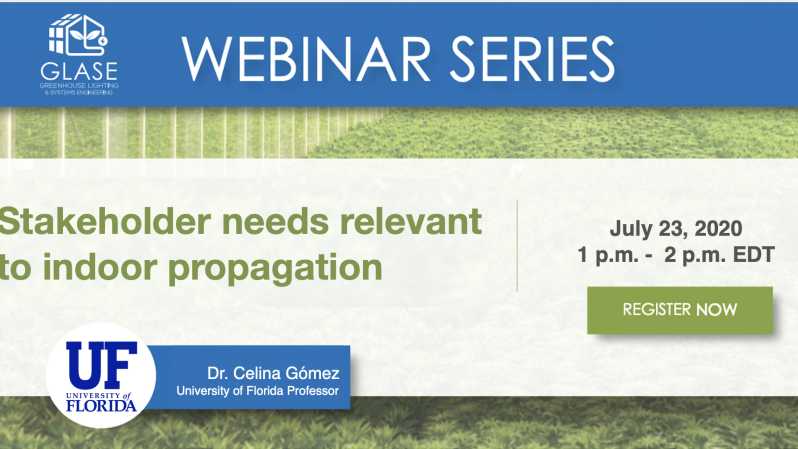 There are economic and knowledge-based challenges that must be addressed for indoor farms to be viable in the U.S. despite their potential benefits. These challenges will be the focus of a webinar that takes place on July 23, presented by the GLASE consortium.
University of Florida Professor Celina Gomez will take a closer look at a mixed-methods approach that was recently used to identify the needs of specialty crop growers and stakeholders interested in or currently using indoor environments to grow seedlings, cuttings, and tissue-cultured plants. An online survey evaluated specialty crop growers’ experience with indoor plant propagation and assessed their needs related to improving propagation processes. A focus group with 19 participants was then conducted to further understand the needs for indoor plant propagation by stakeholders.
Findings suggest that industry stakeholders are largely motivated to adopt indoor propagation environments to reduce crop losses, increase productivity per unit of land area, ensure faster germination or rooting, improve plant quality, and profit from anticipated economic benefits. Research and education priority areas identified by stakeholders included economic costs and benefits (including capital investment and energy costs), improved crop quality, production time, uniformity, reduced shrinkage, and strategies to improve light management indoors.
As suggested by the results of this project, a strategic plan encompassing stakeholder needs must be implemented to maximize the benefits and enable adoption of indoor plant propagation environments. A discussion about ongoing efforts to identify stakeholder perceptions with indoor plant propagation environments will be presented.
Click here for more information about the webinar, and to register.


Subscribe to eNewsletter
