



Smarter HVAC Strategies Help Growers Improve Efficiency and Climate Control
 March 17, 2026
 Greenhouse climate system design begins with a clear understanding of both external environmental conditions and the internal climate required for optimal crop performance. As production systems become more specialized, growers are increasingly relying on HVAC solutions tailored to specific crops, geographic regions, and facility designs.
One key challenge is managing temperature differentials between day and night. Cooling is not only a daytime requirement; many crops require active night-time cooling to maintain temperature differentials that support physiological processes such as fruit set. Managing these temperature shifts efficiently can be particularly challenging in colder climates, where heating and dehumidification systems may operate independently.
Rising Energy Costs and System Limitations Drive HVAC Upgrades
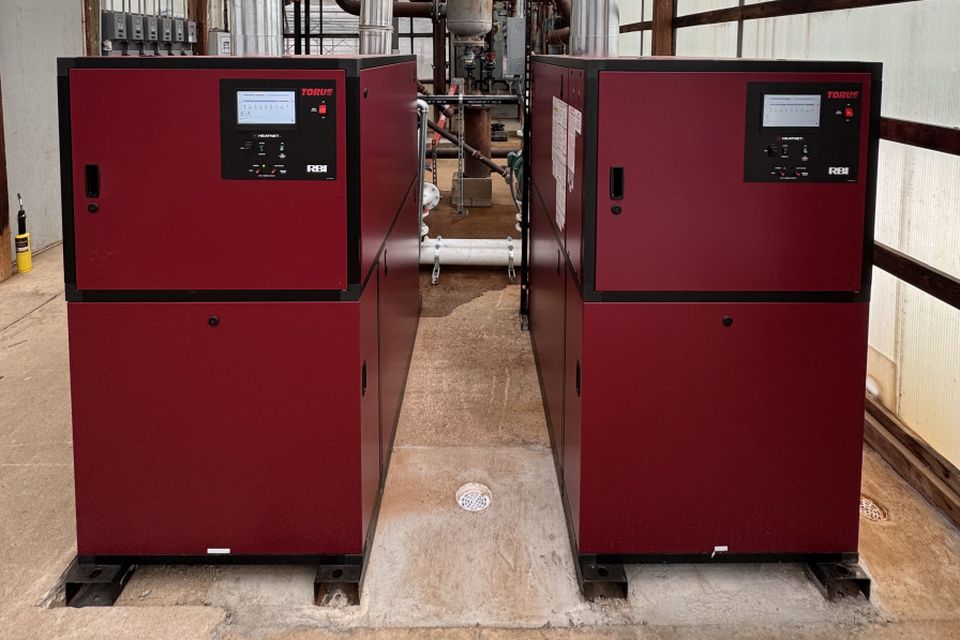
Modern low-mass condensing boilers can respond more quickly to changing greenhouse conditions and operate more efficiently than legacy systems. | BioTherm Solutions
Rising energy costs remain one of the most significant concerns for greenhouse operators. Inefficiencies of older systems, combined with increasing maintenance and operating costs, are prompting many growers to evaluate system upgrades.
Many growers are adopting more targeted heating strategies to improve temperature uniformity while reducing fuel consumption. Recent extreme winter conditions have also exposed vulnerabilities in system redundancy and the lack of dedicated snowmelt capabilities in some facilities, according to Jim Rearden, CEO of BioTherm Solutions.



From a cooling perspective, undersized mechanical systems are a common issue. Traditional pad-and-fan systems often struggle to maintain adequate cooling and humidity control during periods of high summer humidity.
More growers, Rearden says, are considering mechanical cooling and dehumidification systems to address these limitations. The wider adoption of energy curtains, including dual-curtain systems, is improving climate control, although retrofitting these systems into existing structures can present challenges.
Proper System Design and Load Calculations Are Critical
Proper system sizing and design are essential to maintaining consistent greenhouse climate conditions.
Accurate heating load calculations must account for greenhouse structure, geographic location, crop requirements, and environmental conditions. Equipment placement, ventilation design, and flue gas management also play important roles in ensuring efficient and reliable operation.
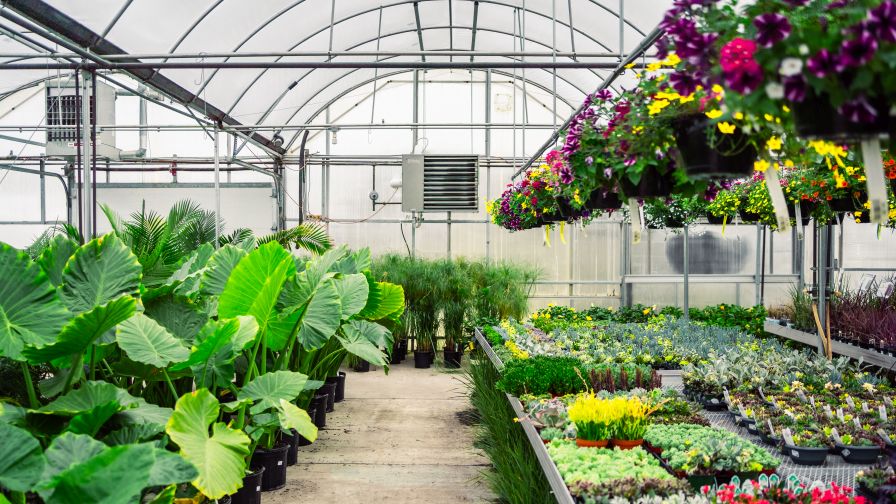
High-efficiency gas-fired and hydronic heating systems are helping greenhouse operators improve climate control and manage energy use more effectively. | Modine
Improper load calculations or equipment placement can result in uneven temperature distribution, reduced efficiency, and increased energy costs. As Jon Rector, Regional Sales Manager for Modine Manufacturing, notes, heating load accuracy is one of the most common challenges in greenhouse system design.
Addressing these factors early in the design process helps ensure systems operate efficiently and reliably, allowing growers to focus on crop production rather than climate management.
Energy Modeling and System Design Help Improve ROI
As growers evaluate HVAC system upgrades, return on investment (ROI) remains a key consideration. Energy modeling tools allow growers to evaluate existing system performance, project fuel usage under different configurations, and compare upfront equipment costs with long-term operating savings.
These analyses help growers identify opportunities to improve efficiency, reduce energy consumption, and better understand payback timelines. In many cases, utility rebate programs and efficiency incentives can further improve project economics.
High-efficiency equipment can significantly reduce operating costs, particularly as energy remains one of the largest expenses in greenhouse production after labor. Improvements in humidity control, heating efficiency, and overall system integration can reduce heating demand, improve climate consistency, and support more predictable operating costs.
Suppliers Introduce New Technologies to Improve Climate Efficiency
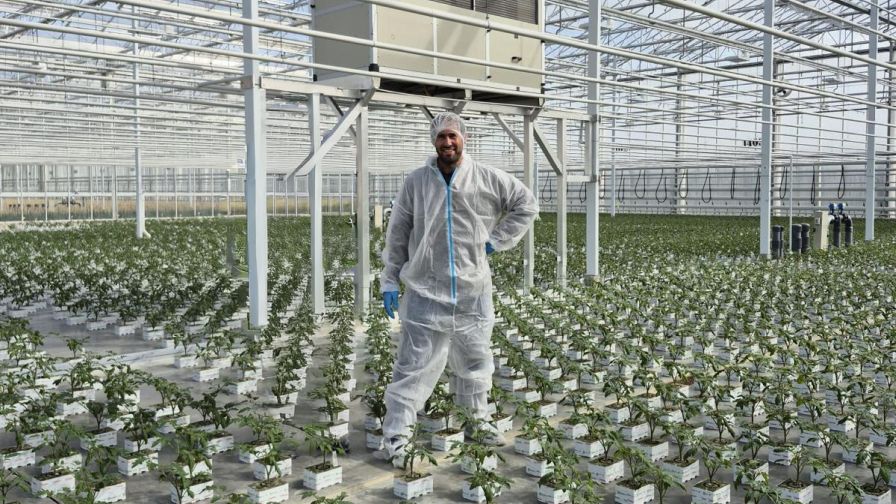
The DryGair DG-12 split system provides both heating and night-time cooling, helping growers maintain precise temperature control in young plant production environments. | Justin van der Putten
As controlled environment agriculture systems evolve, greenhouse HVAC solutions are being designed to function as integrated climate systems rather than independent components. Heating, cooling, dehumidification, and ventilation must work together to maintain consistent crop conditions while managing energy use efficiently.
New ventilation, heating, and climate control technologies are improving airflow management, temperature uniformity, and overall system performance, Rector says. Advances in engineering tools, including computational fluid dynamics (CFD) modeling, allow engineers to simulate airflow, temperature distribution, and humidity control before systems are installed or upgraded, helping optimize system design and performance.
Alternative energy technologies, including heat pumps and solar thermal systems, are becoming part of long-term greenhouse climate strategies as growers seek to improve efficiency and reduce reliance on conventional fuel sources.
Advances in boiler technology, including condensing and low-mass systems, are improving system responsiveness and allowing greater compatibility with emerging energy sources. “Growers are moving toward smarter, more integrated climate control systems,” says Amir Kandlik, Regional Director for North America at DryGair.
As greenhouse systems become more sophisticated, proper design, system integration, and climate management strategies will play an increasingly important role in maintaining crop quality while managing energy and operational costs.
Subscribe to eNewsletter