



The Science of Shade: How Climate, Crop, and Structure Should Influence Decisions on Shading Systems
 August 21, 2025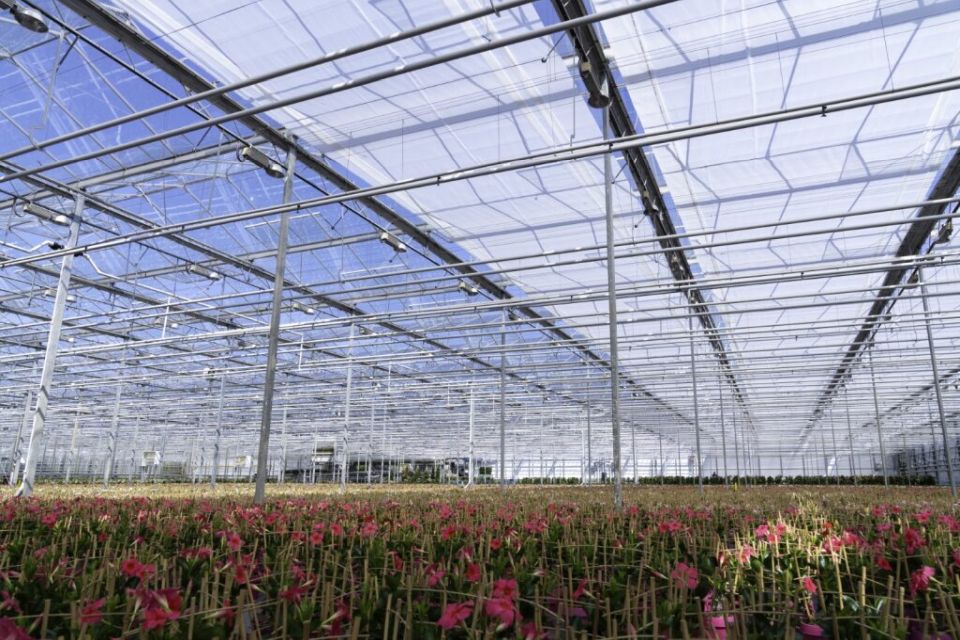
Ludvig Svensson Harmony 2047 FR; Photo: Ludvig Svensson
Choosing the right greenhouse covering or shade starts with understanding your operation’s specific needs — and how each option measures up.
In the second of a three-part series (you can find the first part here), Greenhouse Grower caught up with coverings and shading systems manufacturers to learn more about the main factors growers need to consider when it comes to deciding which covering or shading system is right for them.
“When selecting a greenhouse covering system, growers should consider factors such as climate, light requirements, crop type, and long-term operational goals. In colder regions, maximizing insulation and solar heat gain is crucial, while in hot climates, reducing heat load with filters or shading systems may be more important,” says Eric Moody, Vice President of Sales and Marketing at UbiQD. “Light transmission and spectrum also play a key role. High PAR transmission supports plant growth, but so does the quality of light.”
Unlike filters or shading films, Moody says luminescent films like UbiGro Cover can passively convert UV/blue light into more photosynthetically efficient orange, red, and far-red wavelengths, enhancing growth without sacrificing overall light availability. Additionally, diffused light can boost uniformity, particularly in dense or tall canopies, making diffusion-enhanced films a valuable tool for improving overall light penetration.


“Growers should also consider practical factors such as material durability, lifespan, and maintenance requirements,” Moody says. “Polyethylene films are affordable and widely used, but they typically need replacement every three to five years. In contrast, glass or polycarbonate panels are more durable but can have significantly higher upfront costs. Operational factors, such as installation effort and compatibility with existing structures and systems, can also influence the right choice.”
Ultimately, Moody says, the ideal covering system balances light optimization, energy efficiency, crop performance, and long-term ROI, helping growers get the most from their environment with minimal tradeoffs.
Ludvig Svensson Greenhouse Climate Consultant Paul Arena says the top things to consider are the crop, greenhouse type, local climate, screen system type (hanging or sliding), and climate goals.
“It is important to prioritize the better business decision,” Arena says. “For example, should you prioritize a screen that allows for more energy savings in the winter, or an open structure screen that will provide more airflow and cooler temps in the summer for better quality crops?”
Robert Hanifin, Product Specialist for Ridder, says when it comes to climate screens and curtains, growers need to consider a number of factors:
- The crop being grown: All crops have different climate needs, and a screen will need to fit the crop
- The crop’s optimal climate and light values: E.g. DLI, PAR and radiation (instantaneous light), day and night temperatures, 24-hour temp, humidity, etc.
- The climate goal the grower needs to achieve: E.g. improve energy savings, control light, control temp, etc.
- Site challenges: Too hot in summer, too much light in summer, too high energy bill in winter, etc.
- The external climate affecting the greenhouse
- The greenhouse type: Is there roof ventilation? Supplemental lighting?
Anicea Kervoelen-Saliba, Area Market Marketer North America for Lumiforte, shares additional factors:
- Crop type and light requirements – Ask yourself: Does my crop thrive on maximum sunlight, or does it need protection from high radiation or heat stress? For example, tomatoes, peppers, and roses benefit from high light levels but may need temporary shading during peak summer radiation. Orchids and some potted plants are more sensitive and may need stronger shading. Some crops, like peppers, gerberas, and many cut flowers, perform better under diffuse light, which helps sunlight reach lower leaves, improves photosynthesis, and supports more uniform growth.
- Local climate and seasonal extremes – What are the seasonal light and temperature conditions in my region? If you experience hot, high-radiation summers, you may need a stronger shading layer to protect crop quality. As light levels naturally drop in autumn and winter, consider reducing or removing shading to allow more sunlight for production. Adjusting shading levels throughout the year helps avoid both heat stress in summer and light shortages in winter.
- Production goals – What do you want to achieve? Is the focus on maximum yield, improved crop quality, compact growth. Your goals influence which coating, or combination of coatings, you choose and when you apply or remove them.
- Application method – How will you apply the coating? Options include machine application, helicopter or drone spraying, or manual spraying for smaller greenhouses. Each method has advantages depending on greenhouse size, labor availability, and desired precision. A uniform coating layer gives the best light control and avoids patchy shading.
Frank Giglia, an industry consultant and General Manager of agriculture nets supplier Signature Supply, says there are three questions he asks growers when they are looking for shade net or any coverings:
- What are you growing?
- What structure do you have or are building?
- What do you want to accomplish?
“Once we know these three things, we can inform the grower on their options to maximize PAR light, control temperature range, control light quality and spectrum range,” Giglia says.
One size does not fit all, he also notes.
“The same plant can have different light quality and temperature needs depending on where they are in the growing cycle. The grower must tailor the plants that meet the customer’s needs with the minimum number of variable inputs,” Giglia says. “Employing controlled environment agriculture techniques working with sunlight to create the optimum environments for crops. We work with a large selection of covering materials that use sunlight to dial in photosynthetic light and temperature control to the crops.”
Subscribe to eNewsletter