




Cut Flowers Gain a Following as an Alternative Crop for Farmers
 May 16, 2024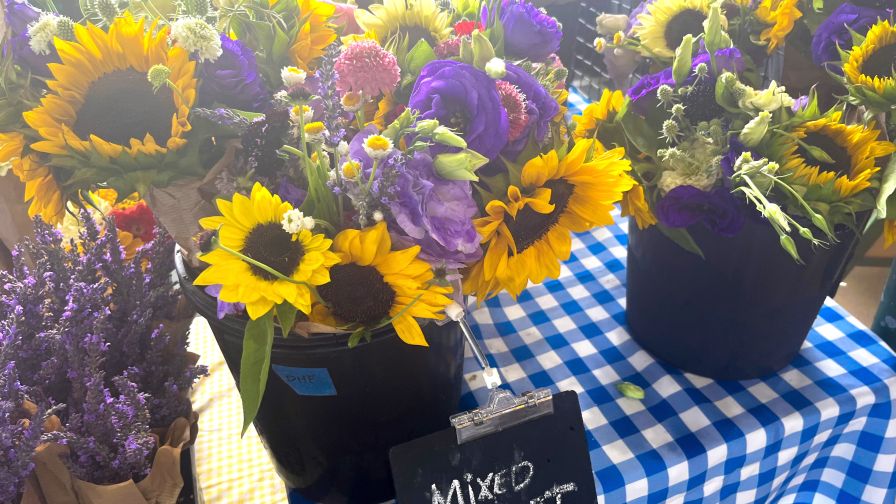
Cut flowers at Farmers Markets | Allan Armitage
Farmers markets have been prime destinations for local growers to sell edible goods such as fruits, vegetables, herbs, spices, and more. However, many visitors to such markets, especially in the Midwest, have likely noticed the growing popularity of floriculture on display. The presence of these plants has allowed shoppers to bring home inside arrangements as well as potted plants for porches and patios. In turn, many farmers are supplementing their standard inventory of produce with fresh-cut flowers as a readily available and alternative crop for on-site and online marketplaces.
Recently, at the 2024 Acres of Opportunity Conference, organized by the Iowa Farm Bureau, Meredith Nunnikhoeven of Barnswallow Flowers in Oskaloosa, IA, spoke about her experience growing and designing flowers for outdoor locales.
Regarding an uptick in floriculture interest among Iowa farmers, Nunnikhoven expressed little surprise, noting that it was simply the market following trends. However, she did caution about proper preparation, especially for farmers unfamiliar with growing flowers.
“Starting to farm a new crop with hundreds of species is extremely overwhelming, especially if you’re not armored with a toolkit of information, knowledge, and mentorship,” she says. “I’ve seen flower farms go under in five years because of this.”
Still, because of this fact, she was grateful for the opportunity to speak and guide farmers considering a business move into the floriculture industry toward success.
“(This) was my chance to help provide these farmers with applicable information in order to grow the industry for the betterment of all.”
Popular Flower Varieties for Farmers Markets
Data collected by the Iowa Farm Bureau points to the following varieties as standouts in popularity:
- Asiatic lilies
- Daffodils
- Dahlias
- Lisianthuses
- Marigolds
- Peonies
- Tulips
- Zinnias
Each of the preceding varieties has different growing seasons, ideal weather conditions, and other boons that make them favored among consumers. For example, daffodils tolerate cold well and then bloom in spring, while zinnias thrive in the heat and have a mid-summer flowering period.
“Never assume. Know the weather, research, test and develop, plan to save financially (and) don’t quit when the going gets tough,” says Nunnikhoven, advising the importance of groundwork into whichever varieties farmers choose.
However, she also pressed newcomers not to be discouraged by missteps, as failure is a common contributor. “Failure is a part of that learning process and can be disappointing. When you are trying to farm not just one flower crop, but many, the work in this area of education will eventually pay off.”
Educating Midwest Farmers in Floriculture
Throughout the 2024 Acres of Opportunity Conference, Nunnikhoven pressed the need for trial and error at the outset. “I personally don’t do anything on a large scale that will affect me financially until I can actually trial it myself and see another operation doing it successfully,” she says.
Additionally, she posed that the biggest challenge to overcome is further education, as Iowa and other Midwest-area farmers aren’t as familiar with the practical and business aspects of the industry compared to many large-scale and experienced growers on the West and East Coasts.
“Iowans are woven from the same cloth that exudes ‘seeing is believing,’ so it will take some time for our community to grow. This is not a get-rich-quick industry and requires a lot of talent to not only grow but design and sell a product if you are a farmer florist.”
Subscribe to eNewsletter
