


Planning for Plant Succession in the Nursery and Garden
 March 20, 2025
 At this time of year, most plantsmen and plantswomen are dreaming about the first flowers they’ll see in the coming month or so. While these often take the form of bulbs like snowdrops or daffodils, some perennials enter the fray quite early in the growing season. Last year, our hellebores (Helleborus sp.) began flowering the first week of March and our moss phlox (Phlox subulata) were blooming by the end of March. Although these early bloomers are each wonderful in their own way, they’re no more special than many later-blooming taxa. So why do we look forward to them so much in particular? Because we’re eager for any color once winter loosens its grasp on our gardens.
View all
While anticipating our gardens during the bleak days of winter, many of us veer off track by August (if earlier, shame on you). It’s all too easy to fall behind and give up on garden care after a vacation getaway or other distraction. Whatever the reason, this means we’re leaving months of botanical interest on the table. Indeed, some plants don’t even begin to put on much vegetative growth until June, with budding and blooming following far later. Though these perennials and warm-season grasses may seem late to the party, they complement the plants that peak early and start to subside during the beginning of summer. Just because we’ve already enjoyed a couple months of flowers by June doesn’t mean we should give up on the rest of the year quite yet.
Early bloomers are easy to sell as gardeners flock to garden centers with renewed enthusiasm after a long winter. Planning for succession throughout the growing season requires foresight and self-control during the spring shopping season. Nurseries could likely do a better job educating their consumers on this topic rather than pushing whatever is immediately available at a given time. This could lead to greater total sales spread over a longer part of the year, potentially alleviating the stress of having everything ready for sale around May (or whenever the last frost date is predicted). And as always, it is up to nurseries to supply these plants if we’re ever to create a demand for them since gardeners don’t want what they don’t know even exists.
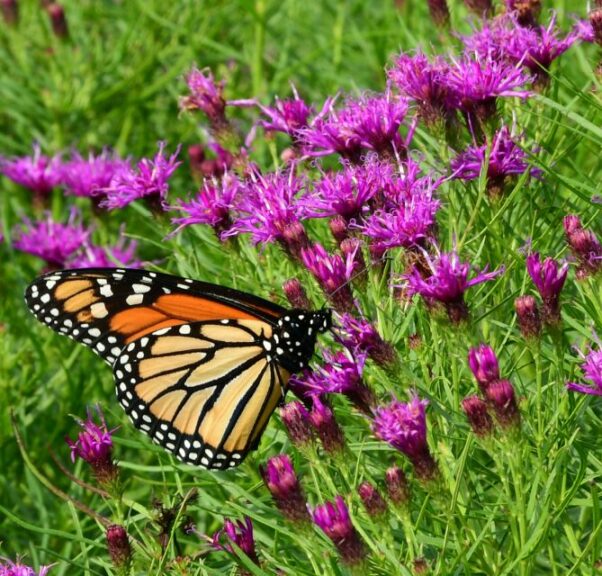
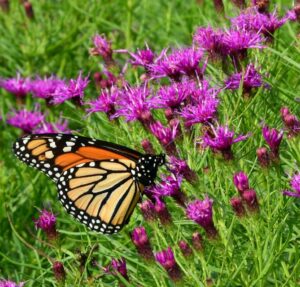
Beyond prolonging the season of interest, later bloomers also benefit pollinators. Bees, hummingbirds, and other pollinators do not retire during the dog days of summer if there aren’t many flowers around. Rather, they persist and scavenge for whatever pollen and nectar sources they can find, often for longer than one would expect. When I see monarch butterflies on our ironweeds (Vernonia sp.) in October, I often ask them “Shouldn’t you be on your way south by now?” Native species and their cultivars benefit a greater array of pollinators with the proper nutrition they need, but even some exotic plants can benefit pollinators in the absence of other sustenance from late summer through fall.
Below are a handful of taxa that bloom during the latter half of the growing season. By utilizing them in conjunction with earlier bloomers, we’ve observed consistent flowering for roughly nine months of the year at the Chicago Botanic Garden, an impressive feat in a relatively cool climate.
Asclepias incarnata (Swamp Milkweed)
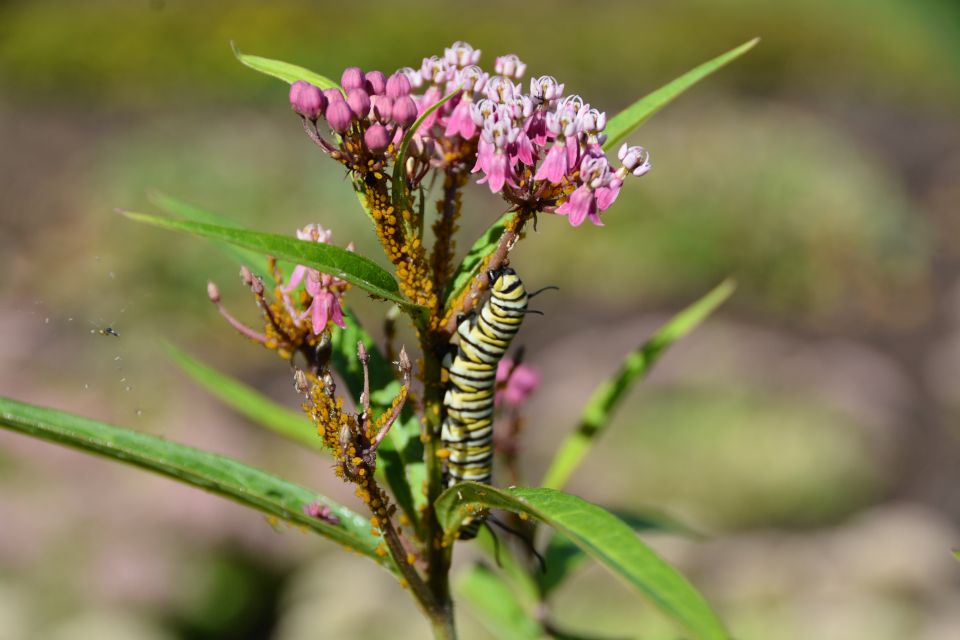
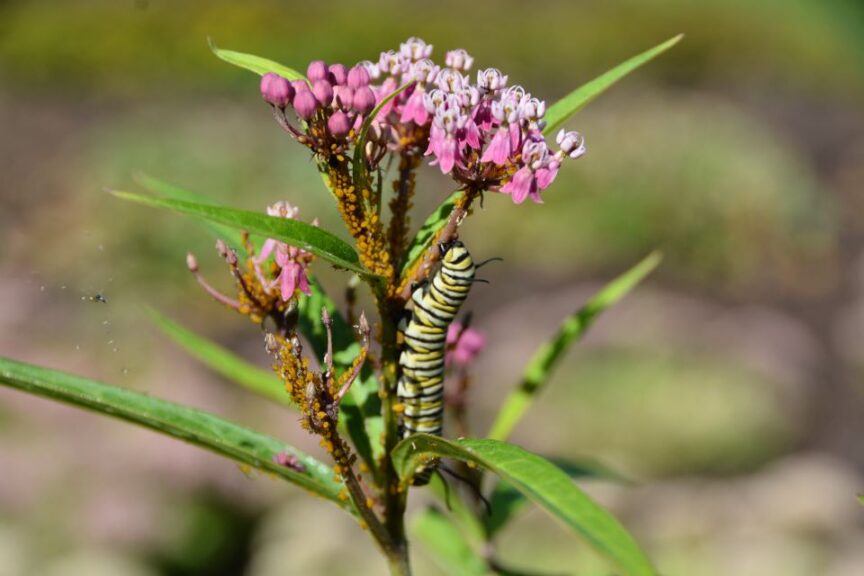
Many species of milkweed would suffice for this piece, but A. incarnata is a personal favorite, combining several desirable traits. Native to most of the U.S., it blooms slightly later than other common species (in mid to late summer), has beautiful pink flowers borne in umbels, and supports monarch butterfly caterpillars. As a bonus, it thrives in wet conditions and can fill in swampy areas where other plants would falter.
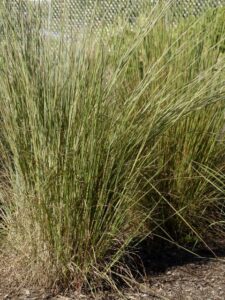
Schizachyrium scoparium (Little Bluestem)
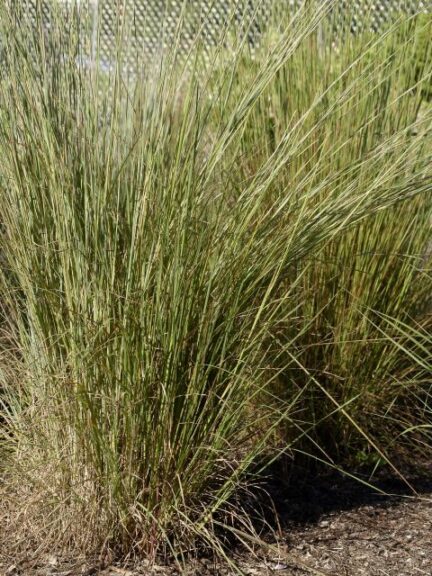
Also native to most of the U.S., this warm-season grass is a bit slow to start the year but rewards gardeners with interest later in the year. It begins flowering in mid to late summer and follows its flowers with a myriad of fall colors. This species has a rounded mounding habit, stays upright throughout the year, and is adaptable to different soil and moisture conditions. Many cultivars are available in different sizes and summer and fall colors. ‘Blaze’ is a smaller cultivar with arguably the reddest fall color, and it is more than 50 years old!
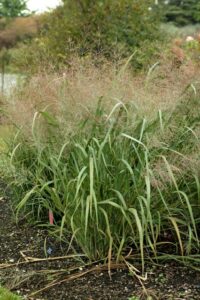
Panicum virgatum (Switchgrass)
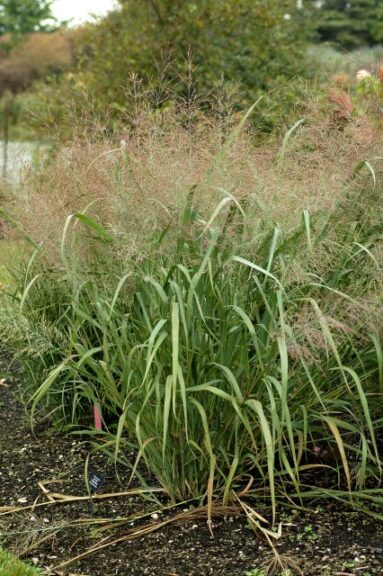
Like little bluestem, switchgrass is native to most of the U.S. and common in prairies. While switchgrass looks best at peak bloom in late summer, it is also desirable before and after bloom due to its fine foliage and orange fall colors. Many cultivars in varying colors and sizes, ranging from just 3 feet up to 8 feet tall, are available. Few herbaceous plants are as iconic as this species in the American landscape, and it functions well as a focal point or as a foil for other foliage textures.
Vernonia sp. (Ironweed)
Several species of ironweed are available for cultivation, and most bloom later in the year, either in late summer or fall. Flower heads are abundant and typically purple but sometimes white. Many species reach peak bloom in late September or October and provide pollinators with food at a time when most garden plants are weeks to months past flowering. A handful of cultivars (often interspecific) are available, and my favorite is ’Summer’s End’, bred by my predecessor at the Chicago Botanic Garden.
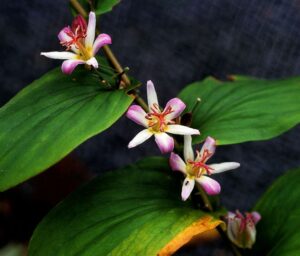
Tricyrtis formosana and T. hirta
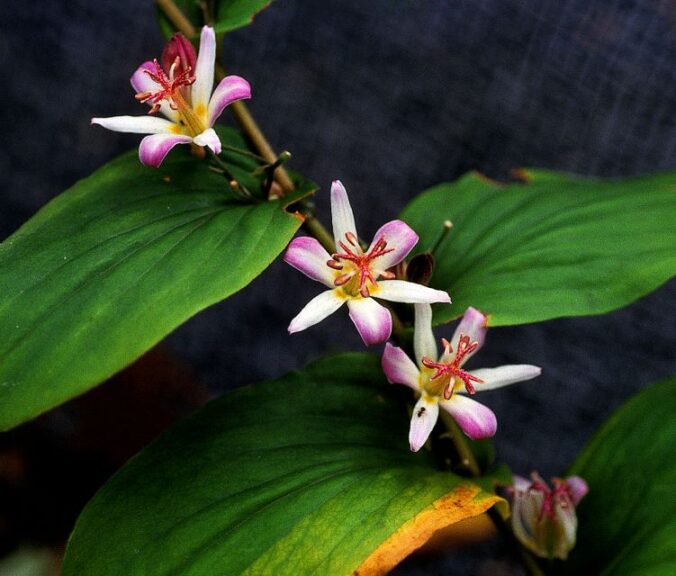
Though not a native plant (found mostly in Japan and Taiwan), toad lilies are great for providing late season blooms in shady sites. Many cultivars in the marketare either T. formosana or T. hirta (or hybrids of both), the former having an upright habit and the latter an arching habit. Flowers are sometimes too small to be conspicuous but are beautiful for those who notice them. ‘Tojen’ has performed well at the Garden and lacks the spotting commonly found on the tepals of other toad lilies.
Chrysanthemum sp.
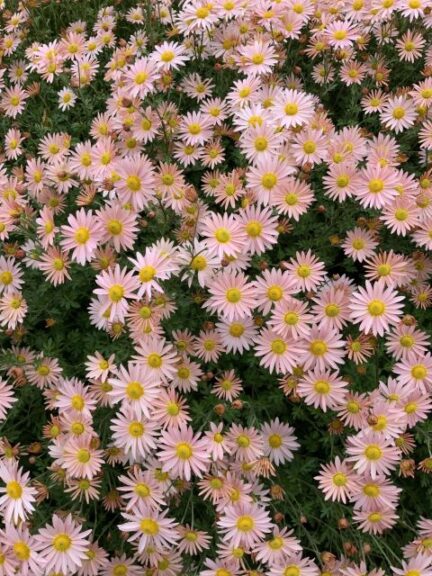
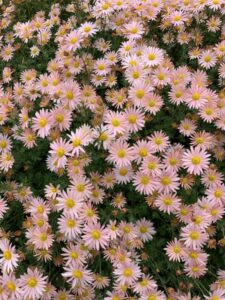
When most people think of mums, they think of the small pots with abundant blooms that functionally serve as annuals. Save yourself the trouble of buying these mums every year and give the perennial form a permanent spot in your garden beds, as is deserved. Plants in our evaluation trial are robust, reaching up to 42 inches tall and wide. Intricate, lacey green foliage emerges in July before flowers blanket plant canopies in the fall, with some cultivars continuing until a hard frost hits. ‘Hillside Sheffield Pink’, though old, is one of the best cultivars in a trial that draws visitors by the hundreds each fall. We’ve seen it bloom well into November, when just about everything else has retired for the year.
Subscribe to eNewsletter