



Perennial Precision: Modern Strategies for Greenhouse Success
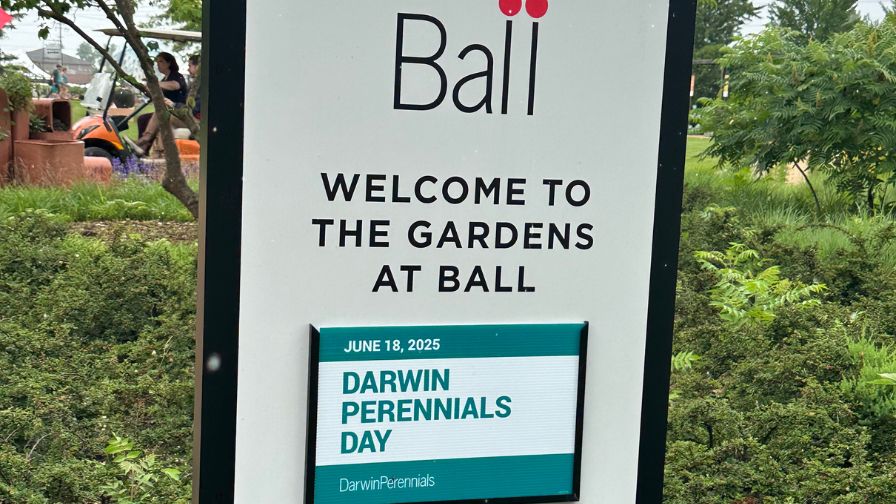
Darwin Perennials Day, North America’s premier perennial event, took place on June 18 in The Gardens at Ball in West Chicago, IL. The event connects perennial growers, garden center businesses, and professional landscapers with top plant suppliers across North America. | Melinda Taschetta-Millane
In today’s evolving horticultural landscape, perennial growers are facing tighter margins, labor shortages, and weather unpredictability. But with those challenges come opportunities — especially for growers willing to fine-tune their production practices.
At a recent industry panel held during Darwin Perennials Day, held at The Gardens at Ball in West Chicago, IL, perennial experts Chris Fifo, Produce Representative for Darwin Perennials; Drew Koschmann, Head Grower at Walters Gardens; and Dr. Nathan Jahnke, PhD, Culture Research Manager for Ball Seed, shared production insights that greenhouse growers can implement immediately. Their common thread? Precision isn’t just about technology — it’s about dialing in every step of the process to make smarter, more profitable decisions.
The Root of the Matter: Getting the Start Right
Chris Fifo has made a career out of helping growers identify problems before they become disasters. His key takeaway? It all begins with how plugs or bare roots are handled from the moment they arrive. “So many issues begin with poor transplanting,” he says. Too often, plants are mishandled — plug crowns are buried too deep, roots are overwatered, or transplants are delayed.
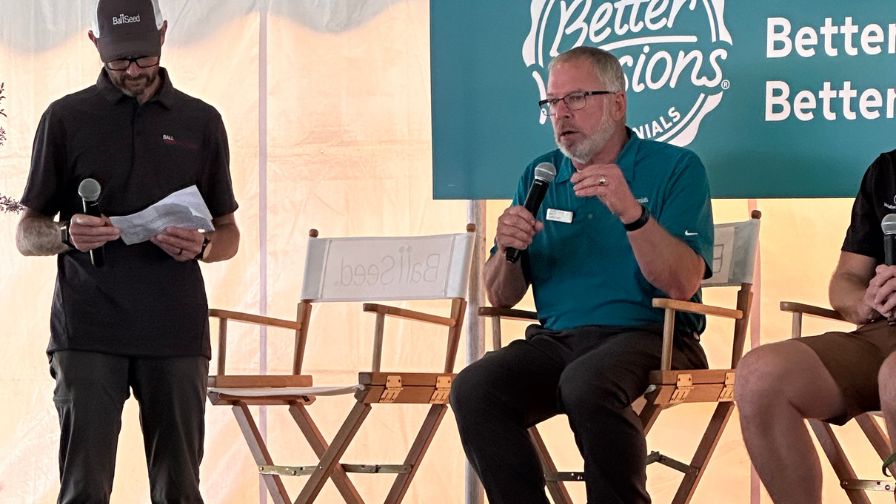
Chris Fifo is a long-time head grower turned industry advisor, and travels North America helping growers troubleshoot problems and adopt new perennial genetics. With decades of hands-on experience, he is known as a “perennial guru,” dedicated to ensuring growers’ success through coaching and product support. | Melinda Taschetta-Millane
Getting the start right means more than just following protocols — it’s about precision and timing. Plugs should be transplanted immediately or held at proper temperatures if delayed. Moisture should be kept evenly distributed, but not saturated. The crown should remain above the media line. “You can’t shortcut the start,” Fifo emphasizes. Poor early decisions can lead to disease, delayed growth, or total crop loss.
Rethinking Growth Control: Less Labor, Better Results
From his position overseeing perennial greenhouse operations at Walters Gardens, Drew Koschmann sees firsthand how labor and scheduling pressures affect outcomes. One of his favorite efficiency tricks is counterintuitive: do less. Specifically, he promotes a “no pinch” approach for summer crops.
“Pinching adds stress, slows down flowering, and burns labor hours,” Koschmann explains. Instead, he recommends using plant spacing, temperature regulation, and light control to guide plant architecture naturally. If a variety has compact genetics or can be bulked quickly, why waste time and money on unnecessary manual labor?
This strategy is especially valuable during peak summer, when labor shortages and high heat make it harder to stay on top of tasks. It’s a reminder that good crop management doesn’t always mean more input — it often means smarter input.
Smarter Use of PGRs: Timing is Everything
Dr. Nathan Jahnke brought a scientific perspective to the conversation, urging growers to rethink their use of plant growth regulators (PGRs). He sees frequent mistakes around misapplication and overuse — especially when growers treat all seasons the same. “The same PGR rate that works in February might delay your flowering in May,” he cautions.
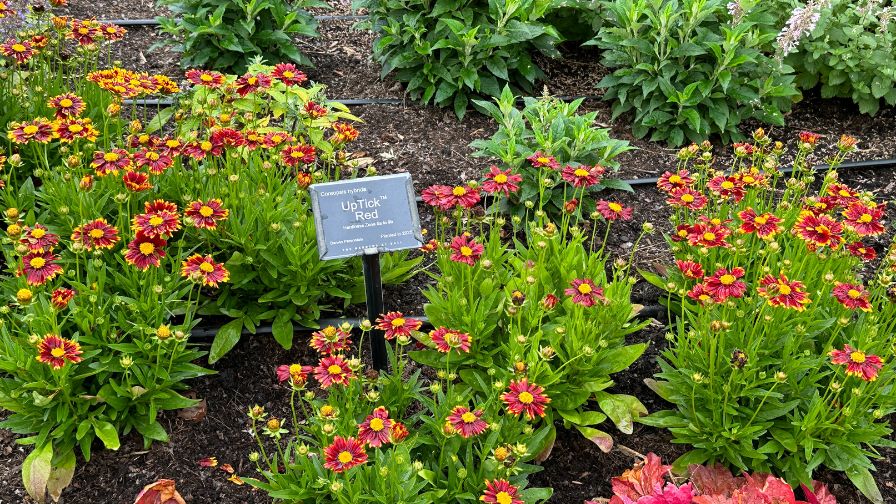
Coreopsis hybrida ‘UpTick Red’ is part of the Best of Darwin Garden that is featured at The Gardens of Ball. | Melinda Taschetta-Millane
The key is to treat PGRs like precision tools, not blunt instruments. Growers should document what they apply, when, and under what conditions — and test on a small batch before going full-scale. Seasonal behavior matters. So does variety response. Jahnke encouraged growers to create a data loop, tracking plant response over time. That information becomes your competitive edge.
Water: A Silent Risk and an Untapped Opportunity
If there’s one universal truth in greenhouse production, it’s that overwatering kills more crops than underfeeding. The panel unanimously agreed: most greenhouse root and crown issues come down to too much water, too often.
Whether it’s during early establishment or winter dormancy, precision irrigation is essential. Use moisture sensors if possible. Train staff to look at plant need, not just schedule. Avoid creating anaerobic conditions that lead to root rot and poor nutrient uptake. Invest in well-draining media and consider elevating pots or benches to promote air movement.
“The plant will tell you when it’s thirsty,” Fifo says. “But you have to be watching.”
Tech That Works: Don’t Be Afraid to Start Small
Automation is gaining ground in perennials, but Koschmann advises growers not to get overwhelmed. “Start with one small tool that solves a real problem,” he says. Bluetooth sensors that monitor soil moisture or climate can help flag issues before they spiral out of control.
Integrated systems like climate-controlled irrigation or crop-tracking dashboards are becoming more accessible, even for mid-size operations. For growers ready to scale, these tools offer both time savings and data clarity. But Koschmann stressed that even low-tech fixes — like better spacing charts or standardized labor routines — can have a big impact on consistency.
Preparing for Dormancy: Fall Moves That Make Spring
One of the most overlooked aspects of perennial production is dormancy preparation. According to Fifo, many growers treat overwintering like a passive phase, when in fact it’s full of risks.
Perennials that enter dormancy in poor health rarely emerge strong. Growers should begin adjusting nutrition, irrigation, and climate controls in early fall. That means reducing nitrogen, gradually drying down media, and monitoring both air and soil temperatures closely.
Structure maintenance also matters — especially when it comes to airflow, snow load, and zone labeling. “You need to know what went in, what zone it’s in, and how it’s doing through the winter,” says Fifo. “You can’t manage what you don’t measure.”
Adapting to Climate Change: Resilience Over Routine
The effects of climate change are no longer theoretical for greenhouse growers. From unpredictable frost dates to intense rain events and extended heatwaves, weather volatility is impacting perennials across the board.
Jahnke emphasized the need for adaptive thinking. New genetics are more resilient than ever, but their success depends on how they’re managed. For instance, some plants that once required chilling now flower with minimal dormancy. Growers need to observe and trial these changes in real-time.
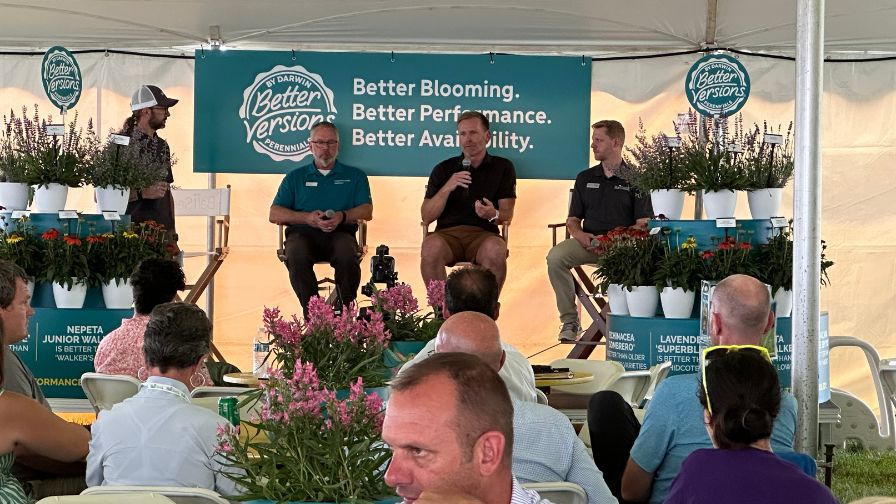
A panel of experts presented during Darwin Perennials Day, hosted by The Gardens at Ball in West Chicago, IL. The panel, moderated by Bill Calkins, Product Marketing Manager at Ball, included (from left) Chris Fifo, Produce Representative for Darwin Perennials; Drew Koschmann, Head Grower at Walters Gardens, and Dr. Nathan Jahnke, PhD, Culture Research Manager for Ball Seed. | Melinda Taschetta-Millane
This is also where communication with suppliers becomes crucial. “Don’t assume what worked five years ago will work today,” Jahnke advises. “Be ready to shift your playbook.”
A Culture of Curiosity: Listening to the Crop
If there was one unifying theme from the panel, it was the call to stay curious and stay engaged. All three speakers stressed the importance of ongoing observation, record-keeping, and collaboration.
Too often, growers push through problems without asking for help. But as Fifo puts it, “Sometimes the best investment is a second set of eyes.” Whether it’s a supplier, a crop consultant, or a fellow grower, a fresh perspective can make the difference between a disappointing season and a breakout one.
Ultimately, success in perennials isn’t about chasing the newest gadget or input. It’s about doing the small things a little bit better, every day. And that’s where the real margin lives.
Final Takeaway: Precision Pays Off
Perennial growing doesn’t reward shortcuts — but it does reward growers who pay attention, adapt with the seasons, and never stop asking “What if we tried this?” From smarter water use to simplified pruning strategies, there are countless ways to produce better plants more efficiently.
In a market that values consistency and quality, growers who fine-tune their practices and embrace innovation — without abandoning the basics — will be the ones who thrive.
Subscribe to eNewsletter