



Enhancing Fall Flower Production Through Targeted Weed Management
 July 10, 2025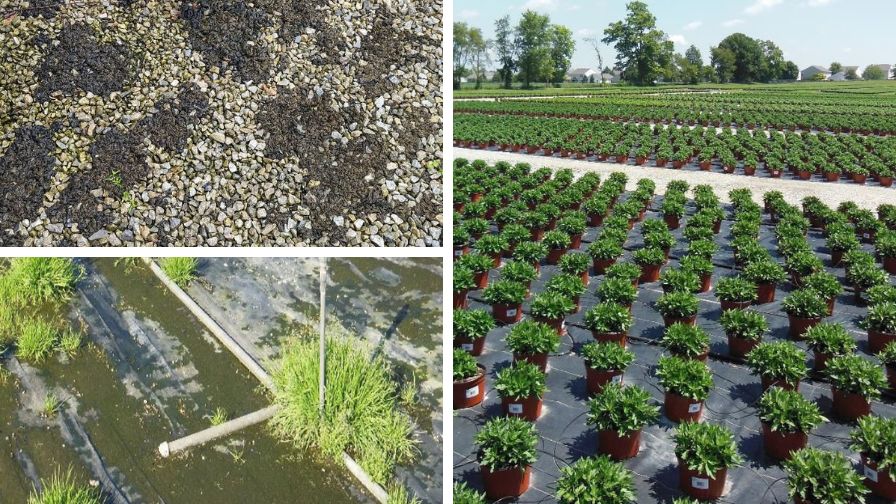
(Clockwise from top left) A gravel container pad infested with nostoc, outdoor production containerized garden mums grown on woven black groundcover and free of weeds, and Container pad with persistent weed problems. | Dr. W. Garrett Owen, The Ohio State University
In a recent e-Gro Alert, The Ohio State University’s W. Garrett Owen discusses effective weed management strategies, including proactive removal and careful herbicide application options. Here are some of his suggested practices that effectively control the spread of weeds while minimizing risks to floriculture crops to ensure optimal plant uniformity and production efficiency.
Weed Management Control Strategies
Proactive Weed Removal
According to Owen, the “hand removal of weeds is a foundational and proactive strategy for effective weed management in greenhouse and outdoor container production.” Consistent and targeted hand weeding is a highly effective option for reducing the prominence of weed seeds, especially “in areas where chemical herbicides must be minimized or avoided.” Owen notes that while this is one of the most labor-intensive options at a grower’s disposal for weed control, its use often reduces or eliminates the need for herbicide applications, thereby minimizing the risk of plant injuries from chemical control.
Sanitation Practices
Sanitation is key to minimizing weed pressure in production areas. According to Owen, this involves “inspecting and weeding new plant material before transplanting, as well as removing weeds from gravel or container pads, non-crop areas, and surrounding surfaces.” A part of proper inspection includes regular scouting of the production environment to identify the presence of weed species early, and from there selecting the most effective control methods based on their level of growth and location.
Flame Weeding for Gravel Pads
“Flame weeding is an effective non-chemical method for managing weeds on gravel pads,” which uses heat to quickly kill weed seedlings. Owen explains that this method is “best suited for gravel or other paved surfaces,” where weeds can be targeted without causing damage to nearby crops or equipment.
Chemical Control
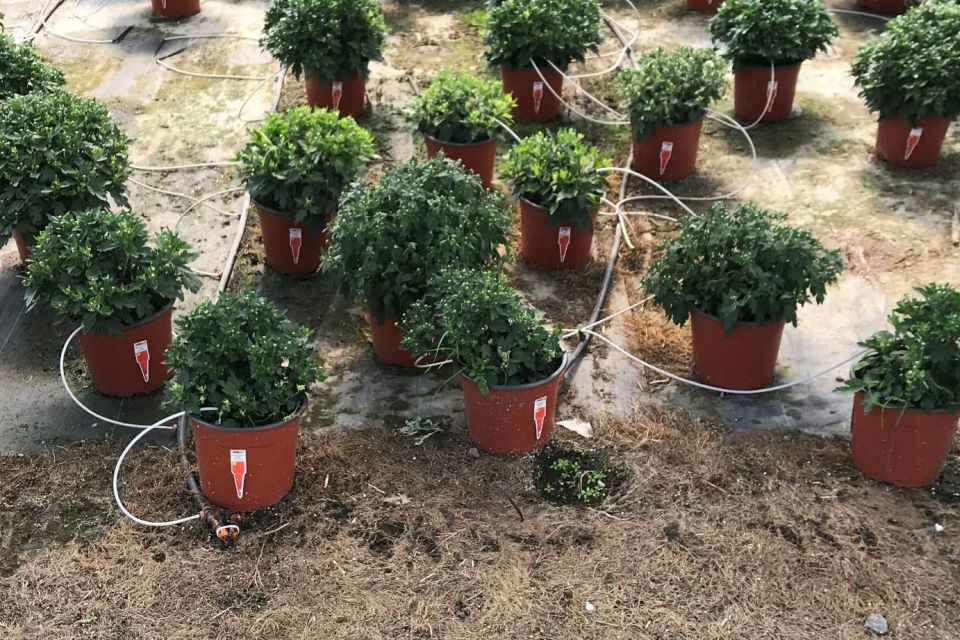
Example of a greenhouse grower that used an herbicide to control weeds at the transition zone between gravel and an outdoor container pad. | Dr. W. Garrett Owen, The Ohio State University
“General herbicide use in container production requires careful consideration to ensure effective weed control while minimizing risks to crops and the environment.” That includes:
- Calibrating application equipment to deliver accurate doses.
- Considering environmental factors (wind, temperature, humidity, substrate conditions) to prevent drift and volatilization.
- Following all label instructions regarding application rates, safety protocols, and timing.
- Keeping records to track observed effects on crops.
- Rotating herbicide modes of action to prevent resistance.
- Selecting herbicides registered for the U.S. state of residence.
- Selecting herbicides that are labeled for ornamental plant use.
For additional information and insights on integrated weed management strategies for outdoor floriculture crop production, including the best practices of using both per-emergent and post-emergent herbicides, please read the full e-Gro (Electronic Grower Resources Online) alert “Strategies and Guidelines for Herbicide Application During Outdoor Fall Crop Production.” Additional and current e-Gro alert pieces from Volume 14 (2025) can be found online.
Subscribe to eNewsletter