



How to Boost Greenhouse Weed Control with Non-Chemical Solutions
 September 25, 2025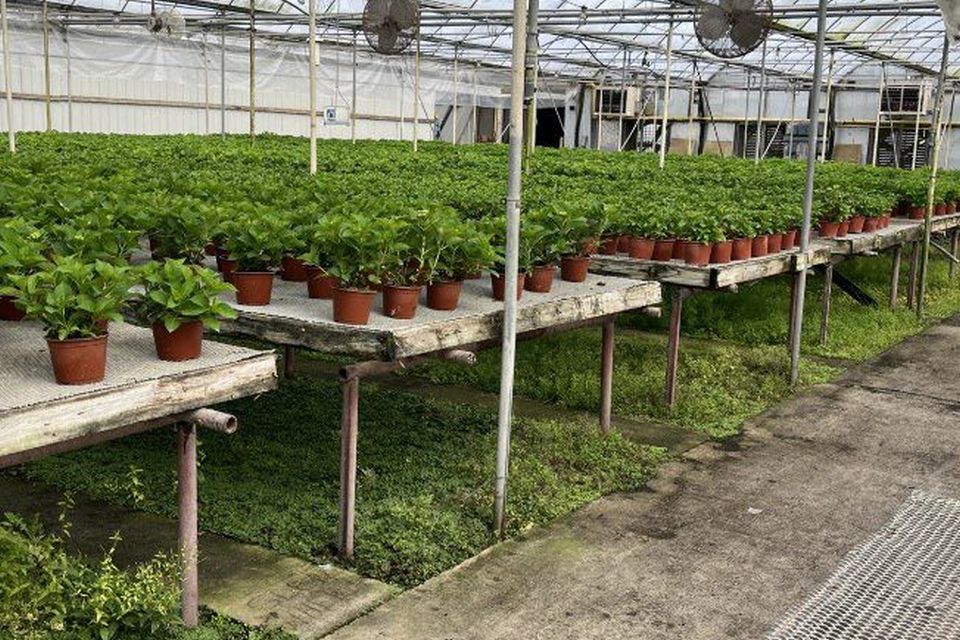
Heavy weed infestation under the benches inside a commercial greenhouse. | Debalina Saha, Department of Horticulture, Michigan State University
In a recent e-Gro Alert, Debalina Saha and Carolina Fitzgibbon of Michigan State University (MSU) cover non-chemical weed control strategies that growers can employ, both as an alternative or supplement to traditional chemical controls, to ensure greenhouse crops maintain their health, and in turn their market value.
Common Greenhouse Weeds and Their Hiding Spots
First, Saha and Fitzgibbon list off some of the most common weeds that controlled-environment growers in “greenhouses, hoophouses, propagation houses,” and other enclosed structure operations have to deal with, including:
- Hairy bittercress (Cardamine hirsuta)
- Liverwort (Marchantia polymorpha)
- Spotted spurge (Euphorbia maculata)
- Yellow woodsorrel (Oxalis stricta)
Before any kind of control practices are implemented, the weeds first need to be found and identified within the structure. Weeds can be found in many spots, some obvious and some less so. Some of the many places to check include:
- Benches: On, underneath, or within if there are big enough cracks and open spaces.
- Containers: Both near the top in the growing media, competing directly with crops, and at the bottom and sides, clogging drain holes.
- Floors: As opposed to concrete floors, ground-cloth floors pose a higher risk of weed infiltration.
- Liners and stock plants: Even before being put in a container, weeds can make a home within your greenhouse or nursery stock.
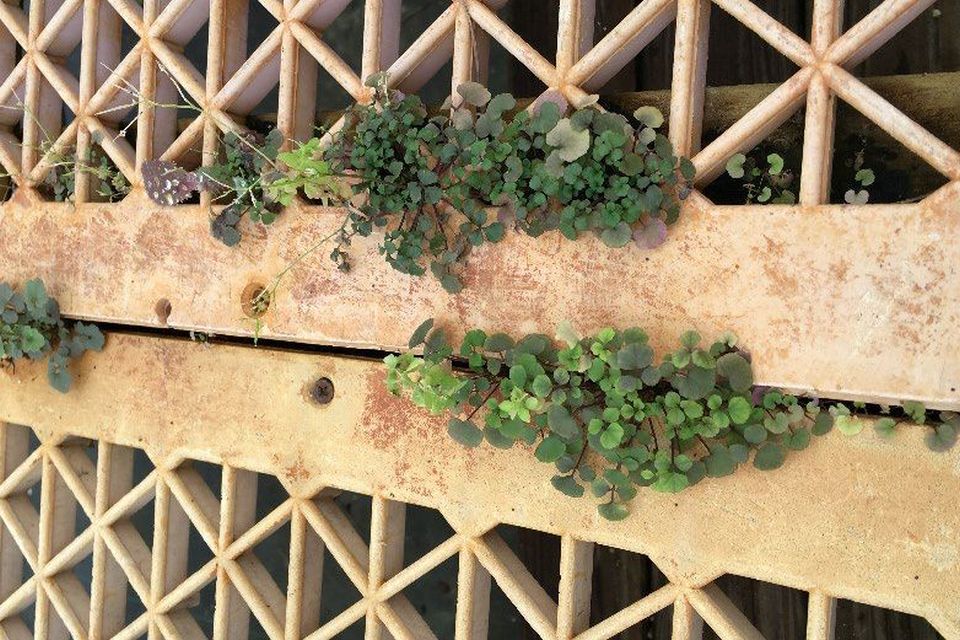
Weeds growing on the greenhouse benches inside greenhouse conditions. | Debalina Saha, Department of Horticulture, Michigan State University
Sanitation Practices and Preventive Measures for Greenhouse Weeds
The first crucial step in comprehensive weed control is adopting preventative measures and ensuring thorough sanitation practices. Saha and Fitzgibbon state that “It is recommended to use clean and sterile substrate or media for growing ornamentals. The tools and equipment need to be cleaned thoroughly each time they are being used to make sure that there are no weed seeds attached to them. Greenhouse workers should maintain proper sanitation practices and are recommended to disinfect their shoes/boots and gloves thoroughly, as weed seeds can get dispersed via human beings.”
Other areas to secure and sanitize to ensure optimal weed control include:
- Coverings: Weed barrier fabrics on floors and under containers can help reduce weed seed germination.
- Shipments: Examine new shipments of plant materials and equipment before allowing them in.
- Storage areas: Ensure storage areas are free of weeds to prevent spread to bulk goods (media, liners) and equipment (empty containers, racks).
- Vents and fans: Screen attachments can help reduce the amount of wind-borne seeds from entering.
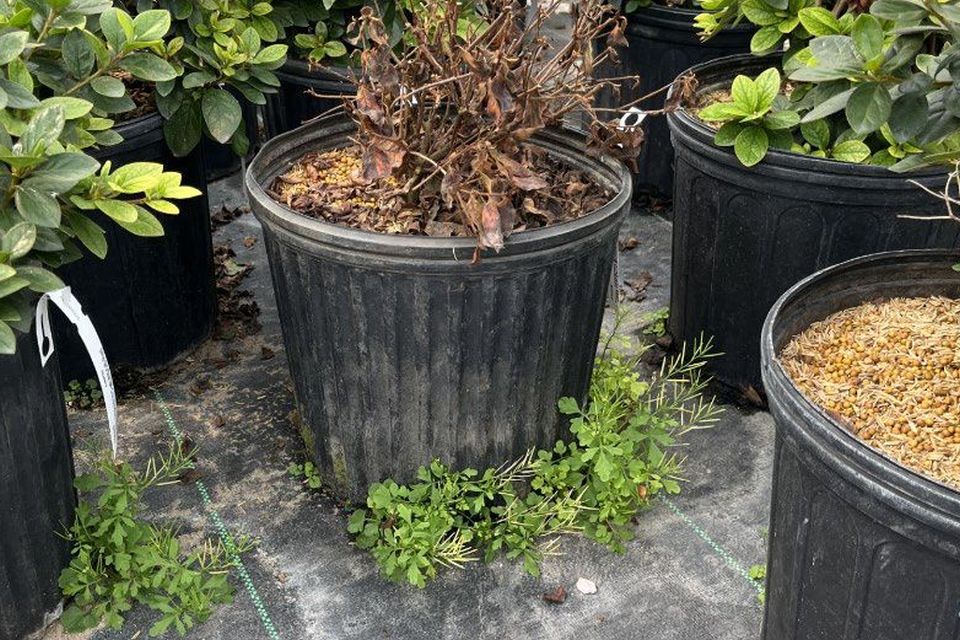
Weed barrier fabric can reduce weed seed germination to certain extent. | Debalina Saha, Department of Horticulture, Michigan State University
Saha and Fitzgibbon also propose the options of solarization and steam sterilization.
Solarization involves emptying a greenhouse and turning off all irrigation, causing weeds to dry, wilt, and die, before removing the weeds by hand. This process can also be done for growing media within containers by covering them in plastic to trap in heat and then monitoring soil temperatures to a level that kills potential weed seeds.
Steam sterilization involves using steam emitter hoses or manually operated surface steam systems to increase soil temperature. However, “Once sterilized, steamed media should be covered and used within a week because it can be reinfested while stored.”
Cultural Weed Control Practices
Greenhouse water management can be crucial to curtailing weed germination and growth. “Algae, moss, and liverwort all thrive in moist conditions and therefore overwatering can lead rapidly to their growth and spread of these weeds on container media, particularly on crops with long production times.” Additionally, rather than affecting plant health and market value, some of these weeds can contribute to safety risks, as many types of algae create slippery surfaces. Additionally, beyond irrigation, humidity levels must be considered, as excess moisture brought by this manner also exacerbates weed germination. Beyond adjusting levels to prevent overwatering, proper plant spacing, drainage spots, and ventilation can address high moisture levels.
For additional information on non-chemical weed management, including the benefits of adding manual hand-weeding and outdoor weed control to regimens, please read the full e-Gro (Electronic Grower Resources Online) alert “Non-Chemical Greenhouse Weed Management Strategies.” Additional and current e-Gro alert pieces from Volume 14 (2025) can be found online.
Subscribe to eNewsletter