



How to Ensure Your Greenhouse Heaters are Winter-Ready
 November 18, 2025
 In a recent e-Gro Alert, W. Garrett Owen of The Ohio State University covered the importance of preseason inspections for unit heaters in greenhouses and garden centers to ensure that they’re ready to operate efficiently and safely without issue, protecting and ensuring healthy winter crops.
From the spring to fall season, greenhouse heaters can often sit idle, unused, and forgotten. During that time, they can collect an obscene amount of dust, plant debris, and even be a target for bird nests and other animals. Additionally, many other issues may arise with heaters since their last use, such as line disconnections or other pieces of equipment, such as coverings, being set up in their way. Therefore, it’s important to ensure that a greenhouse’s heaters are properly checked over and inspected before being turned on again, lest a grower’s overwintering and seasonal plants be negatively affected.
Physical Installation Issues
Owen recommends that the first step should be ensuring that “the heater is still firmly attached to the truss, post, or wall bracket and that vibration or summer work has not loosened hardware.” Additionally, check “clearances to poly, shade cloth, energy curtains, hanging baskets, and temporary plastic walls.” Lastly, examine the target of discharged (heated) air, so that it’s not blocked and is supplied evenly throughout the production environment instead of being directly aimed at one target.
Fuel Line and Piping
Start by tracing “the fuel line from the heater back to the source.” From there:
- Check propane tank (if applicable) for fuel levels and positioning.
- Confirm manual shutoff valves are open, accessible, and clearly labeled.
- Look for dislodged and/or stressed connectors.
- Inspect piping for corrosion.
Throughout this process, if you smell gas or suspect a leak, “stop and call your fuel supplier,” as that can lead to:
- Excess moisture
- Incomplete combustion
- Plant injuries from ethylene
Electrical and Control Wiring
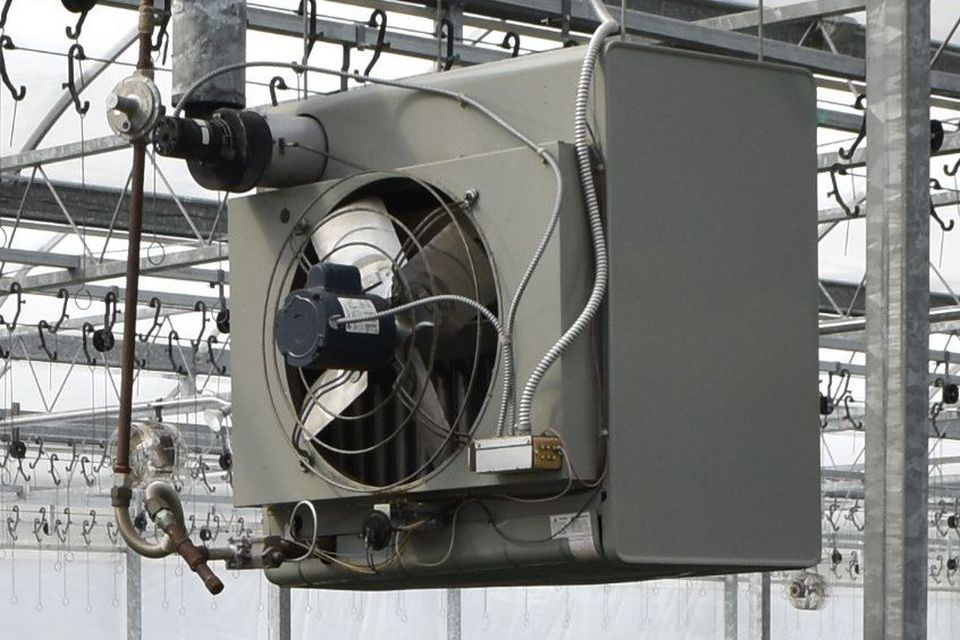
Inspect unit heater electrical wiring and connections to ensure no wires were accidentally pulled loose while the unit sat idle from late spring through fall. | Dr. W. Garrett Owen, OSU
Owen recommends looking for wires that may have been “accidentally pulled loose” as well as to inspect and “tighten electrical connections.” Additionally, the heater’s service switch should be “on and labeled.” For greenhouses with multiple heaters in a single zone, “confirm that each thermostat is mounted where it senses representative air and is not in the heater discharge path.”
Cabinet, Fan, and Burner Area
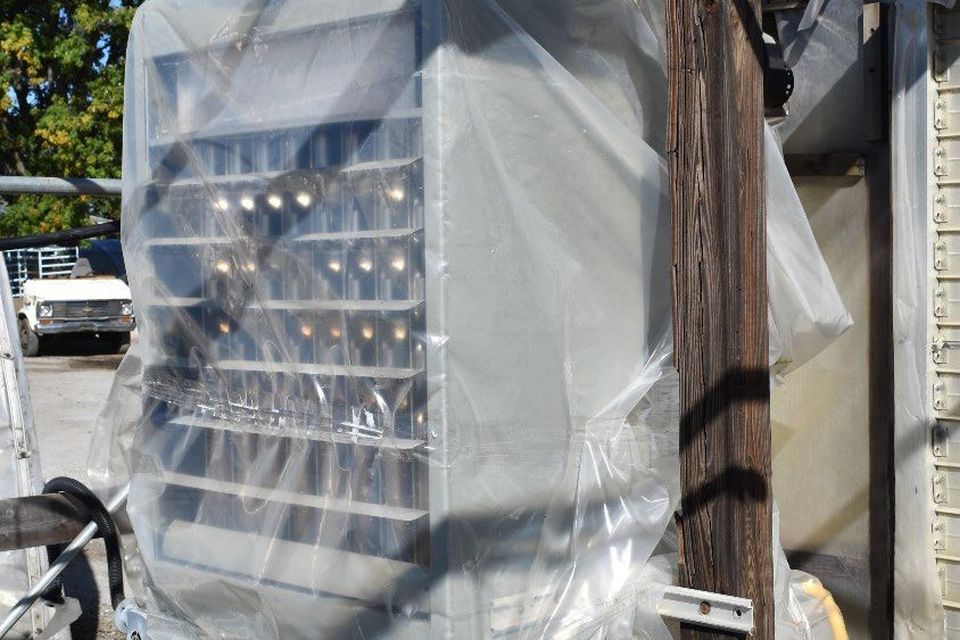
Example of covering a unit heater during the summer months with poly when the greenhouse glazing material was removed. | Dr. W. Garrett Owen, OSU
From the heater’s cabinet, fan guard, and burner compartment, growers will need to “remove dust, leaves, insect parts, and plant debris,” among anything else clogging or cluttering up the parts. For an extra buffer to mitigate plant debris and material and prevent entry from large insects and birds, “some growers place metal screens over the front of the heater cabinet.”

For additional greenhouse preseason heating checklist and inspection items to cover before test firing, please read the full e-Gro (Electronic Grower Resources Online) alert “Preseason Checklist for Greenhouse Unit Heaters.” Additional and current e-Gro alert pieces from Volume 14 (2025) can be found online.
Subscribe to eNewsletter