



Mastering Nematode Management for High-Value Ornamental Crops
 December 1, 2025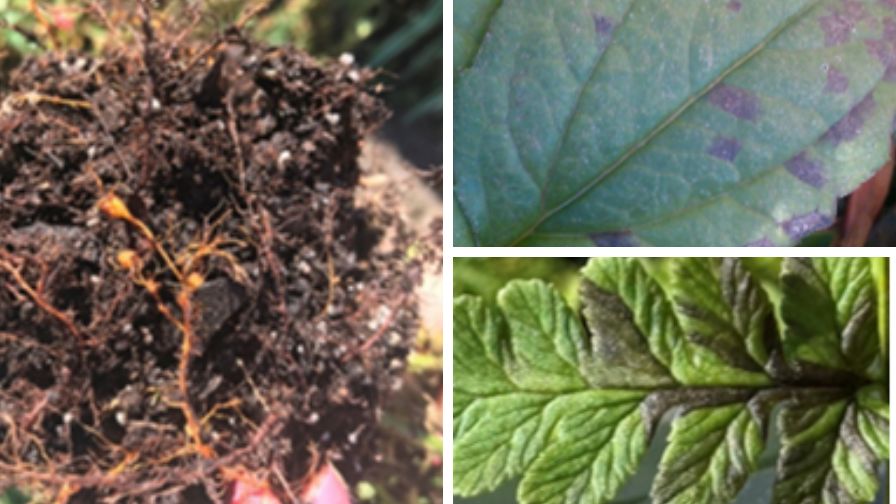
(Clockwise from left) Root-knot nematdoe galls on Pentas, foliar nematodes cause angular interveinal necrosis on Echinacea, and angular interveinal necrosis on fern. | Nancy Rechcigl 2025, Syngenta
Plant-parasitic nematodes are an often-overlooked pest that can significantly impact ornamental crops in greenhouses, nurseries, and landscapes. Unlike many other pests that cause immediate and visible damage, nematodes attack plant health quietly, below the surface, and sometimes within leaves and buds. These microscopic roundworms are difficult to identify, as above-ground symptoms like stunted growth, yellowing, or poor vigor, can resemble common ornamental diseases or other stressors. With careful scouting, preventive practices, and a comprehensive management strategy, growers can reduce nematode pressure and maintain plant health throughout the production cycle.
Know the Threat
Understanding how nematodes operate and the conditions that favor their spread is the first step in protecting plant health. Plant-parasitic nematodes encompass a wide range of different genera that feed on roots and foliage.
Root-feeding nematodes primarily live in the soil and feed on the roots of woody and herbaceous ornamentals through a retractable, piercing stylet. Some nematodes stay outside the root and use this stylet to puncture cells inside the root (ring, stubby root, and sting), while other nematodes enter the root and feed at many sites (lesion) or stay in one feeding site (cyst and root-knot). Plants grown in the ground are primarily at risk for invasion.
Root-feeding nematodes can cause several problems, including:
- Galling, stunting, and severe deformation of plant roots
- Impaired root systems that limit water and nutrient absorption, resulting in plants that are off color with low vigor
- Physical damage that acts as entry points for disease-causing pathogens
Foliar nematodes occur in more than 100 plant families, most often in herbaceous perennials. They typically live and feed on leaves and buds, but can also live in plant parts under the soil, reinfesting plants by migrating up stems and into leaves via films of water. Foliar nematodes can survive in dry tissue, remaining dormant until rehydrated. Since feeding by these nematodes is usually limited to tissue between the veins, foliar damage will appear as necrotic, angular spots or streaks, depending upon the venation of the plant. Herbaceous and woody ornamentals can be a host of foliar nematodes.
Adopt a Strong Agronomic Program
Overhead watering, warm temperatures, and dense planting environments favor nematode establishment and spread. Effective, preventive cultural practices are key to managing these pests:
- Maintain a clean, dry growing environment (remove plant debris from previous crop).
- Provide plants with proper spacing to reduce the chance of water splashing and ensure good air flow.
- Scout routinely, examining foliage, soil, and roots. Send samples to a diagnostic lab to identify nematode species and population levels.
Integrated Nematode and Disease Management
For high-value ornamental crops experiencing nematode pressure, Syngenta developed Trefinti® nematicide/fungicide powered by TYMIRIUM® technology. The novel mode of action in Trefinti systemically controls key species of plant-parasitic nematodes and disease-causing pathogens that can damage plant roots and foliage.
Trefinti should be applied preventively to plant species with a history of nematode problems to provide high-level root-to-leaf protection. Following drench applications, Trefinti is absorbed by the roots and translocated throughout the upper canopy to control foliar nematodes and certain diseases, including Alternaria spp. and powdery mildew. Drench treatments will also provide protection against Fusarium spp. and root-feeding nematodes.
This dual-action protection is particularly important for high-value greenhouse and nursery crops, where nematodes and diseases often work side-by-side to weaken plants. When combined with sound cultural practices, like sanitation and routine scouting, Trefinti supports strong early growth and healthier crops throughout the production cycle.
Subscribe to eNewsletter