



Meet Dr. Brian Whipker, Our 2025 Industry Achievement Award Winner
 December 14, 2025
 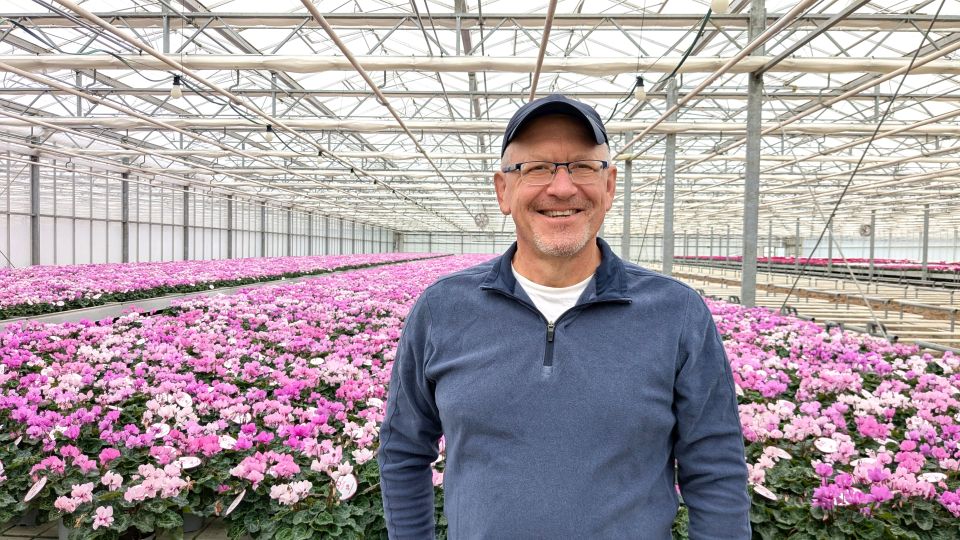 According to his North Carolina State University Extension bio, Dr. Brian Whipker’s primary responsibilities are to “conduct relevant research and Extension activities on commercial floriculture crops in North Carolina.” In practice, his impact reaches far beyond that. Whipker, Greenhouse Grower’s 2025 Industry Achievement Award winner, is a familiar name to growers and technical experts across the floriculture industry. His dedication to education has led to the development of numerous tools and resources that have dramatically improved plant production in the greenhouse industry. That drive to innovate is matched only by his commitment to developing the next generation of industry leaders.
A Background in Education
Brian Whipker grew up on a vegetable farm in southern Indiana, and that hands-on experience, along with roles in 4-H and Future Farmers of America, fostered his interest in intensive agriculture rather than row crops or animal ag.
“My great aunt instilled a love of garden plants and a desire to attend Purdue University, where I earned Horticulture and Agriculture Education dual BS degrees,” Whipker says. “A summer internship in Finland broadened my experience in greenhouse production.”
That internship, combined with his vegetable production background, led to his first role as a Regional Commercial Horticulture Agent in Indiana after he earned his MS degree in Agricultural Economics. After a few years, he began a Ph.D. program under Dr. P. Allen Hammer at Purdue University, a mentor who would shape his career for decades to come.
“Working with Dr. Hammer built my scientific skills in plant science and further developed Extension expertise,” says Whipker, who then spent nearly two years at Iowa State University before being recruited for an Extension position at North Carolina State University (NCSU).
“For someone like me who wanted to do Extension work, NCSU has been a great place to be, and the University really values Extension,” he says.
 Educational Accomplishments
During his time at NCSU, Whipker has played a lead role in developing resources and growing tools that many growers now consider indispensable. Highlights include:
Plant Growth Regulator Guide
A project sponsored by Fine Americas that has become a key reference for greenhouse growers.
Co-founding e-GRO
This online grower resource was launched with former student Brian Krug (now at Syngenta), Nora Catlin (Cornell University), and Roberto Lopez (Michigan State University). “This was an idea dreamed up in the Netherlands in a Hema department store cafeteria on a rainy afternoon during a trip to the old NTV tradeshow,” Whipker recalls.
PourThru Development
A nutrient monitoring system that is now the standard for checking pH and EC in greenhouse crops. “We adapted work originally done by Todd Cavins for his Ph.D. project,” he says.
Phosphorus (P) Research
Conducted as part of past graduate student Josh Henry’s MS degree (now with Ball Seed, funded through a Fred C. Gloeckner grant), this work identified low P rates, documented deficiency
symptoms such as lower leaf purpling and olive-green leaf spots, demonstrated the use of low P to color up red-leaf cultivars, and confirmed that late-season deficiencies can appear in the upper foliage beneath the fruit or flowers.
Pansy and Gerbera Plug Boron (B) Deficiency
“This was a result of Brian Krug’s Ph.D. work (also through a Fred C. Gloeckner grant) to identify the symptomology and causes of B uptake problems,” Whipker says.
Ornamental Kale Fertilization
“This was part of Jamie Gibson’s (now with Syngenta Flowers) work (Fred C. Gloeckner grant) to determine that late-season fertilization was still required to avoid lower leaf drop,” Whipker says. Growers were stopping fertilization to color up the centers but then loosing lower leaves.”
Nutrient Deficiencies of Bedding Plants Book
“Our NCSU team produced the book as a result of work in the early 2000s,” Whipker says. “The lead author was Jamie Gibson.”
Today, Whipker’s current work includes refining leaf tissue nutrient standards, moving beyond the limited survey that has long served as growers’ main reference toward a more robust model that provides ranges for deficient, low, sufficient, high, and excessive leaf tissue nutrient levels.
He is also leading capstone projects to tap into decades of images and data to produce new diagnostic guides for growers. “Over the last year, we have produced guides on Nutrient Disorders, Viruses, Ornamental Peppers, Tomato Nutrient Disorders, Scaevola, and Poinsettia Nutrient Disorders,” Whipker says. “We are working on three more this fall (Plant Root Zone Management, Coleus, and Ipomoea), creating these guides is my driving force.”
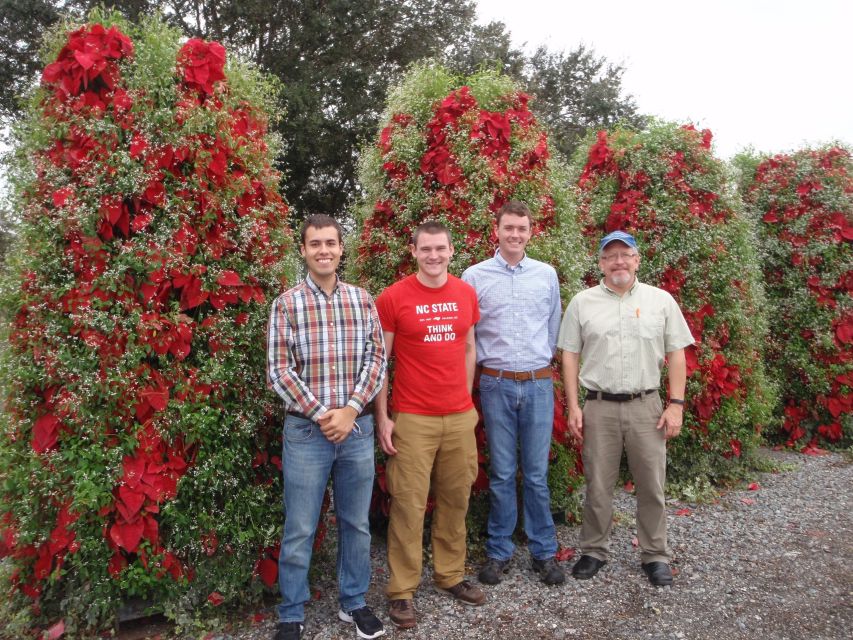
Across the horticulture industry today, dozens of Dr. Brian Whipker’s former students are now industry leaders.
Working With Researchers and Growers
At NCSU, Whipker’s focus was on hands-on learning, technical knowledge, and building his students’ diagnostic skills. The guides and resources listed above, along with involving students in Extension projects and speaking at the OFA Short Course (known today as Cultivate), helped those students develop skills they use every day in their current roles.
“I’m really proud of their accomplishments,” Whipker says. “I look at it as a legacy.” Whipker’s list of students-turned-professionals is long and includes:
- Todd Cavins, Pan American Seed
- Josh Henry, Ball Seed
- Jamie Gibson, Syngenta Flowers
- Brian Krug, Syngenta
- Alicain Carlson, Syngenta Flowers (committee member)
- Michelle McElhannon, Dümmen Orange
- Ka Yeon Jeong, Sun Gro
- Three NCSU Ph.D. students recently hired by Jiffy and Berger (thanks in part to the influence of fellow NCSU educator Dr. Brian Jackon).
And it’s not just industry suppliers; Whipker has also partnered closely with growers over the years.
“Fairview Garden Center is close by, and Susan Rollins always allowed me to scout the crop and take photographs,” Whipker says. “Cyn-Mar in Pine Level and William’s Plant Farm in Bailey, NC, are also among my favorites.”
Shaping the Future of the Industry
Whipker grew up surrounded by a sea of monoculture corn and soybeans in the Midwest. That experience gave him a deep appreciation for the diversity horticulture offers.
“Horticulture offers diversity and excitement. Getting to grow so many varied species and being able to problem-solve how to grow them better is one of the perks of this job,” Whipker says. “I love the mystery of the unknown when it comes to helping a grower diagnose a problem.”
So, what is he most excited about when it comes to the future of the industry?
“Over the past few years, I am really proud of the accomplishments of my former graduate students and students I interacted with at NCSU,” Whipker says. “They are now the technical leads for many major companies. They are the future.”
Words of Support
Brian Whipker received several nominations for the Industry Achievement Award. Here are just a few of the comments shared:
- “Whipker’s dedication to connecting science with practical horticulture is evident in his approach to work. Despite his academic achievements, he is known for his preference for being in the greenhouse among growers and plants rather than in an office. His commitment to practical studies and the dissemination of information has made him an integral part of the horticulture industry.”
- “If you look across the horticulture industry today, dozens of students that Whipker has advised are industry leaders. Plant breeding companies, plant analysis laboratories, trade organizations, major universities, sales and distribution companies, and offshore plant production companies are just a few places you will find Whipker’s former students. They are not really ‘former’, as Whipker continues to be a leader and confidant for them all.”
- “Whipker’s research accomplishments and his efficient, powerful methods of disseminating information on plant nutrition and diagnosis have set him apart as an undoubted leader in the industry. The high level of respect he receives from both peers and constituents is a testament to his significant impact and achievements. His willingness to help others and share his knowledge has made him one of the most respected and relied-upon figures in the technical aspects of floriculture.”
Subscribe to eNewsletter