



6 Steps to Better AI Prompts for Growers
 January 29, 2026
 Many growers already use generative AI tools such as ChatGPT, Copilot, Gemini, and Claude to support crop production and answer everyday questions. The quality of the response, however, depends heavily on the quality of the prompt. Poorly framed questions can lead to limited or unhelpful answers, and sometimes even incorrect ones. This article offers simple, practical guidelines for crafting effective prompts so you can get reliable technical information in a format that works for your greenhouse or nursery business.
What Is Generative AI — and How Are Growers Using It?
Generative AI produces responses based on what you ask it to do. You type in a question or short instruction, and the tool generates an output — such as text or images — by drawing on patterns learned from large amounts of data. In greenhouse production, these tools can provide technical answers to problems, summarize research papers, build crop plans, create structured SOPs, and analyze market data.
Getting started is straightforward. Most AI tools, including ChatGPT, Claude, and Gemini, offer free versions. Simply search for the platform in your web browser and enter your prompt to begin (Figure 1).
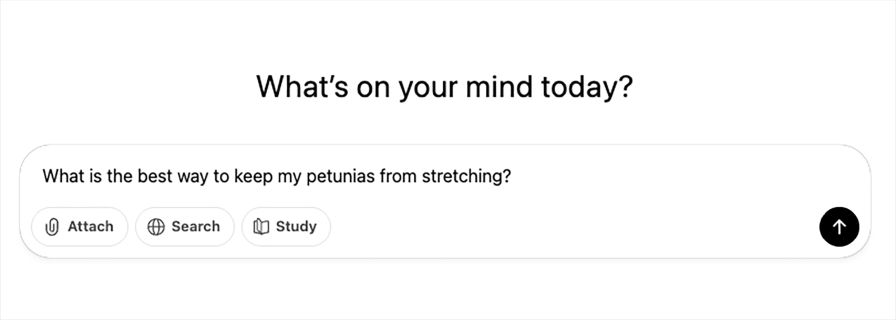
Figure 1. Example of a basic prompt entered into an AI platform. | Carly Anderson
What Is a Prompt?
A prompt is the text or set of instructions you enter into an AI tool to tell it what you want. It can be a question, a short description, or a series of steps. Crafting a well-structured prompt is critical because it guides the tool to deliver reliable output in the format you need. In short, your prompt directly determines both the quality and usefulness of the response.
Why Vague Prompts Lead to Vague Answers
If you enter a very basic prompt such as, “What is the best way to keep my petunias from stretching?”, the AI will often return broad, generic recommendations. These responses are frequently geared toward home gardeners rather than commercial greenhouse operations. Suggestions such as “feed with a balanced or bloom-boosting fertilizer” may sound reasonable on the surface, but they do not reflect professional production practices and can even be counterproductive at scale. Managing stretch in a greenhouse petunia crop, for example, is not solved by applying a general-purpose fertilizer like 10-10-10.
The issue is not that the AI is incorrect, but that the prompt lacks context. Without clear guidance on production scale, crop stage, environment, and level of expertise, the tool defaults to generalized advice that fails to align with commercial greenhouse realities.
One of the most effective ways to improve the quality of output from an AI tool is by adding structure to your prompt. By clearly defining what you want the tool to do and how you want the information delivered, you can dramatically improve the usefulness of the response. To get better results, structure your prompt using the six elements outlined (Figure 2).
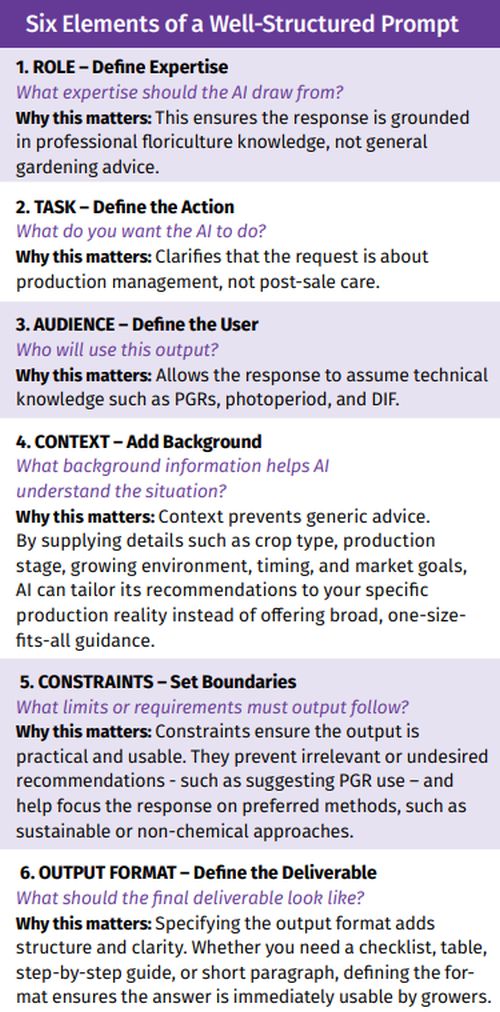
Figure 2. Six elements to include in a well-structured prompt. | Carly Anderson
The difference between a poor prompt and a well-structured one comes down to these six elements. Applying each step transforms the basic petunia example into a prompt that generates clear, professional, greenhouse-production-focused guidance (Figure 3).
A complete prompt can combine all six elements into one clear request: You are an experienced commercial floriculture advisor who specializes in bedding plant production. Your task is to explain how to keep petunia plants compact during production. This explanation is for greenhouse growers who have several years of experience producing bedding plants. The crop is a vegetatively propagated petunia grown in a heated greenhouse for spring sales in 4-inch pots under Florida conditions. Avoid using chemical growth regulators. Focus on cultural and environmental control methods such as light management, temperature, and nutrition. Provide your response as a concise checklist of key practices, organized by growth stage (rooting, establishment, bulking, flowering).
Example of Improved Output from a Structured Prompt
When the prompt is refined using the six elements, the AI response shifts from generic advice to a stage-based plan that reflects commercial greenhouse production. The output uses grower terminology (for example, DIF, DLI, and photoperiod response), includes clear timing (such as “0–10 days after transplant” and “28 days to ship”), and keeps recommendations consistent in production-appropriate units (°F/°C and ppm N). It also organizes guidance by crop stage so it can be applied directly to scheduling and day-to-day decision-making.
In this example, the response is broken into two production phases with targeted guidance:
Bulking/vegetative build-up (10 to 28 days after transplant): Maintain strong light, manage temperature (including negative or zero DIF), continue nitrate-based feed in an appropriate ppm N range while avoiding stretch-promoting nutrition, and use firm water management with consistent dry-downs. Cultural practices such as early spacing and cultivar-appropriate pinching are also included to improve branching and limit stretch.
Flower initiation and finishing (about 28 days to ship): Maximize DLI and light exposure, favor cooler finishing temperatures (including morning drops when possible), adjust fertility to a leaner feed with appropriate Ca and Mg, and manage irrigation to avoid excessive late-stage vegetative growth. The plan also emphasizes airflow and canopy management (for example, HAF) and uniform spacing to maintain crop quality through finish.
After you receive a response from an AI tool, keep the following best practices in mind:
1. Refine the Prompt to Fine-Tune the Output
You can further adjust the prompt by adding more detail about the desired output format, such as requesting fewer words, more explanation, or a specific layout, to better match your needs.
2. Always Review and Verify the Output for Quality and Accuracy
As a general rule, any AI-generated response should be reviewed before being used or implemented. Even with a well-structured prompt designed to improve accuracy, recommendations should always be checked and verified by someone with expertise in the subject area before being put into practice.
Key Takeaways
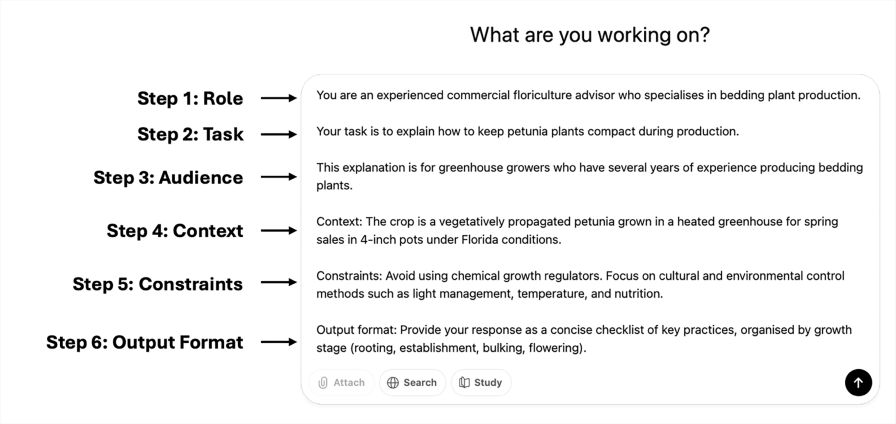
Figure 3. Six elements combined into a single, well-structured prompt using a practice example. | Carly Anderson
Taking a few moments to structure your prompt using the six elements outlined in this article:
- Role
- Task
- Audience
- Context
- Constraints
- Output Format
These can transform vague questions into focused requests that generate clear, professional, and relevant advice. The five minutes you spend refining a prompt will ultimately save far more time by reducing the need to filter through irrelevant or unfocused information.
Many AI tools also save past conversations, making it easy to reuse and adapt successful prompt elements for future use. And while AI is a powerful and increasingly useful tool for greenhouse operations, it is not a replacement for human intelligence, experience, or common sense. The best results come from using AI as a support.
Subscribe to eNewsletter
