



How to Design Your Greenhouse Around Automation
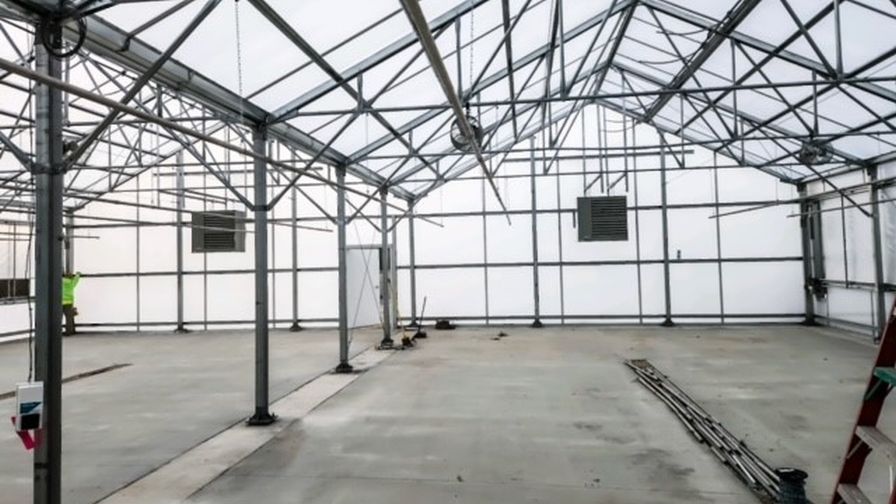
Construction work on a new Indiana University greenhouse build. | LLK Greenhouse Solutions
Greenhouse growers who want to add automation to their facilities after the design is finalized, after construction has begun, or even after the facility is already operating, can face challenges. Automated systems require fundamentally different space planning than traditional greenhouses. Additionally, retrofitting a greenhouse space is expensive, disruptive, and sometimes impossible.
Automation Eats Up a Lot of Space
The first big hurdle for operators planning automation is how much non-productive space these systems demand. Additionally, arguing for the need for more space for equipment operation usually receives a lot of pushback from clients/growers, as every bit of space used for automation is space that isn’t being used to grow plants, and therefore generating revenue.
However, extra space is critical for greenhouse automation. Human workers can navigate tight spaces and improvise around obstacles, but automated equipment often needs clear pathways, a turning radius, and buffer zones.
Where Details Matter Most
Beyond space requirements, highly automated facilities require exhaustive upfront planning that many operators aren’t prepared for, as the level of detail goes far beyond traditional greenhouse design, including:
- Container dimensions
- Process sequences
- Time Studies
- Worker positions
Everything needs to be specified because the automation provider needs to engineer systems around exact parameters. All cultivation processes need to be carefully considered to avoid bottlenecks.
The Hidden Labor of Automation
Automation doesn’t eliminate labor, it shifts it. And one critical role many operators overlook is maintenance. When something breaks in a traditional operation, workers adjust. They carry flats instead of using carts. They work around the broken bench roller. Operations continue, even if less efficiently.
However, automated systems don’t have that flexibility. The system works beautifully when everything functions correctly. When it doesn’t, growers need expertise on-site to restore functionality quickly, or the entire operation can stop.
While growers can use techniques to slow down or speed up the growth of their crops, plants don’t have a pause button and are on a schedule from propagation to finish. This makes it particularly important to fix automation issues quickly and get production back on track.
Make the Decision Early
Not every facility should automate. However, for growers thinking of automating, the decision needs to happen during initial planning; not after design, not after construction begins, and definitely not after the site is operational.
For those committed to the idea of automating, know that automation takes a lot of planning. Still, that investment in planning — made early in the process — is what separates automated systems that transform operations from expensive disappointments that don’t deliver on their promised efficiency to successful ventures.

For additional information on making greenhouse automation decisions early, including the importance of buffer zones and where the “point of no return” falls during structure planning, please read the original article found on the LLK Greenhouse Solutions website.
Subscribe to eNewsletter
