



How Greenhouse IPM Programs Are Getting Smarter
 February 10, 2026
 Long-time greenhouse growers may remember when terms like “integrated pest management (IPM)” and “biopesticide” were still new. Today, growers are taking more targeted and sophisticated approaches to managing key pests. In many operations, biological controls are no longer supplemental tools, but core components of IPM programs tailored by crop or pest.
Expanding Crop Categories Bring New Pest Pressures
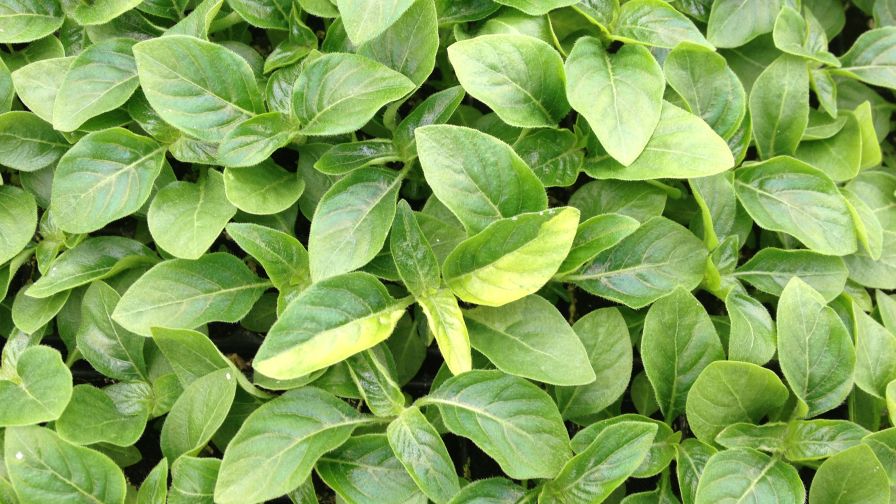
Symptoms of disease or insect damage, such as this leaf discoloration on vinca, may not show up until it’s too late, hence the need for advanced scouting. | Jen Browning, BASF
D.S. Cole Growers in Loudon, NH, produces a wide range of young and finished plants and has long relied on biological controls as part of its pest management strategy.
“We grow so many different varieties here that it’s important for us to stay clean throughout the facility,” says Chris Schlegel, Head Grower at D.S. Cole Growers. That focus became even more critical as the company expanded its houseplant and tropical offerings.
“The foliage and houseplant market, which also includes cacti and succulents, was already growing pre-COVID, and we saw a big increase in this category as consumers were forced to stay indoors,” Schlegel says. “We knew about these plants years ago, but they’re new to a lot of people. We’re also finding that they’re willing to pay higher prices for them, which means we need to deliver a high-quality product.”
Plant Diversity Complicates Pest Management
As the category expanded, new challenges emerged, including identifying key pest and disease issues, monitoring potential cross-contamination, and sourcing clean tissue culture and unrooted cuttings from reputable suppliers.
Perhaps the biggest challenge, however, was plant diversity. Succulents and cacti tend to have similar needs across genera, while foliage houseplants vary widely in moisture requirements, light levels, and pest pressure.
“Mealybugs and spider mites all of a sudden become more of an issue, and we knew it was important to make sure those were controlled effectively,” Schlegel says. To manage spider mites, the company relies on a targeted biocontrol program that includes biweekly releases of Neoseiulus californicus on susceptible plants such as elephant ears (Colocasia) and croton (Codiaeum), N. cucumeris in all hanging baskets, and Phytoseiulus persimilis applied biweekly to hot spots.
“We started putting out flags in certain areas of the greenhouse with varieties that are more susceptible to spider mites and mealybugs,” Schlegel says. “We’ve also started grouping susceptible varieties together so we can treat them separately from plants that don’t have the same issues.”
Scouting and Monitoring Remain Essential
Beyond maintaining a schedule for biological control releases, Schlegel says scouting remains a critical component of effective pest management.
“Being proactive and watching our stock plants carefully is key,” Schlegel says. “We’re also looking at new technology that would help us avoid having to hand-count sticky cards.”
Looking ahead, Schlegel says they plan to continue evaluating new tools and approaches as they emerge. “There are always new options being introduced,” he says. “We tried brown lacewings for aphid control recently, for example, and we’re still interested in finding something that could work on mealybugs.”
How Growers Are Addressing Their Biggest Crop Protection Issues
One of the questions in Greenhouse Grower’s 2025 State of the Industry survey focused on growers’ biggest crop protection challenges and how they are addressing them.
Respondents consistently identified pest and disease pressure as their most persistent concern. Insects, mites, and mealybugs remain widespread issues, compounded by limited product options and growing concerns about resistance. In response, many operations are strengthening their IPM programs through improved scouting, increased use of beneficial insects, cultural practices, and product rotation.
Fungal diseases such as gray mold (Botrytis) and downy mildew also continue to pose challenges, prompting growers to invest in better climate control, preventative protocols, and, in some cases, improved plant nutrition and variety selection to help boost natural resilience.
Environmental and Structural Pressures Add Complexity
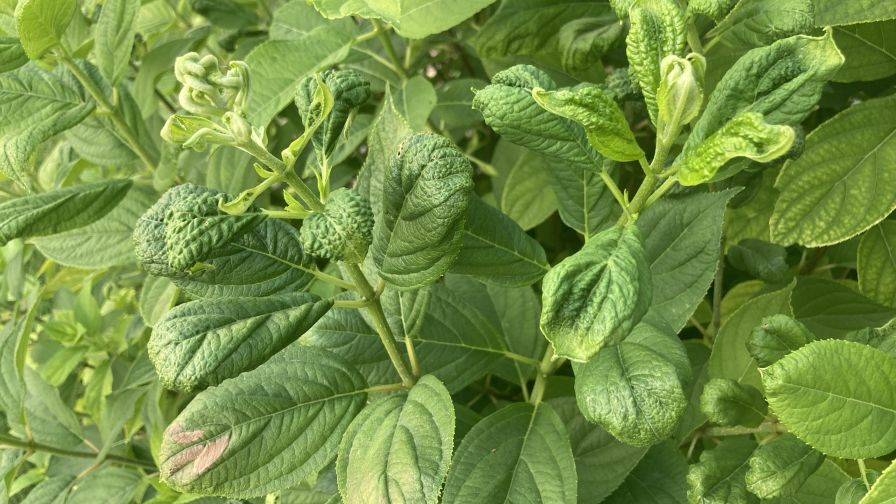
Scouts should be trained on how to monitor for early signs of feeding. | Jen Browning, BASF
A second major theme emerging from the survey centers on environmental and structural pressures that complicate crop protection efforts. Extreme and unpredictable weather — including heat, cold, late frosts, and excessive rainfall — continues to disrupt production cycles and increase plant stress. Growers report responding by upgrading heating and cooling systems, improving insulation and ventilation, and using additional protective coverings for outdoor crops. Other challenges include weed encroachment, wildlife damage, infrastructure limitations, and rising material costs, such as tariffs on imported plants.
Overall, growers are taking a more holistic approach to crop protection, blending IPM strategies with environmental modifications and plant health management to address increasingly complex pressures.
Keep Good Records and Check Your Sources
As growers face increasing pest pressure and production complexity, suppliers are responding by working more closely with operations to address their biggest challenges and share practical guidance.
“The use of biologicals goes back to the basics of integrated pest management,” says Matthew Krause, Ph.D., Director of Field Solutions-CEA and Nurseries at Lallemand Plant Care. “You don’t need to replace your entire management strategy. You just need to identify where your weakest links or least effective tools are. Those are what you can replace.”
Krause emphasizes that strong recordkeeping is critical to identifying those gaps and evaluating what’s working over time. “If you can keep track of variety, time of year, and other factors, you can chart that information to look for patterns across seasons, rather than focusing only on individual events,” he says. “One of the most useful tools growers have is a smartphone. It allows you to document observations with photos and notes, track issue progression, diagnose problems, and capture results from season to season.”
With the rapid emergence of new biological pest and disease management products, Krause recommends seeking out registered biopesticides and avoiding products that lack U.S. EPA and state registrations or recognition as minimum risk pesticides. He notes that biopesticides registered in multiple countries often come with stronger track records and more reliable technical guidance.
From Reaction to Informed Decision-Making
Jen Browning, PCA and Senior Technical Specialist with BASF’s Turf + Ornamentals division, echoes the importance of recordkeeping, noting that while it can be time-intensive on the front end, it becomes far less so in gathering.
Browning adds that conversations with growers today are noticeably different than they were in the past. “The calls I get are less reactive and more thoughtful,” she says. “There’s a lot of good technical information available now, which allows growers to ask better questions and have more productive conversations.”
Finally, Browning notes that growers are coming to these conversations with more background knowledge and specific ideas about potential solutions.
“We had a grower come to us about pepper thrips (thrips parvispinus) when the pest was still relatively new to the operation, and they were planning to apply nematodes using a sugar lure,” she says. “In the past, I might have been skeptical, but after years of building trust with growers, I knew he was absolutely right.”
Subscribe to eNewsletter