



Why AI Innovation in Greenhouse Software Is a Two-Way Street
 February 12, 2026
 As growers’ needs shift around production planning, inventory management, and logistics, software providers are under pressure to keep pace. Artificial intelligence has become a major part of that evolution, but many of the most effective advancements are rooted in close collaboration with growers and a clear understanding of their operational challenges. “We are at a unique time in history when most growers are keenly aware they need to upgrade the systems they are using,” says Tony Van Oort, Director of Sales at Aster Software.
To better understand how those needs are shaping new tools and platforms, we spoke with several software companies closely connected to the horticulture industry about the trends driving innovation.
The Need for Reliable Data
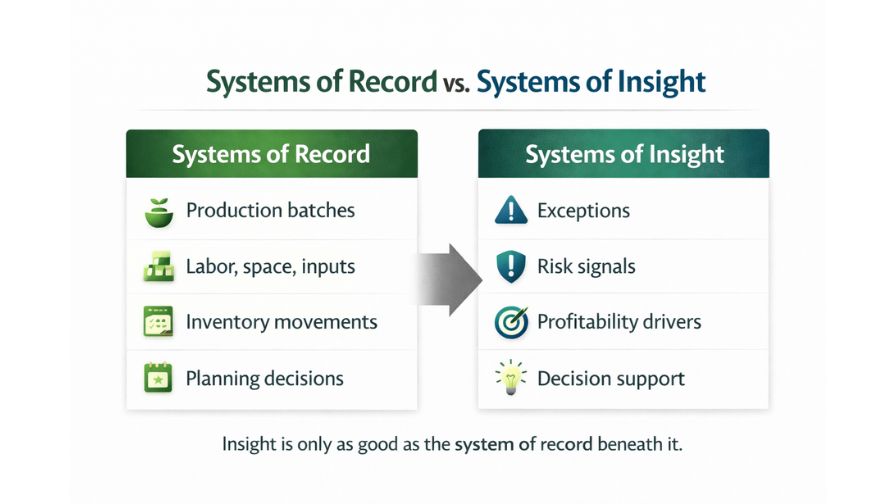
Systems of record. | Aster Software
“I don’t see AI as a feature. I see it as a multiplier on clean data, disciplined workflows, and on operational truth,” Van Oort says. “Without that foundation, AI simply accelerates bad decisions. It only becomes valuable once businesses are operating on trusted, structured data.”
At the same time, Ben Marchi-Young, Industry and Product Manager at Velosio, cautions against relying too heavily on automation without first defining what a system is meant to accomplish.
“In that case, you might be implementing superfluous autonomous actions,” Marchi-Young says. “There are still many user-defined actions where AI could be doing far more sophisticated work.”
That makes data accuracy a non-negotiable starting point, particularly when information is shared across teams. “If you’re going to give someone on your team financial or inventory information, you have to be confident it’s correct,” says Alan Brown, Managing Director of Growflo. “There’s significant risk in deploying potentially false information to a sales team and expecting them to make informed decisions.”
Addressing Grower Processes
Some software companies are already embedding AI into their platforms using clearly defined parameters that align with existing business processes and data structures. “This allows AI adoption to be more systematic and complementary to a grower’s operations, rather than being treated as a cure-all or magic wand,” says Garrett Walsh, North American Sales Director at Mprise Agriware.
One practical application, according to Van Oort, is helping growers better understand the true cost of production.
“Growers may look at their end-of-the-year fiscal numbers, but do they know which crops actually contributed to profitability and which detracted from it?” he says. “That’s critical information for a sales team to know.”
He adds that the more structured data a grower can capture, including weather, spacing, spraying, and trimming, the more precisely AI tools can be applied and refined. “AI is powerful, but only when it understands data in a horticultural context,” Van Oort says. “Otherwise, it’s producing confident nonsense.”
Marchi-Young sees similar value in applying AI to historical sales data and production forecasting. “What’s better than leveraging AI across your sales history and production forecasts to quickly surface that information for you?” he says.
Labor planning is another area where AI can deliver immediate impact, particularly as workforce challenges intensify. “Having AI help forecast your labor needs, at a time when labor costs are rising and workforce uncertainty remains a concern, can lead to significant cost savings,” he says. “AI can help with that.”
The Future of ERP Systems
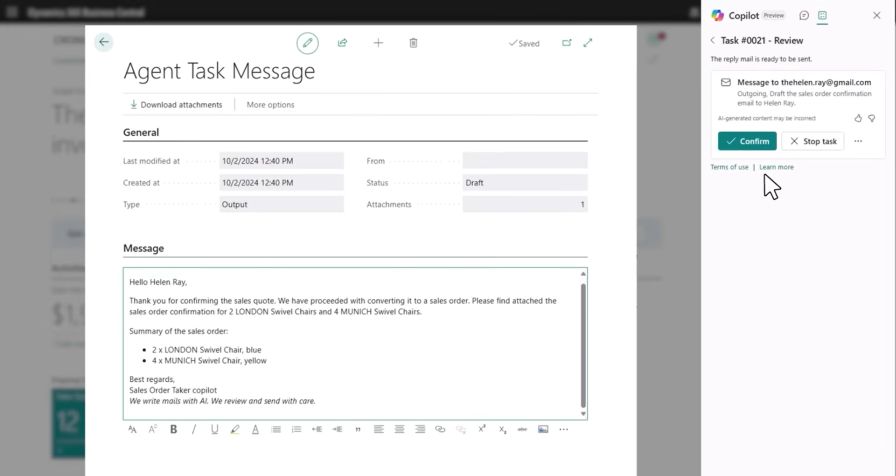
Automating specific processes with AI agents can support sales and back-office teams. These systems can draft an email for sales teams to review and send to customers. | Mprise Agriware
Artificial intelligence is not likely to make enterprise resource planning (ERP) systems obsolete, but it is changing how those systems are used and perceived. As AI capabilities expand, the traditional definition of ERP is beginning to shift.
“There’s a lot of hype around whether AI will make ERP irrelevant,” Van Oort says. “The reality is that many growers have what they call an ERP system, but they’re still running multiple spreadsheets across the organization that aren’t connected to it. That’s the reality across much of the industry right now.”
According to Marchi-Young, ERP systems are not disappearing so much as moving into the background. “It’s not that ERP is going away,” Marchi-Young says. “It’s that users are no longer going to interact with it the way they have in the past. The system will sit in the background, while AI becomes the front end.”
Feedback Direct From the Source
One message echoed consistently across conversations with software providers: growers do not have to navigate these changes alone. “We sit down with our customers to understand where their business value is today, and where it needs to be,” says Arno Hogervors, Director of Innovation at Mprise Agriware. “From there, we help them build a path forward. We have a toolbox of AI options that allows us to determine the best approach based on each company’s needs and long-term plans.”
Melissa Herbst, Account Executive at Velosio, notes that supplier-hosted workshops with growers play an important role in identifying practical, high-value use cases for AI. “Plant substitution is one example,” she says. “That’s a scenario that can help growers evaluate whether they should contract, grow, or purchase a product elsewhere, while still delivering value to their customers.”
That collaboration, however, depends on growers having a clear sense of direction. “What we often see is a grower coming to us with an idea that may be possible, but getting there requires multiple steps to fully understand what’s needed,” Hogervorst says. “That’s why our approach to workflow management and improvement is different for every customer.”
For Van Oort, the relationship between growers and software providers ultimately comes down to trust and longevity. “A supplier-grower relationship is a long-term one that can last generations,” he says. “As growers continue to scale, they need to get a handle on their data. They can’t do it alone, but they don’t have to.”
Subscribe to eNewsletter