


Monrovia: A Century, Measured in Plants
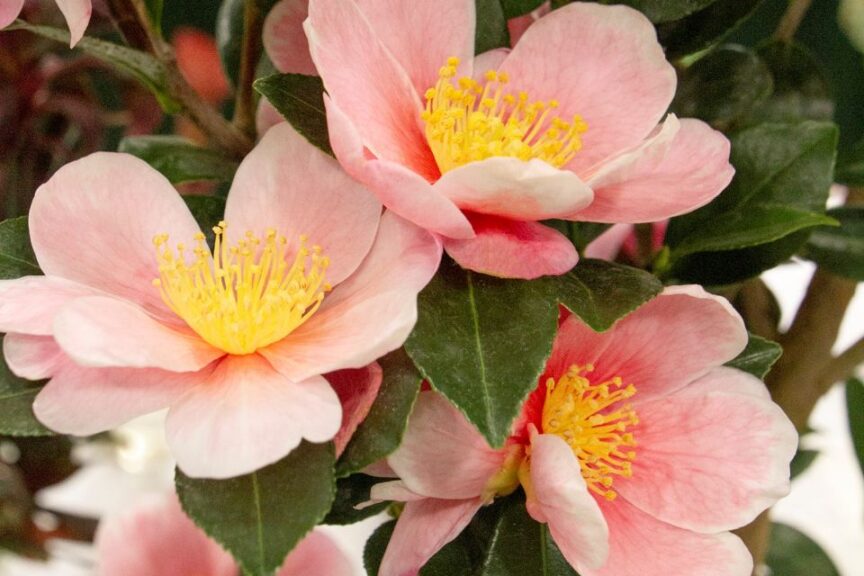
On a nursery drive in Azusa, CA, sales craftsman Brad Crocker was passing a field of ‘Yuletide’ camellias when something in the rows did not match the rest.

View all





That unexpected find would become Pink-A-Boo® camellia, one of the plants Monrovia is celebrating this year as part of its Landscape Legends, its top 100 plants and the stories behind them. It is a small moment, but it captures something essential about how this company has lasted. Monrovia’s century is not only a timeline of milestones — it’s a trail of plants, and the people who notice what is different, then do the work to bring them into the landscape.
“100 years is a milestone for any company,” says Jonathan Pedersen, President and CEO of Monrovia. “For Monrovia, it is a chance to celebrate all the innovations we’ve brought to the industry and the thousands of unique plant varieties that are in the North American landscape because of the hard work of our many craftsmen over the years.”
That word, craftsman, comes up often when Pedersen talks about Monrovia. The company’s identity has long been tied to how plants are grown, not just what is grown.
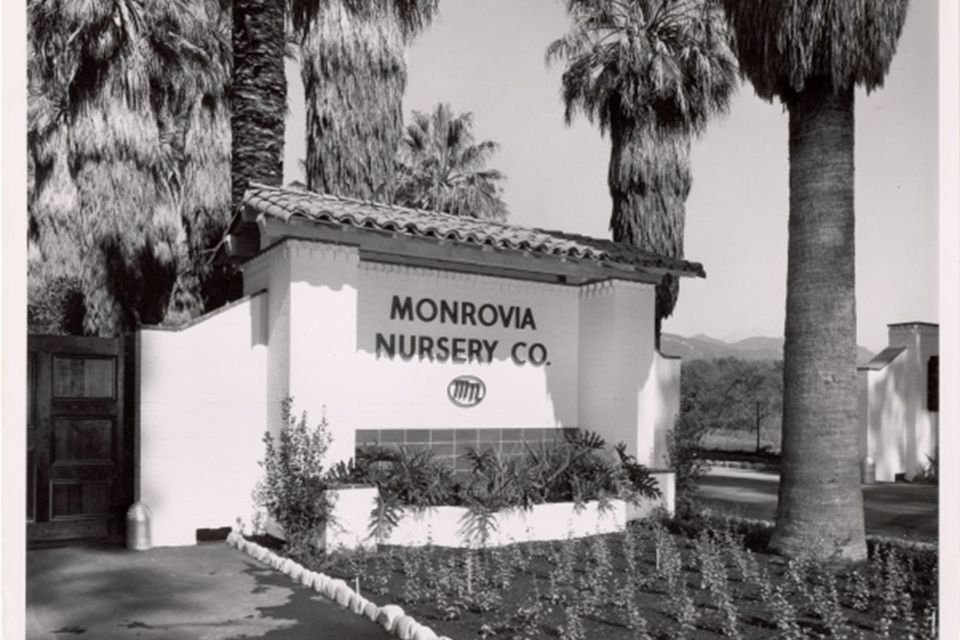
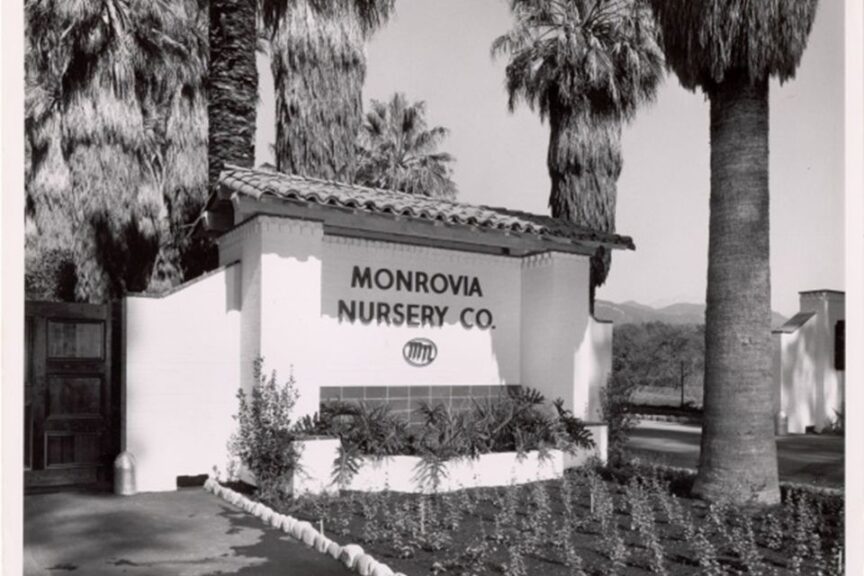
“Harry Rosedale Sr. started with 10 acres in Monrovia, CA, and built this business with attention to detail and quality above all,” he says. That focus, he adds, traces back to the company’s founding mission. “Harry E. Rosedale Sr. set out with a mission to grow the highest quality, most beautiful plants in North America. That hasn’t changed.”
Monrovia is using its 100th year to look back at the innovations that shaped modern nursery production, and to look ahead at what it will take to keep plants thriving and gardeners confident in the decades to come. “We are also using the anniversary moment to focus on what’s next for our industry and for home gardeners,” says Katie Tamony, Chief Marketing Officer of Monrovia. “To not rest on our past successes, but to think about what the future can look like.”
Defining Moments
Monrovia’s defining moments often show up as practical decisions made in the service of plant quality.
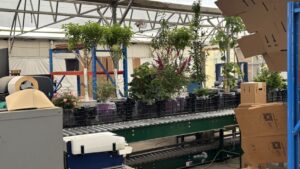
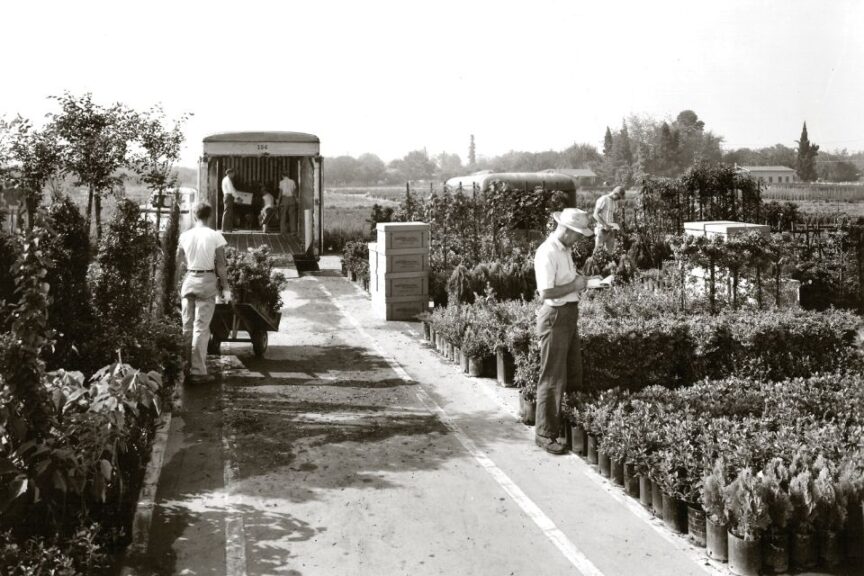
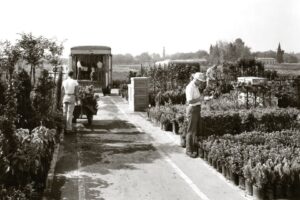
“We were the first nursery to grow in containers,” Tamony says. “This innovation was born out of the need to be able to ship these beautiful plants to wider areas.” She adds that container production reduced stress through the pipeline. “Plants would be less stressed if grown from the beginning in a container and then shipped that way.”
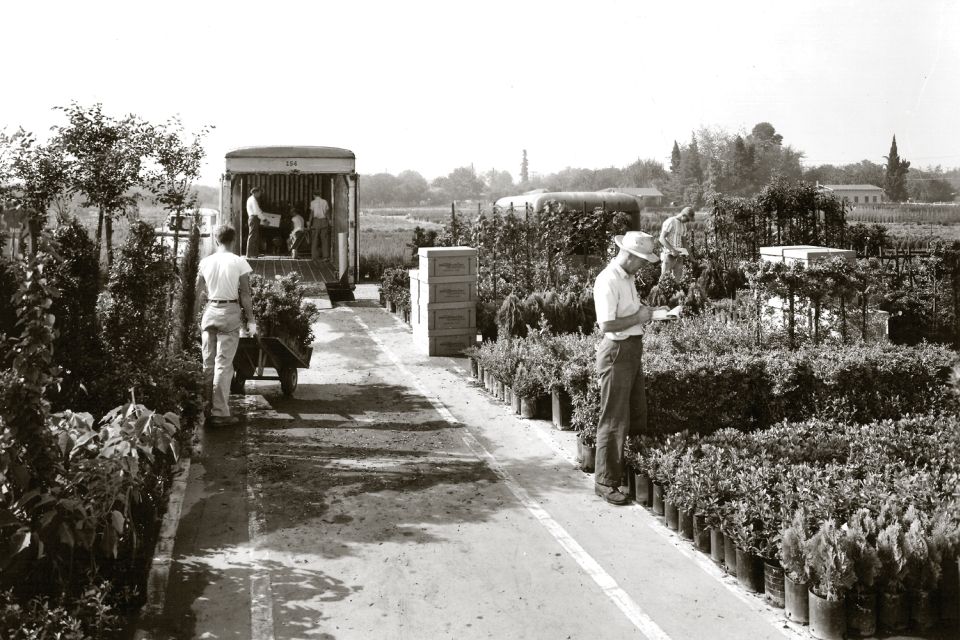
Monrovia shipping operations in the 1950s. | Monrovia
From there, the next pressure point was timing. “Scheduled shipping allowed retailers to plan their inventory,” Tamony says, supporting spring refreshes during peak season.
Tamony points to several milestones that expanded what the company could do with plants, including a 1941 first patenting unique varieties beyond roses, a 1952 expansion to an 80-acre Azusa site, the 1950s creation of an R&D department to improve propagation and growing techniques, and a later shift toward gardener education through plant tags, Plant Finder, and a website built to be a trusted plant information source.
Soil and Water
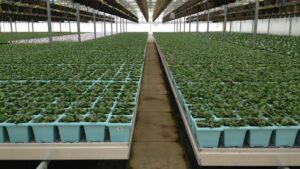
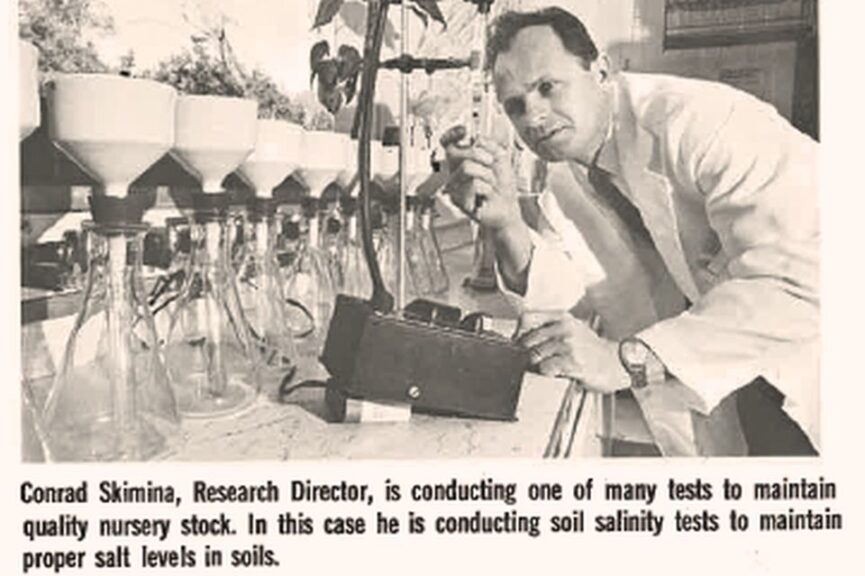
If container growing helped Monrovia ship farther with less stress, it also raised the stakes on what went into the container. “Soil is the key to giving plants a healthy start,” Tamony says. “Each plant has specific needs. We currently grow Monrovia plants in more than 40 different soil mixes to give them the best start possible.”
That kind of precision is meant to travel home with the plant. “That soil, when transplanted into a home garden, transfers the benefits,” she says.
Tamony points to mycorrhizae as one example. “We put mycorrhizae in our soil mixes to help plants be efficient in their water and nutrient uptake,” she says. “Monrovia has been a pioneer in water conservation, being among the first nurseries to develop a water recycling system to capture and reuse runoff,” Tamony says. “We recycle more than 95% of our water.” She describes the infrastructure behind that percentage. “We have graded our growing areas so water drains into culverts and into a reservoir before it is reused.”
Stewardship in Practice
Monrovia’s sustainability story did not begin with a new initiative. Tamony describes it as part of the company’s historical growing methods, especially in integrated pest management. “We’ve been a leader in IPM practices, especially for a nursery our size,” she says. “We continue to add beneficials and biologicals to our methods.”
The goal is practical. Keep quality high while reducing reliance on certain inputs. Tamony notes that Monrovia is consistently researching ways to lower pesticide and herbicide use, including using mulch top dressing to suppress weeds and beneficial organisms to reduce pests.
She also shares a concrete example of biological control built into a shipped crop. “We ship Neoseiulus cucumeris in sachets on our Mandevillas,” says Tamony. “These are predatory mites that feed on thrips to reduce our use of pesticides.”
Sustainability priorities have expanded into newer areas. “We are now focused on data collection to track greenhouse gas emissions,” Tamony says, “and focusing on plastic use, introducing new post-consumer recycled plastic pots this year.”
When asked what sustainability initiatives are most important today, she names three:
- Beneficial insects
- Plastic use and waste management
- Water management.
The work is not always a solo effort. “We need good partners and infrastructure to keep improving production efficiency,” says Tamony. She gives one example from the container side, where infrastructure affects what is possible. “We found a container supplier in Europe doing more post-consumer recycling because they have the infrastructure to support that there.”
What New Plants Must Prove
Plant introductions are one of the most visible parts of Monrovia’s brand, but Pedersen frames selection as a discipline. It is not about novelty. It is about improvement. “It doesn’t make sense to introduce a new selection unless it brings something better to the market,” he says.
Better, in this context, is not a single trait. It is a full package. “We are selecting plants that offer more to home gardeners,” Tamony adds. “More blooms, better performance, better habit.” Increasingly, she adds, Monrovia chooses selections that do more than one thing. She points to blueberries as an example, not only for what they produce, but for how they function in a landscape. Blueberries that are beautiful year-round shrubs, not only producing delicious fruit, and shrubs that offer interesting features in all seasons.
When asked what traits are most important in new plant introductions today, Tamony does not choose one category. “All those things are important,” she says, and Monrovia takes all those factors into consideration when trialing and testing new varieties. Performance, resilience, sustainability, and consumer appeal matter because consumers are bringing more expectations to the bench than ever before. Then Tamony lands on the non-negotiable. “New selections must be better than what is currently on the market. Better habit, easier to take care of.”
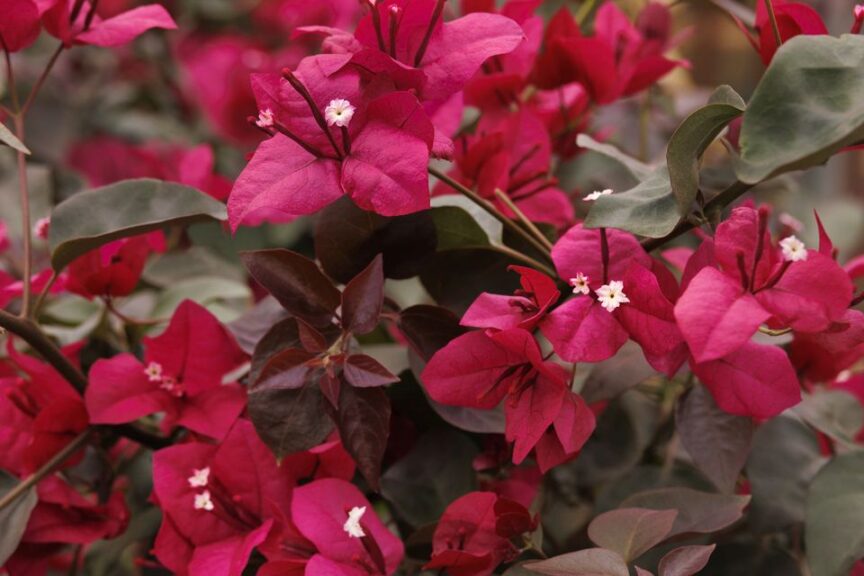
This is also where the centennial story connects back to discovery, the same way Pink-A-Boo® did at the Azusa nursery. Tamony notes that Monrovia discovers varieties in its nurseries, including Pink-A-Boo® camellia and Burgundy Queen® bougainvillea. The story begins with noticing, but it continues with trialing, testing, and the willingness to say no if a plant is not meaningfully better than what is already out there.
The Native Question
Few topics are as charged as native plants, and Tamony acknowledges the confusion she sees. “‘Native’ has become a buzzword,” she says, “and we think it’s sometimes marketed on plants that aren’t really native, which can be confusing to consumers, especially beginning gardeners.”
Monrovia’s response is to be strict about what it does and does not call native. “We seek to be really accurate in our labeling and terms,” Tamony says.
She also reframes what many shoppers mean when they ask for natives. Many consumers, she says, are really looking for plants that do well in their climate, attract pollinators, and will not be invasive. That can apply to many cultivars.
In that sense, accuracy becomes a form of service. The plant can be great. The outcome still depends on choosing the right plant for the right place, and having enough guidance to get it established.
How Gardeners Learn Now
Monrovia’s next era is also tied to how consumers learn. Tamony says storytelling matters more than ever because there are more plant brands competing for attention. She adds that the format has shifted. “Video is king, especially in plant education.”
What makes education effective, in her view, is that it goes beyond care instructions. “We help consumers not just understand how to care for a plant, but how to integrate it into their garden design,” Tamony says. She notes that Monrovia’s most popular videos pair care advice with project ideas and combinations to help gardeners choose confidently.
Monrovia has also built tools meant to translate trends into action at home. “In 2021, we introduced planting plans based on trends,” she says, “and we now have more than 40 planting plans for borders, containers, patio spaces.”
The Next 100 Years
When Pedersen talks about the next century, he does not frame it as a reinvention. He frames it as a continuation of a habit that has always been there. “What helped us reach 100 years was a constant focus on improvement, in growing techniques, plant selection, and customer service,” he says. “That’s still our biggest priority.”
In the end, Monrovia’s future reads less like a new direction and more like a commitment to keep raising the standard. Pedersen puts it simply, “Monrovia is growing the highest quality plants to make the world a more beautiful place in the next century and beyond.”
Subscribe to eNewsletter