



Could Your Greenhouse Become a Data Center?
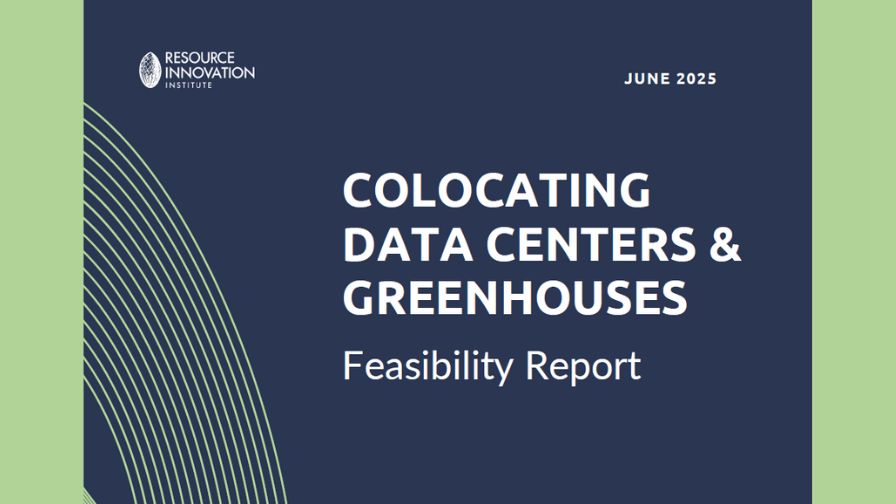
The first page of the Colocating Data Centers and Greenhouses: A Feasibility Report. | Resource Innovation Institute (RII)
A new feasibility report reveals an emerging opportunity to align two of Virginia’s target sectors — data centers and controlled environment agriculture (CEA) — through strategic colocation. This report was released by the non-profit Resource Innovation Institute (RII) in partnership with the Institute for Advanced Learning and Research (IALR) and GO Virginia Region 3.
The report, Colocating Data Centers and Greenhouses: A Feasibility Report, explores how Southern Virginia can adapt global best practices to create a new model for regional innovation and economic development. Highlighting Agriport A7 in the Netherlands as a leading example, the study outlines how colocating these industries can unlock resource efficiencies, create high-quality jobs, and enhance community resilience.
“Virginia is strategically building a strong foundation for controlled environment agriculture, driven by innovation and strengthened through public-private collaboration, to position our Commonwealth as a national leader,” says Virginia Secretary of Agriculture and Forestry Matt Lohr. “This report shows the potential to create high-quality agricultural jobs in rural Virginia while delivering significant revenue gains for local communities.”
“As data infrastructure expands and CEA continues to gain traction in Virginia, there’s a unique opportunity to plan ahead for smart, synergistic development,” says Derek Smith, Executive Director of the Resource Innovation Institute and co-author of the report. “We’re excited to offer this analysis as a roadmap for how Virginia can lead the nation in colocation innovation.”

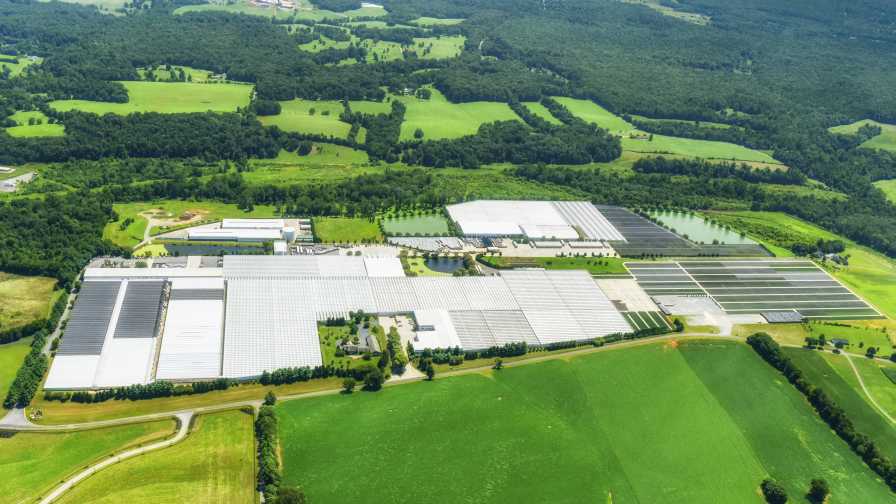

The study presents a vision for clustered development zones where data centers and greenhouses share infrastructure, such as heat, CO₂, and energy, to reduce costs and improve efficiency. This clustering model, seen in the Netherlands and Canada, offers a more competitive development plan compared to isolated facilities.
“We are pleased to collaborate with RII and IALR on this pioneering analysis,” says Lauren Willis, Chair of GO Virginia Region 3 Council. “Colocation between data centers and CEA operations represents an actionable, strategic opportunity to strengthen the regional economy while aligning with our long-term development goals.”
This opportunity comes at a time of notable momentum for the CEA industry in Virginia, with Danville emerging as a hub of activity due to research assets like the CEA Innovation Center, robust broadband infrastructure, and ready industrial parks.
“Controlled environment agriculture continues to grow across Southern Virginia,” says Dr. Scott Lowman, Vice President of Applied Research at the Institute for Advanced Learning and Research. “This model of colocation can position our communities to compete nationally while delivering long-term economic and workforce benefits.”
Key Findings from the Report:
- Waste heat from data centers can be repurposed to benefit greenhouse operations by providing energy, heating, and CO₂ for plant growth.
- CEA offers strong job creation potential, with each 65-acre greenhouse supporting 140–270 jobs, significantly more than a typical data center.
- Industrial clusters unlock shared infrastructure and economic multipliers, making colocated development more competitive than standalone facilities.
- Southern Virginia is uniquely positioned to pilot this concept due to its broadband access, industrial sites, and assets like the CEA Innovation Center and robust workforce training programs.
The study recommends evaluating specific colocation sites, launching a demonstration project, and building a coalition to coordinate public-private investment. Drawing on decades of greenhouse management experience, report co-author Rob Eddy, RII’s Horticulturist, emphasizes the importance of aligning infrastructure planning with agricultural and data sector growth to maximize economic and environmental returns.
This research aligns with RII’s broader work through the CEA Accelerator, a U.S. Department of Energy-supported initiative advancing energy- and water-efficient agriculture. By integrating colocation strategies into regional development, the report offers a roadmap for communities like Southern Virginia to pursue resilient food systems, efficient industrial design, and long-term job creation.
To download the full study, click here.
Subscribe to eNewsletter