



Insights From the CEAg World State of the CEA Industry Report
 November 8, 2025
 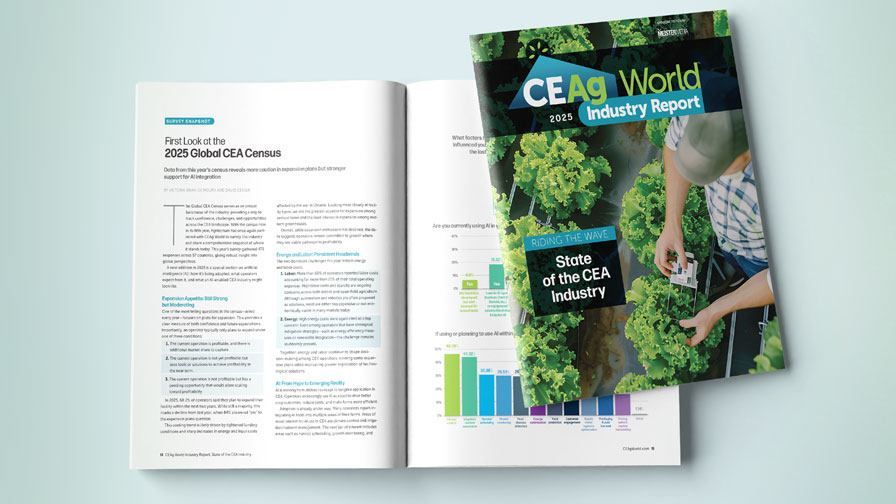 “How do you get up to speed on something that’s still a moving target?” This is how my fellow editor and Content Lead Kristin Zeit introduced the latest State of the CEA Industry Report, produced by Zeit and the team at CEAg World, a sister brand to Greenhouse Grower. The report takes a look back at the past 12 months and offers some thoughts on where the CEA industry goes from here. “Profitability, labor, and energy challenges remain stubbornly problematic,” Zeit says. “But little by little, person by person, you’re all moving the needle on what CEA can be.”
Many greenhouse floriculture growers I talk to say they want to stay in tune with what’s happening in other market sectors. With that in mind, you can download the full report here. In addition, here are some of my own immediate takeaways.
Trade deals and tariffs are presenting challenges. The U.S. withdrawal from the 2019 tomato suspension agreement, effective July 14, 2025, imposes approximately 21% antidumping duties on Mexican tomato imports. The policy has had mixed reactions across the agriculture industry: Florida field growers pushed for termination, while the CEA Alliance expressed disappointment. Companies with U.S.-only operations may gain a competitive advantage, while integrated North American producers face complex decisions about moving production northward versus absorbing tariff costs on Mexican operations.
The upcoming 2025 Global CEA Census serves as a barometer of the industry, providing a way to track confidence, challenges, and opportunities across the CEA landscape. Full results will be made available in early 2026, but one thing I noticed was trends in artificial intelligence (AI). More than 75% of census respondents are either using some form of AI now, or are planning to use it in the future. When asked how they would apply it, around 47% mentioned climate control, 44% mentioned irrigation/nutrient management, and 30% mentioned growth monitoring.
Researchers were hard at work in 2025 developing technology and testing new methods to move CEA further into the mainstream. One project of note: In January, it was announced that researchers at the Massachusetts Institute of Technology (MIT) have made significant progress on robotic insects to make artificial pollination more efficient. According to a report from MIT News, the goal of the project is to boost yields for greenhouse growers and indoor farmers. The research was published in the journal Science Robotics.




Behind the headlines are many extraordinary people doing everything they can to push CEA forward. This year CEAg World has launched the Impact Awards: a program designed to pull some of these trailblazers into the spotlight for much-deserved recognition. The awards cover four categories: Visionary Grower, Innovator, Emerging Leader, and Educator/Researcher. Winners will be announced at the upcoming CEAg World Conference and Expo.
Subscribe to eNewsletter