



The Risks and Rewards of Having a Broad Customer Base
 May 23, 2025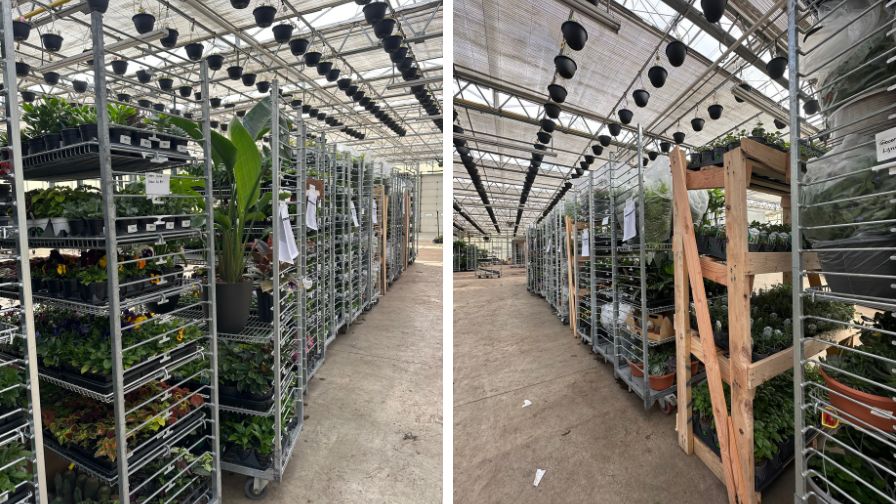
With a diverse customer base comes a lot of different styles and strategies for different customers, which can lead to a wide variety of SKUs. | Joe Van Wingerden at Van Wingerden Greenhouses, Inc.
All greenhouse growers, from the Top 100 and on down, aim for maximum efficiency and a streamlined organizational workflow. But this can be a challenge if you have a broad customer base, each of whom has different needs.
Diversifying Your Customer Base
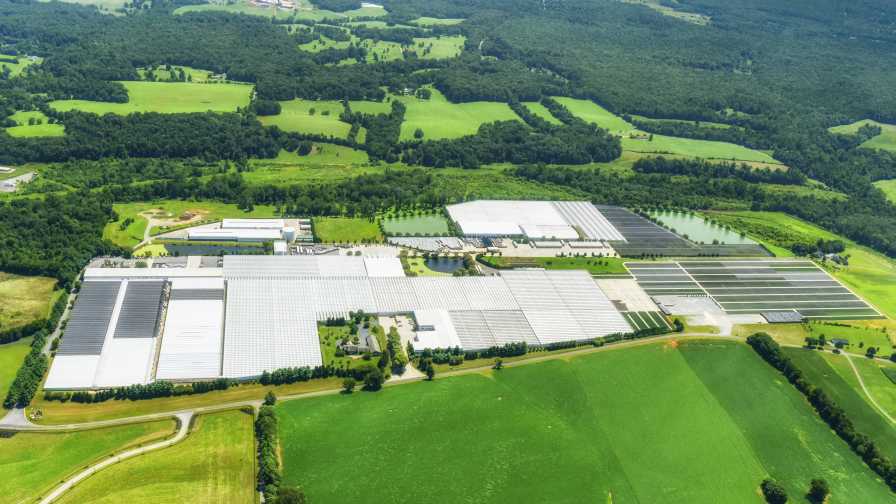
Van Wingerden Greenhouses in Blaine, WA, for example, has historically worked with different types of customers.
“Once upon a time, we had a big box customer that commanded more than 80% of our business. A change in strategy on their end resulted in a complete shift away from us as a supplier,” says Tom Van Wingerden, Sales Director at Van Wingerden Greenhouses. “At that point, we had to pivot to any other potential business we could find. With this in mind, we see the value in a diverse customer base for the reason of reduced risk.”
With a diverse customer base comes a lot of different styles and strategies for different customers, which can lead to a wide variety of SKUs.



“We are always trying to guide our customers to line up more with what we consider our core items but battle with trying to fulfill the diverse needs within our base,” Van Wingerden says. “We have been able to simplify some items by creating software to help with the sales side and joining it up with a different software to manage our fulfillment side.” It is not perfect by any means, Van Wingerden says, but it allows the company to be flexible in sales and organized in fulfillment.
The most difficult part of having a diverse base of customers is trying to create a program that is unique from their neighbors but still fits within Van Wingerden’s product assortment.
“If we offer all of our SKUs to all of our customers, how can they feel that they have a unique offering from their competitor? This challenge pushes us to add new SKUs, which creates more chaos and confusion,” says Van Wingerden.
With confusion comes added cost. Increased SKU offerings slow down production and reduce crop sizes, making it harder to grow effectively and produce consistent quality, Van Wingerden says. It also increases costs on the fulfillment side and creates a lot of questions that slow down the line.
On the flip side, Van Wingerden says having a diverse customer base and finding ways to fulfill their needs gives the company security.
“If we are able to work in a way that can’t be replicated easily, the risk of losing business is lower,” says Van Wingerden. “Additionally, diversity means we have many small customers with many small crops. In a given year that we lose a specific customer, it won’t be as painful or hard to recover in this scenario.”
Everything Starts With Service
Willoway Nurseries in Ohio has three categories of customers that make up most of its sales:
- Independent garden centers (IGC)
- Landscapers
- Re-wholesalers
E-commerce also makes up a small portion of business. Willoway also operates three distribution centers servicing landscapers throughout Ohio.
“Each category, as you can imagine, has a different need or requirement, which means service is key,” says Dave Geary, Chief of Sales at Willoway. “What an IGC is looking for in most cases is much different than a landscaper. For instance, a landscaper does not have any need for color tags or custom pricing, whereas an IGC depends on this service. In the case of tags, we have set up a system for the customer to choose from a few simple options, and we charge a small fee the more custom the request is.”
Another concern at Willoway is shipping. An IGC needs a truck delivery with carts — with the option of a lift gate — while a landscaper with a job site delivery needs a different set of equipment.
“In many cases, service options are just as important as the plant itself,” says Geary.
Having a more diverse customer base helps spread risk, Geary notes, but it comes at a cost. That balance is probably the most difficult part to manage.
“Each company needs to weigh the benefit according to their mission and value proposition,” says Geary. “My suggestion to anyone facing this challenge is to spend more time working on who you are as a company, and where you want to be in the future.”
For Willoway, it has never been an option to sell to one channel.
“One-channel selling is something we have discussed in the past, but it always comes down to risk for us,” Geary says. “We feel a broader line of customers has less risk, but with this comes more challenges. Balance is a never-ending process and something we work on every day.”
Subscribe to eNewsletter
