



Why There’s a Renewed Interest in Sustainable Packaging for Plants
 September 9, 2024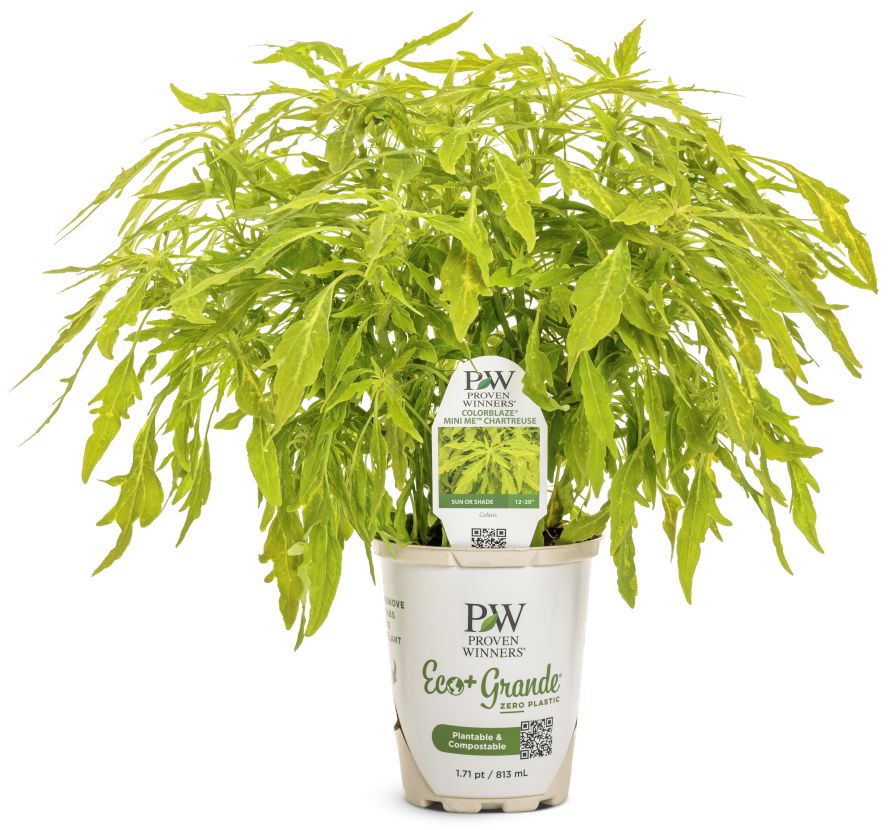
This Eco+ Grande Pot is plantable and compostable. Photo: Proven Winners
Sustainability has been a buzzword in the horticulture industry recently. It started out as a trend, and can sometimes be hard to define. But at Cultivate earlier this year, sustainability efforts were seen in a meaningful, tangible way.
Many growers are looking to implement more sustainable growing practices. This includes reducing fertilizer, reusing water, incorporating biological control agents, and more. More growers are considering MPS certification to promote sustainable practices.
But being sustainable isn’t only up to the growers. Every facet of the horticulture industry is looking at ways to be green. Proven Winners made that clear with its new pots.
Plant-Based and Recycled Pots, Tags
Kate Spirgen, Marketing Specialist at Proven Winners, says growers, retailers, and gardeners alike have growing interest in being environmentally friendly. Their interest in going green stems from various concerns, such as climate change and supporting pollinators. In response, Proven Winners wanted to support people who want the green industry to be a little greener.



“People don’t like the waste that comes from buying plants. You have a lot of plastic containers and, most of the time, you can’t recycle them because recycling facilities won’t take them,” Spirgen says. “People are much more conscious about what they send to the landfill these days, so we’re working on how we can support gardeners in their efforts to be more eco-friendly.”
Proven Winners recently introduced plant-based pots, called Eco+ Containers made of sugars derived from corn grown in the U.S. The carbon footprint is low, and the pots can be placed in the soil with the plant. The pot is compostable, and it releases nutrients as it breaks down.
“That’s an extra bonus. Now you have a product that you don’t have to throw away at all — you can mix it in with the soil. Or, if you do throw it away, it decomposes much faster than plastic,” Spirgen says. “People are excited about having an eco-friendly option.”
The original Eco+ Container had four tabs to remove, but it has been refined to only include two tabs, and the bottom of the pot drops out so there is full root-to-soil contact.
The latest green-friendly introduction from Proven Winners is 100% recycled plastic pots. The material is sourced from post-consumer plastic. This means the plastic was likely from food waste, such as butter and yogurt containers, Spirgen says. The material is thoroughly sanitized before it is repurposed.
Proven Winners also offers 100% recycled plastic tags and plant-based tags. The material for these tags is sourced from the same as the recycled plastic and plant-based pots. Although there are no nutrients included in the tags, which the Eco-Pots do have.
Some gardeners may worry that if they have plant-based tags, the tags might break down over time. Gardeners may want to keep the tags to identify the plants they are growing. Spirgen says in order for the tags to break down, they must be subjected to heat and moisture, such as when the Eco+ Containers are planted in the ground. She says the plant-based tags will not degrade unless subjected to those conditions.
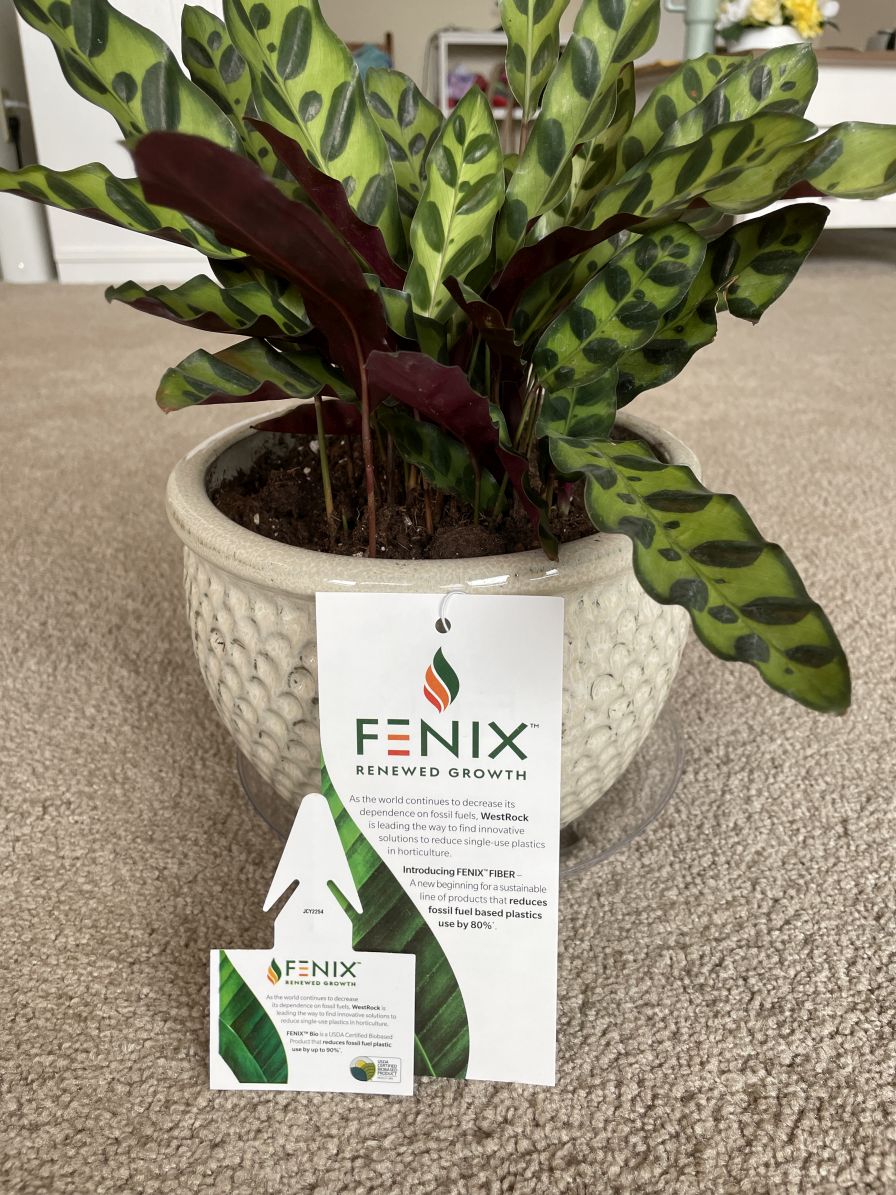
Smurfit Westrock displayed its new Fenix tags at Cultivate’24. Photo: Julie Hullett
Plant-Based Tags from Smurfit Westrock
Smurfit Westrock is also taking a new approach to sustainability with its tags. The company is prioritizing a reduced use of fossil fuel- based materials. Smurfit Westrock is committed to leading the way in finding innovative solutions to reduce single-use plastics in horticulture. To this end, the company recently introduced Fenix.
Fenix is a sustainable line of plant tag substrates that reduces fossil fuel-based plastics by up to 88%, compared to plastic tags of the same size and shape. The Fenix line of bio-based plant tag materials may help brands achieve fossil fuel-based plastic reduction goals while maintaining critical functionality in greenhouse, nursery, and retail environments, according to Smurfit Westrock.
Here are a few features of Smurfit Westrock’s tagging solutions:
Fenix Fiber
- Suitable material for hanging nursery tags
- Patent-pending for horticultural applications
- Smurfit Westrock custom material
- Water and fade-resistant up to one year
- Durable, 69% plant-based solution with up to 65% fossil fuel plastic reduction
Fenix Bio (currently in pilot phase of development)
- Suitable material for locking tags
- Patent-pending for horticultural applications
- Smurfit Westrock exclusive material
- Water and fade-resistant up to one year
- PLA base material is BPI certified for industrial compostability
- Can reduce fossil fuel-based plastic use by an estimated 90%
Subscribe to eNewsletter