


Biochar Effects on Plant Growth in Ornamentals
 October 16, 2025
 Note: This is the second of a four-part series on biochar. You can find the first part of the series, which introduces biochar as a substrate option, here.

View all
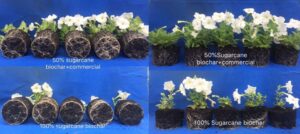
Is biochar good or bad for plant growth? This is not an easy question.
Mixing biochar in soilless substrates could have none or positive effects on plant growth. Biochar made from green waste mixed with peat at 50% (by volume) can increase prayer plant’s total biomass and leaf surface. Adding 10% of sewage sludge biochar with peat-based substrates can increase lettuce biomass by 184%-270%. Mixing pruning waste biochar with peat-based substrates at 50% and 75% (by vol.) can also increase lettuce biomass. Mixing 20% or 35% (w/w) coir biochar with 0.5% or 0.7% humic acid in composted green waste medium showed increased biomass of rattlesnake plants compared to those without biochar and humic acid amendments (Zhang et al., 2014). Mixed hardwood biochar (50%, vol.) and sugarcane bagasse biochar at 50% or 70% with bark-based substrate increased the basil plant’s average root diameter (Yu et al., 2021). Mixed hardwood biochar at 20%-80% (vol.) increased photosynthesis, shoot fresh weight and shoot dry weight of chocolate mint, peppermint, Kentucky Colonel mint, spearmint, and orange mint. Also, pinewood biochar mixed with pine bark increased chrysanthemum shoot fresh and dry weight. Pinewood biochar (20%-80%; vol.) mixed with peat moss-based substrate had no effects on Easter lily or poinsettia plant growth compared to those in 100% peat moss-based substrate (Guo et al. 2018). Tomato crop green waste biochar did not affect tomato plant growth, fruit number, or fruit yield when applied in sawdust soilless substrates.
Biochar may also have adverse effects on plants’ growth. For example, we tested one type of biochar, which contained a high salinity where plants grown in the biochar mixes wilted within 30 minutes. When plants do not have enough water to dissolve the extra salts, they die.
Biochar percentage also plays a significant role in the effects of plant growth. Generally speaking, a low biochar percentage may increase plant growth but high biochar percentage decrease plant growth. For instance, biochar at 40% and 60% (by vol.) mixed with bark could increase the growth index of tomato plants, but when the biochar rate increased to 80% and 100% (by vol.), the growth index of tomato plants may significantly decrease. Also, biochar at 30% (by vol.) did not affect the dry weight of leaves and whole aerial parts of geranium (Pelargonium) growth. However, when the percentage increased to 70% (by vol.), geranium plant growth and flowering traits were significantly decreased (Altland et al. 2017).

What Decides the Biochar Effect on Plant Growth?
There are four main factors in determining the biochar effect on plant growth: biochar type, biochar rates, plant species, and other substrate components.
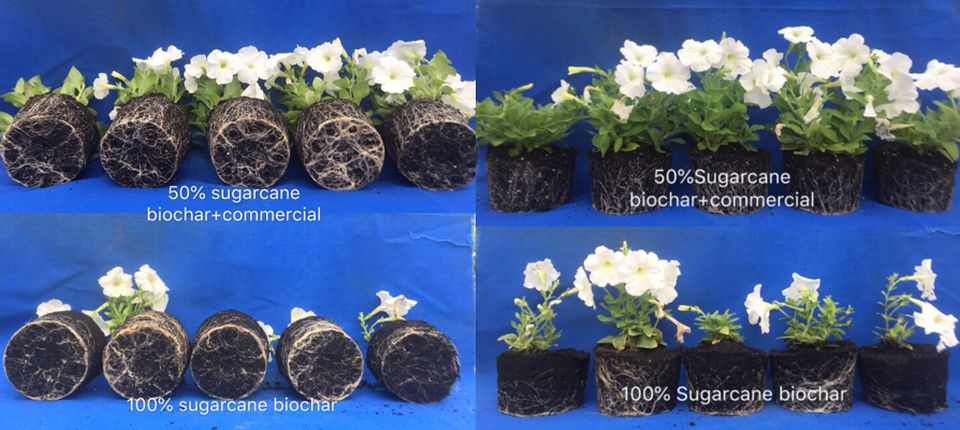
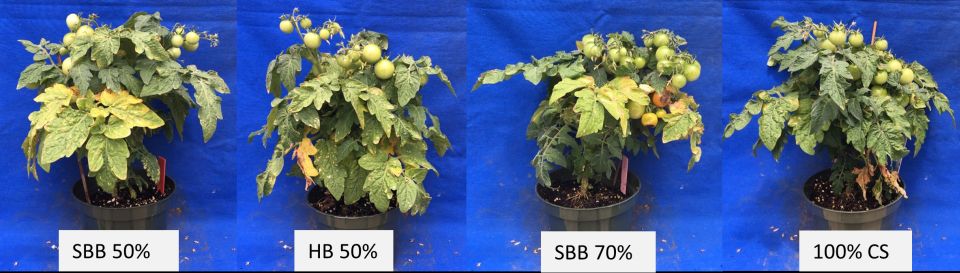
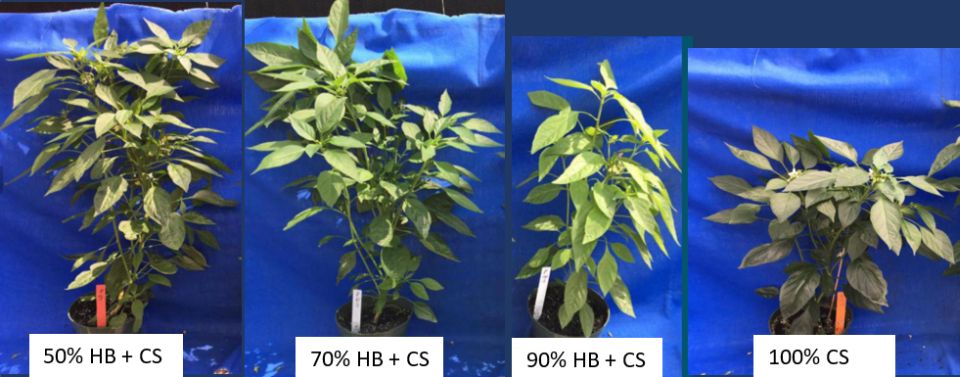
Biochar types and rate influence plant growth differently. We tested sugarcane bagasse biochar and mixed hardwood biochar on tomato and basil plant growth (Figure 1-2). Tomato and basil plants grown in sugarcane bagasse biochar, and mixed hardwood biochar mixes had similar growth compared to those grown in commercial mixes. When we tested the same types of biochar with different rates on pepper and petunia (Figure 3-4), we found that pepper plants in 50% and 70% of mixed hardwood biochar had similar growth compared to these in a commercial substrate. On the other hand, petunia grown in the 50% of sugarcane bagasse biochar had better growth than those in 100% (Figure 4).
Plant species plays a significant role in biochar’s effects on plant growth. Similar biochar may have different effects on different plant species. For example, the mixture of Japanese oak biochar, peat, and vermiculite can improve zinnia shoot growth but has no effects on marigold or scarlet sage. Citrus wood biochar (1%, 3% or 5% by weight) mixed with commercial soilless substrates (a mixture of 70% coconut fiber and 30% tuff by volume) increased the flower and fruit yield of pepper but had no effects on tomato plants (Graber et al. 2010),
Other substrate components in the biochar mix could also affect plant growth. Mixing biochar with bark did not affect the growth index of chrysanthemum, but mixing the same biochar with Sunshine #1 Mix increased the growth index of chrysanthemum. Gomphrena plants grown in pinewood biochar mixed with peat-based substrates had higher fresh dry weight than those grown in pinewood biochar mixed with bark substrates (Gu et al., 2013). Lettuce grown in deinking sludge biochar mixed with peat (50:50; by vol.) had higher total biomass, shoot and root weight than those in deinking sludge biochar mixed with coir (50:50; by vol.) (Méndez et al., 2015).
References:
- Altland, J.E. and Locke, J.C., 2017. High rates of gasified rice hull biochar affect geranium and tomato growth in a soilless substrate. Journal of Plant Nutrition, 40(13), pp.1816-1828.
- Graber, E.R., Frenkel, O., Jaiswal, A.K. and Elad, Y., 2014. How may biochar influence severity of diseases caused by soilborne pathogens?. Carbon Management, 5(2), pp.169-183.
- Gravel, V., Dorais, M. and Ménard, C., 2013. Organic potted plants amended with biochar: its effect on growth and Pythium colonization. Canadian Journal of Plant Science, 93(6), pp.1217-1227.
- Gu, M., Li, Q., Steele, P.H., Niu, G. and Yu, F., 2013. Growth of ‘Fireworks’ gomphrena grown in substrates amended with biochar. J. Food Agric. Environ, 11(1), pp.819-821.
- Guo, Y., Niu, G., Starman, T. and Gu, M., 2019. Growth and development of Easter lily in response to container substrate with biochar. The Journal of Horticultural Science and Biotechnology, 94(1), pp.80-86.
- Méndez, A., J. Paz-Ferreiro, E. Gil, and G. Gascó, 2015. The effect of paper sludge and biochar addition on brown peat and coir based growing media properties. Scientia Horticulturae 193:225-230.
- Yu, P., Li, Q., Huang, L., Niu, G. and Gu, M., 2019. Mixed hardwood and sugarcane bagasse biochar as potting mix components for container tomato and basil seedling production. Applied Sciences, 9(21), p.4713.
- Zhang, L., X.-y. Sun, Y. Tian, and X.-q. Gong, 2014. Biochar and humic acid amendments improve the quality of composted green waste as a growth medium for the ornamental plant Calathea insignis. Scientia Horticulturae, 176:70-78.
Subscribe to eNewsletter