



Building Better Plants with Microbes
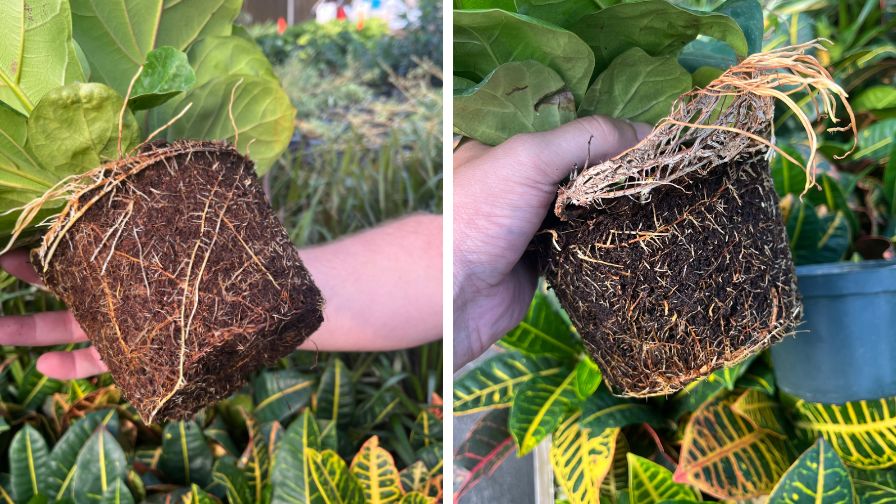
Fiddle-leaf fig before microbiotics treatment (L), Fiddle-leaf fig after microbiotics treatment (R). | F. Lowers Greenhouse LLC.
As interest in sustainable growing practices continues to rise, more greenhouse growers are exploring biological solutions to improve soil and plant health. One promising strategy is the use of microbial amendments — living inputs that introduce or enhance beneficial bacteria, fungi, and other organisms in the growing media.
These microbiotas can help unlock nutrients, suppress pathogens, improve water retention, and even bolster plant resilience. While many products on the market claim to offer these benefits, on-the-ground trials can help growers determine how these biological inputs might perform under real-world production conditions.
That’s exactly what happened at F.Lower’s Greenhouse LLC, a wholesale and retail operation in southwest Missouri. Owner Caleb Whaley decided to trial a microbial soil amendment — a blend called BioSoil, developed by Wind River Microbes — over a six-week period on a selection of tropical and foliage crops.
“I had never tried anything like this before,” says Whaley. “But I thought, let’s just see what it does.”





What’s in a Microbial Amendment?
Microbial soil products typically contain combinations of bacteria, archaea, and fungi that work together to enhance the biological activity of the root zone. These microbes can break down organic matter, solubilize nutrients, and create more favorable conditions for root development.
In the case of BioSoil, the formulation includes more than 70 different strains and is designed to support humus formation, improve soil structure, and help plants better tolerate drought and disease pressure. However, Whaley didn’t change any other part of his cultural practices during the trial — no new fertilizers, no changes in irrigation timing.
“It was a good test of whether the microbes alone could make a difference,” he says.
Trial Design and Observations
Whaley applied 4 ounces of the microbial solution per gallon of water using his injector system, treating selected batches twice per week. A separate group of untreated plants served as the control group. Measurements were taken at the start of the trial and monitored over four weeks.

What stood out most wasn’t vertical height; it was lateral canopy growth and root mass.
“The spread was the biggest difference,” Whaley says. “The treated plants just looked fuller and more vigorous.”
Root development also told a clear story. Photos taken throughout the trial reveal thicker, denser root systems in treated plants — a likely result of improved nutrient access and soil aeration driven by microbial activity.
Whaley also noticed that treated plants handled heat stress better, bouncing back more quickly after wilting and, in some cases, avoiding visible stress symptoms altogether.
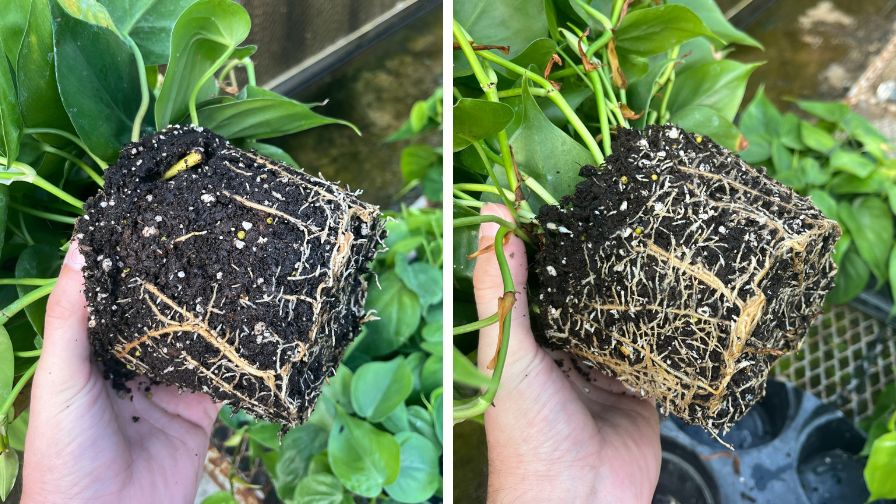
Philly Cord before microbiotics treatment (L), Philly Cord after microbiotics treatment (R). | F. Lowers Greenhouse LLC.
“We didn’t change anything about how we grew them. But the ones with the microbial treatment were clearly more resilient,” he says.
Efficiency and Input Reduction
An unexpected benefit was a decrease in pest and disease pressure, which allowed Whaley to reduce his use of fungicides and pesticides during the trial.
“It wasn’t something I planned, but I found myself spraying less,” he says. “That’s always a win, especially when you’re trying to minimize inputs where you can.”
Equally important was how easily the microbial solution integrated into his routine.
“I’m already using my injector system,” says Whaley. “If this fits right into what we’re already doing and improves the crop, that’s time well spent.”
Rethinking Soil as a Living System
While more research is still needed to understand the full scope of benefits microbial inputs can offer, this small trial offers a glimpse into what’s possible when the root zone is treated as a living, dynamic system.
For Whaley, the trial was low-risk, and the results were enough to justify continued use.
“We didn’t overhaul anything, but we saw real results. It just made sense to keep going.”
As growers look for new ways to build plant health naturally and reduce chemical inputs, microbial amendments like these may become a valuable addition to the greenhouse toolkit.
Subscribe to eNewsletter
