



Clemson Launches Chemical Trial to Combat the Cotton Leafhopper

Clemson College of Agriculture, Forestry, and Life Sciences logo. | Clemson University
Clemson University scientists have begun the first publicly available chemical trial aimed at controlling two-spot cotton leafhopper infestations in hibiscus plants, a major step toward protecting the ornamental horticulture industry.
The two-spot cotton leafhopper, a fast-spreading pest, threatens hibiscus and other ornamental plants. The trial, conducted at Clemson’s Pee Dee Research and Education Center near Florence, SC, provides nursery growers with the first science-based data on chemical control for this pest in a nursery setting.
Zee Ahmed, Assistant Professor and Clemson Extension Specialist in Turf and Ornamental Entomology, is leading the study, along with graduate students Nisha Yadav of Rewari, India, and Peilin Tan of Beijing, China, and Research Specialist Shawn Chandler.
A Pest on the Move
Native to Asia, the insect — also known as the cotton jassid — was first detected in the Caribbean in 2023 and subsequently in Florida in 2024. By 2025, it had spread to Alabama, Georgia, Louisiana, Mississippi, North Carolina, South Carolina, and Texas. Experts warn its range could expand as infested plants are shipped across state lines.
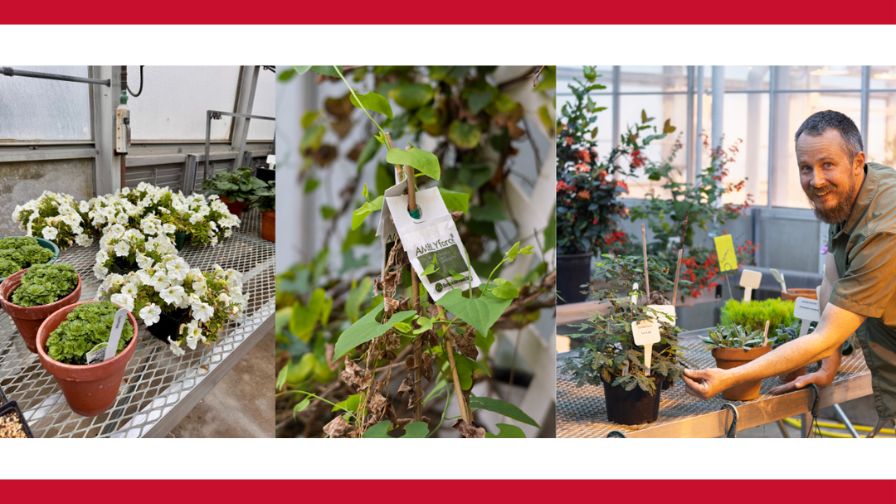


The leafhopper causes “hopperburn,” which turns leaves yellow, red, or brown, curls them, and eventually kills them. Damage often appears to be a nutrient deficiency or disease, making early detection difficult. Females lay eggs inside leaf veins, where they are protected from insecticides and natural predators.
“Eggs are largely unaffected by insecticides,” says Ahmed. “By the time symptoms appear, the infestation is already well underway.”
Why Hibiscus Matters

Hibiscus flowers in Florida at risk two-spot cotton leafhopper. | University of Florida Institute of Food and Agricultural Sciences (UF/IFAS)
The pest feeds on many plants, including cotton, okra, eggplant, and soybeans, but poses a particular threat to ornamentals such as hibiscus. These plants allow leafhopper populations to persist when agronomic crops are out of season.
Reports from other countries show yield losses of 30% to 50% in susceptible crops, underscoring the need for effective control strategies.
The First Public Chemical Trial
To date, no publicly available chemical trial has targeted the two-spot leafhopper on hibiscus in U.S. ornamental production. Ahmed’s team tested six insecticides on hibiscus plants grown in 5-gallon containers and infested with leafhoppers. They evaluated knockdown and short-term residual efficacy at seven and 14 days after treatment.
Products tested included:
- Hachi-Hachi SC (tolfenpyrad, Group 21A)
- Altus (flupyradifurone, Group 4D)
- Mainspring GNL (cyantraniliprole, Group 28)
- Ventigra (afidopyropen, Group 9D)
- Safari 20SG (dinotefuran, Group 4A)
- Talstar Professional (bifenthrin, Group 3A)
Promising Results
Hachi-Hachi SC and Altus consistently reduced adult and nymph populations at both intervals. Mainspring GNL provided rapid adult knockdown at seven days, but populations rebounded by Day 14. Ventigra and Safari 20SG showed variable results, while Talstar Professional had mixed success against nymphs.
“Insecticides that spread through the plant or across the leaf worked better on young insects feeding on the leaves,” says Ahmed. “But none of the products affected the eggs.”
Practical Guidance for Growers
To control this pest, the scientists recommend:
- Regular scouting with a 10x to 30x hand lens.
- Matching treatments to life stages.
- Checking plants at seven and 14 days after treatment.
- Rotating insecticides by IRAC mode-of-action groups.
- Using biological and cultural controls when possible.
“Routine scouting and life-stage-based product choices are the most practical steps to keep small problems small,” says Ahmed.

For additional information and resources on the leafhopper trials, including future research goals and insecticide resistance measures, please read the original article written by Denise Attaway and found on the ClemsonNews website.
Subscribe to eNewsletter