



Growing Media Companies on Shifting Demand in Substrates
 November 18, 2025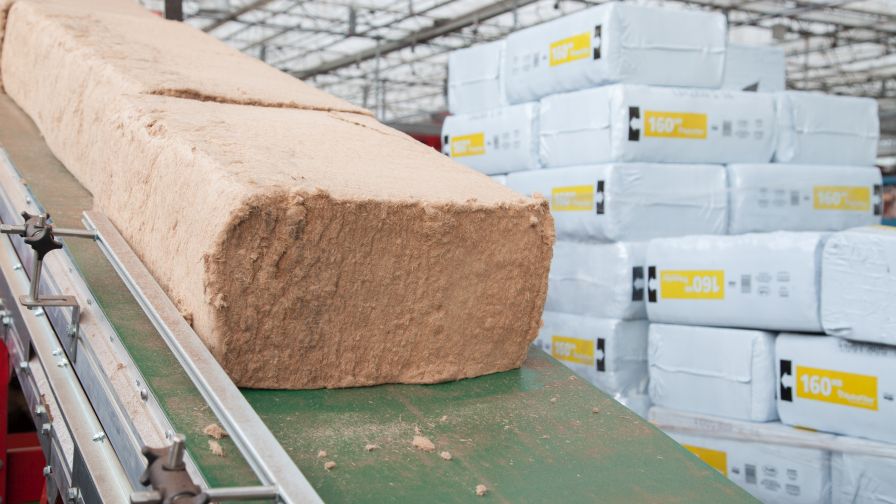
Photo: Profile Products LLC
The right growing media can make or break your greenhouse crop. Beyond achieving reliable performance, growers today must also navigate sourcing challenges, material availability, and shifting expectations around sustainability.
We reached out to growing media suppliers to get their perspective on many of these concerns. In this Part 5 of a series of articles, we look at how demand for different substrate materials has changed over the past couple years. You can check out previous parts of the series, covering topics such as the current peat status, potential tariff implications, and factors to consider when weighing peat alternatives, here.
Josh Peoples, Sun Gro: “I think there’s been a high interest in looking for alternatives, and it started with the COVID-19 pandemic and the craziiness that happened with peat supplies. A lot of growers were almost forced to find alternatives just to keep up with demand, and they learned there are alternatives that may not work exactly the same as peat, but they work pretty well. Since then, they’ve developed their own practices to be able to deliver the live goods plants that they need. As we look forward, I think we’ll see large demand in food production and live goods in general over the next 10 to 15 years, and if you assume the peat supply is somewhat flat, there will be a necessity to find other alternatives to mix in with peat. I don’t view them necessarily as a replacement for peat, but a tool to be able to keep with the demand that is coming.”
Søren Møller Nielsen, Sales Director Americas, Pindstrup: “The growing media industry keeps revolving and making the necessary adjustments. It’s taken a while for the peat industry to start sourcing alternatives, but everybody’s actively looking at this now, and I think that should give some peace of mind to growers that overall demand for substrates will keep growing. All peat companies are realizing that to keep up with demand, we need to keep exploring other alternatives. It’s a necessity for us to keep growing our business.”


Vijay Rapaka, Ph.D., Director of Global Grower Operations and Research, Smithers-Oasis/Oasis Grower Solutions: “Growers are always looking at alternatives. Sustainability, local availability and logistics all play roles. Of course, people are looking at wood fiber and other related wood products, and coco has been proven. For our Oasis® Fertiss® stabilized plug media, the standard is a peat-based plug that’s become a favorite for Stage III tissue culture as well as vegetative propagation and seeding. But we offer a lot of customization options in that line, as we do across the board. We’ve had a lot of interest in Fertiss® blends that include less peat or no peat at all, with coco being the most requested. We’ve also seen new demand for our engineered propagation substrates, like Oasis® RhizoPlug™ for vegetative propagation in floriculture. People appreciate not only the performance, but the cleanliness of the product and the absence of pests and pathogens associated with peat and some other media. And, as I mentioned before, sustainability is also a consideration. It’s also interesting to me how people started embracing sawdust over the last two or three years. A lot of trials have been done, and a lot of growers started using it because there was a good supply when the housing market was booming. Now, because the housing market has gone down, there’s not a lot of sawdust being generated. It was supposed to be a very cheap and readily available alternative, and now it’s scarce.”
Jennifer Neujahr, Senior Director, Global Business Development Horticulture, Profile Products LLC: “Peat is still dominant but under pressure from supply and politics. Demand for coir is growing but volatile due to monsoons and Asian demand. Wood fiber (HydraFiber) is on the fastest growth trajectory, with a projected 1000% scale-up globally by 2050. Stone wool/rockwool is stable in high-tech vegetable production, but under scrutiny for circularity outside Europe. Finally, blends are increasingly the go-to for risk diversification and consistency.”
Subscribe to eNewsletter
