



How a Top 100 Grower Achieved Healthier Plants by Upgrading Its Lighting
 May 29, 2025
Kube-Pak’s transition from older HPS fixtures to LEDs addressed the issue of uneven light distribution, which had previously resulted in inconsistent growth within plant batches. | Kube-Pak
In today’s dynamic business landscape, standing still is akin to falling far behind. For horticulture businesses to truly flourish, a willingness to adapt, embrace transparency, and constantly seek fresh perspectives is paramount. Here’s Part 4 of a look at four forward-thinking growers, plucked from this year’s Top 100 list, who share their strategies for addressing challenges, improving operational efficiency, and boosting their bottom lines.
Make sure to catch up with Parts 1, 2, and 3 if you missed them.
Flipping the Switch to LED
In early 2024, Kube-Pak collaborated with Philips and Ball Seed to convert its high-pressure sodium (HPS) lighting fixtures to LED, a decision driven primarily by the economics of growing stronger, healthier plants.
The limitations of its aging greenhouse lighting system, installed in the mid-to-late 1990s, had become increasingly apparent, says President Robert Swanekamp Jr. While initially reliable, the escalating costs and diminishing availability of components for these outdated fixtures presented a growing operational challenge for Kube-Pak.


“It was harder and harder to get replacement parts for older fixtures,” says Swanekamp. “The other part of the equation was that LED fixtures run more efficiently than the older HPS fixtures. That was appealing to us because we were interested in running more lights at one time for the same electricity consumption.”
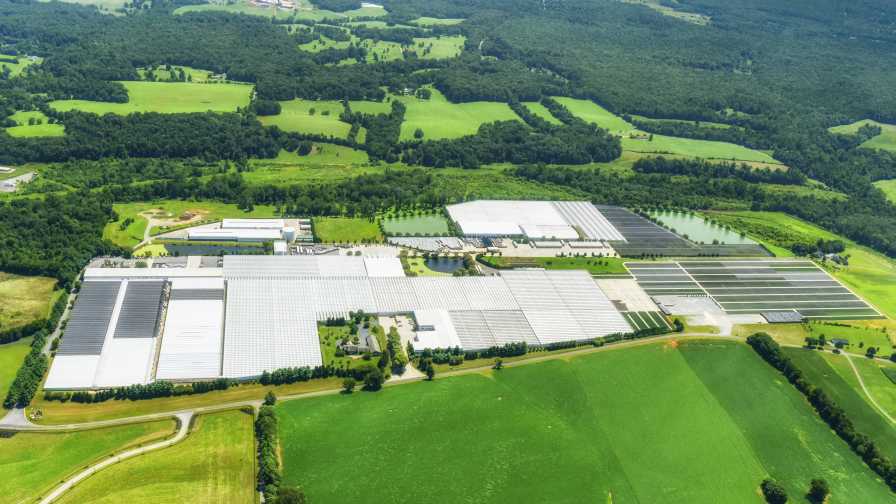
The Allentown, NJ-based wholesale greenhouse, owned and operated by the Swanekamp family for more than half a century, manages around 20 acres of gutter-connected double-poly greenhouses to grow a wide range of horticultural products (plugs, finished plants, field- and landscape-ready, and custom) for garden centers, greenhouse growers, landscapers, and farmers throughout the Northeast and Mid-Atlantic.
According to Swanekamp, other factors helped facilitate this conversion for Kube-Pak. In October 2023, Philips reps presented Kube-Pak with their latest cutting-edge lighting solutions, which was critical timing as the young plant growing season commenced in January.
In addition, the selection process was further strengthened by expert consultation with industry authorities, notably Professor Erik Runkle of Michigan State University, who developed and leads the Controlled-Environment Lighting Laboratory (CELL), a vertical farming research facility.
“Professor Runkle advised us along the way on what we should be looking for specifically for our type of operation and the plants that we grow,” says Swanekamp. “He was a great resource because he focuses on this area, and he knows our operation pretty well. So, he was able to give us some good advice.”
The facility-wide conversion to LED — 1,332 lights — occurred after poinsettia season, and the upgrade to Kube-Pak’s growing infrastructure has so far exceeded initial expectations, Swanekamp says. The enhanced energy efficiency enabled Kube-Pak to operate a more significant number of fixtures simultaneously without increasing electricity consumption. This amplified light output directly translated to more consistent and timely crop readiness across their diverse plant varieties.
Notably, Swanekamp says the transition from older HPS fixtures addressed the issue of uneven light distribution, which had previously resulted in inconsistent growth within plant batches. The early results under the new LED lighting system strongly indicate substantial benefits in both crop uniformity and accelerated growth.
“Once we turned the LEDs on, we noticed a more even distribution of light along the floor,” he says. “So, when we shipped plants, we were shipping a more even crop across all the different varieties that we grow. There were also young plants where we could quickly see that we could cut some crop time because they were finishing more rapidly, because they were growing a bit more vigorously. While we didn’t want to make those types of decisions too quickly, we did adjust the schedules of some crops early on because we saw they were responding to the new lights and realized we could reduce the time on our schedule accordingly.
Lastly, the LED fixtures emit a light closer to white rather than a pink hue, says Swanekamp.
“There are some greenhouse fixtures that emit a strong pink or purple color [light],” he says. “We went with a fixture that is closer to white light. It’s more pleasant to work under, and you don’t feel like you’re on a different planet. And the plants are happy, too, which is fantastic.”
Subscribe to eNewsletter
