



How to Correct Nutrient Issues in Begonias, Gerberas, and Osteospermum
 October 23, 2025
 In a series of recent e-Gro Alerts, Clayton Humble, Patrick Veazie, and Brian E. Whipker of North Carolina State University cover the diagnosis and treatment of various plant nutrition issues, including leaf necrosis on begonias, underserved gerbera, and osteospermum with lower leaf spotting. Here’s a brief look at each topic:
Management of Leaf Necrosis on Dragon Wing and Other Large Begonias
During a grower visit, the group noticed pot-bound, late-season, fully-grown plants, such as Dragon Wing and Whopper begonias, “with necrotic spots on the lower and midsections of the plant.”
Tissue analysis and PourThru testing for the pH and EC values of the affected plants were performed. Although EC levels were lower than the recommended range, the far lower pH was thought to be the reason behind the onset of leaf necrosis. Foliar tissue analysis also “confirmed that iron and manganese exhibited greater tissue concentrations when compared to recommended values for both cultivars,” with the elevated levels also being a contributing factor to the spotting.
For management of pH, Humble, Veazie, and Whipker suggest “a good monitoring routine to determine if it is within the target range.” Additionally, for when the pH needs correcting, options include using “a basic fertilizer to increase the substrate pH over time,” and “using liquid lime to quickly correct the issue.”
Spotting Symptoms of Hungry Gerberas
“Diagnosing nutritional issues starts with the location on the plant to aid in determining the problem,” which can be caught early through proper monitoring and scouting of plants. When scouting a particular gerbera crop, the group came across multiple symptoms, including lower leaf purpling and yellow leaf discoloration, and enlisted PourThru testing and leaf tissue analysis to determine the cause(s).

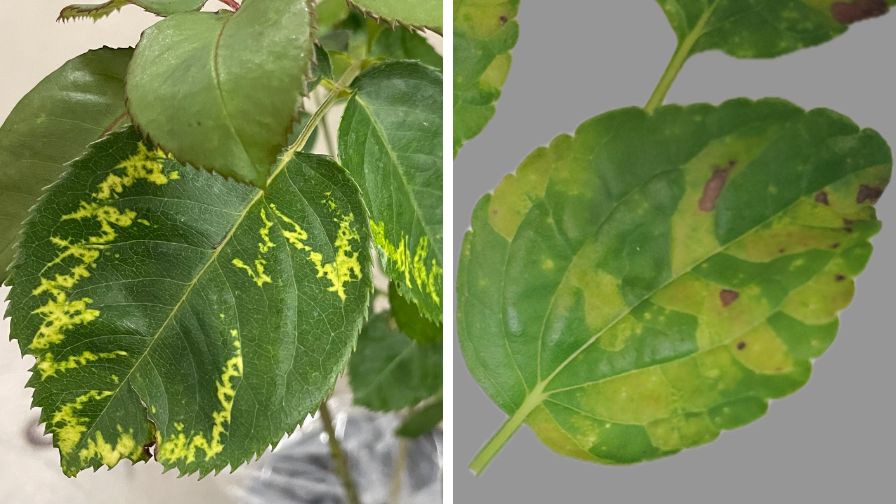

Through testing, EC and pH levels were under recommended levels, but no iron and manganese toxicity was observed. Planta data suggested “a situation of limited nutrient uptake due to overwatering and poor roots,” with iron uptake “hindered by wet conditions, poor roots, and cold growing temperatures.” Inspection of the roots showed that they “were not robust, and the shoot growth was also smaller,” supporting the hypothesis.
Lower Leaf Spotting on Osteospermum
This last look at plant nutrition problems started by noticing “olive-green spotting and necrosis on the lower leaves” on a white flowering cultivar of osteospermum, which was noted as typical of phosphorus deficiencies.
Leaf tissue analysis was conducted on the white cultivar’s lower affected leaves, its recently mature leaves, and the leaves of an adjoining pink osteospermum cultivar. The lower leaves were shown to have roughly half the amount of phosphorus concentration as the mature leaves and the leaves of the pink osteospermum, suggesting that phosphorus “was translocated out of the lower leaves into the upper foliage, which led to the development of symptoms.”
The group notes that “growing plants with lower phosphorus aids in controlling excessive stem stretch,” but completely withholding phosphorus applications can quickly lead to nutrient deficiencies and the subsequently observed symptoms.
For additional information on each plant care and production topic covered above, please read each of the following full e-Gro (Electronic Grower Resources Online) Alerts:
- “Begonia Leaf Necrosis: A Common End-of-Season Problem”
- “Hungry Gerberas: A Multitude of Symptoms”
- “Osteospermum: Lower Leaf Olive-Green Spotting”
Additional and current e-Gro Alert pieces from Volume 14 (2025) can be found online.
Subscribe to eNewsletter