



How to Identify and Prevent Herbicide Damage to Greenhouse Plants
 July 22, 2025
 According to Michigan State University (MSU) Extension’s “Weed Management Strategies in Greenhouses – Part 2: Chemical Control Strategies,” there are very few herbicides labeled for use in greenhouses. Yet, their accidental or careful use can still cause damage to “present and future crops.” In a recent e-Gro Alert, Heidi Lindberg and Erin Hill of MSU address diagnosing herbicide symptoms and reducing herbicide damage to plants through the use of residue testing in diagnostic labs.
Herbicides Applied with Crops Present
Despite many not being cleared for use in greenhouses, “diagnostic clinics receive plants that have been damaged by herbicides” every year. Due to the close benching design of most greenhouses, herbicide sprays can miss their intended targets, instead damaging nearby plants.
Herbicides Applied to Non-Crop Areas Without Crops Present
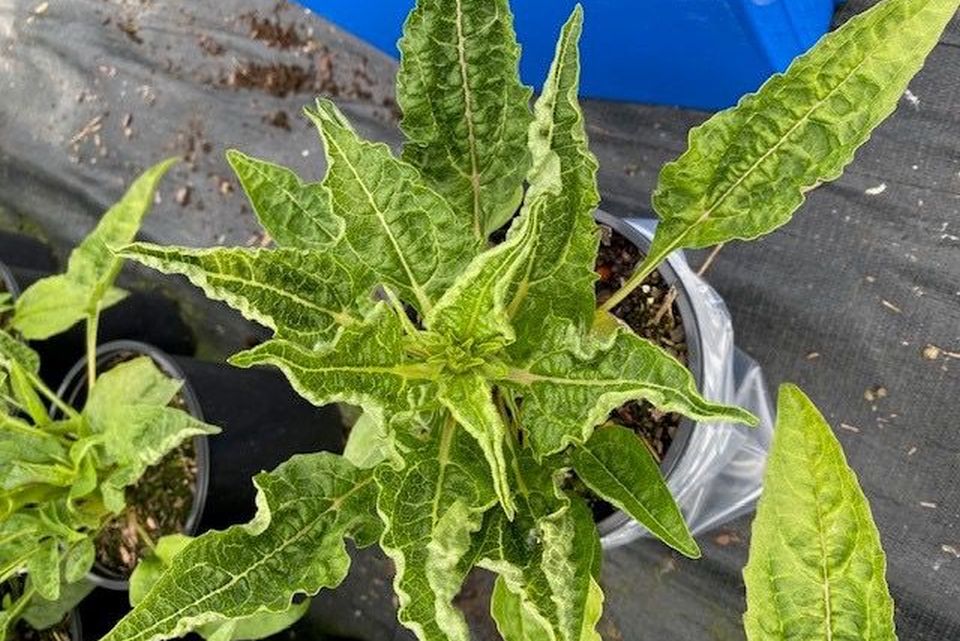
Curled, crinkled leaves on echinacea from a suspected indaziflam exposure. | Michigan State University Diagnostic Lab
In non-crop areas, “herbicides are sprayed to manage weeds under benches, to gravel, to gaps in weed mats,” and more.
In one example, “a grower applied indaziflam (Marengo) to gravel areas prior to the crop being brought inside.” However, when an echinacea with “curled leaves, epinasty of stems, and crinkled leaves” was found, it was sent to the lab, where a diagnosis pointed the finger at “foliar contact with indaziflam.” As for how, “the phytotoxicity from the herbicide might have resulted from spray tank contamination, drift from another area, or contamination of a watering source.”

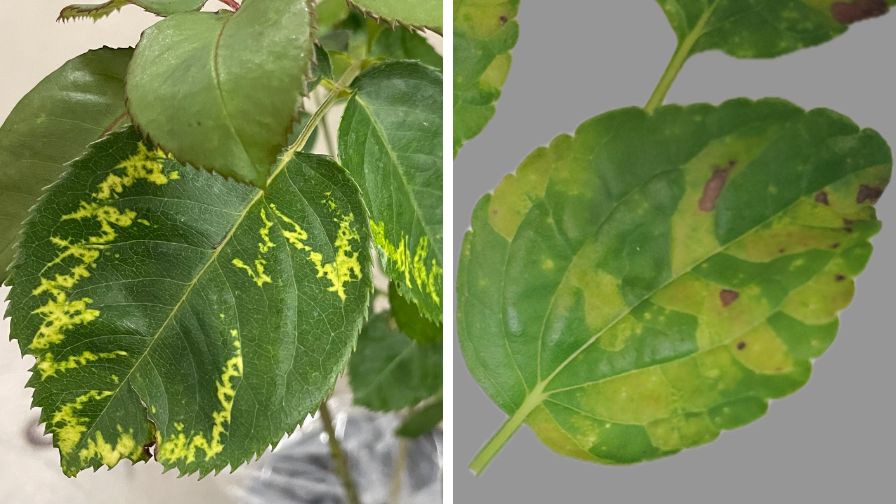

In another case, the diagnostic lab “received a sample of zinnias with distorted, thickened, chlorotic leaves with some distorted stems.” The staff suspected that “topsoil that may have been treated with an herbicide was mixed in with the potting mix.” Fearing a “synthetic auxin injury,” the lab recommended “running a bioassay” to confirm their suspicions.
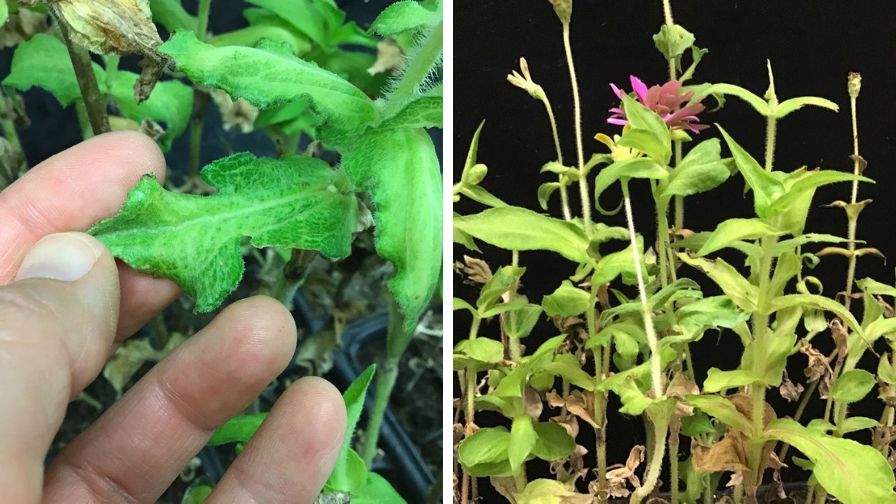
Curled, forked, thickened leaves from suspected
synthetic auxin exposure (L) and abnormal stems and necrotic lower leaves from
suspected synthetic auxin exposure (R). | Michigan State University Diagnostic Lab
Additionally, Lindberg and Hill note that plant injuries from herbicides can also be the result of “off-label use.”
Herbicide Injury Modes
It’s easy to determine the cause of herbicide damage when the affected plants were present during application. However, when plants that weren’t present during the time of the application display injuries, it can be much more difficult to properly diagnose. With direct application ruled out as the culprit, Lindberg and Hill recommend considering the following as methods and/or vectors that allow for herbicide injuries:
Spray Tank Contamination
If herbicides are applied using the same sprayer as pesticide applications, there is the risk of tank contamination. “Minute amounts of an herbicide applied to a sensitive crop can result in significant damage.”
Drift
After herbicides are applied, they can “move with the wind from neighboring areas to affect plants not originally intended.” Additionally, herbicide drift can pass through various greenhouse equipment and structures, including windows and vents.
Volatilization
After being applied to surfaces, herbicides can be “re-released” as vapors. This process of volatilization can increase the risk of herbicide injuries if applied during low wind and/or high temperature conditions.
For additional information on herbicide injury modes and other professional testing methods and insights, please read the full e-Gro (Electronic Grower Resources Online) alert “Herbicide Damage to Greenhouse Plants and Residue Testing.” Additional and current e-Gro alert pieces from Volume 14 (2025) can be found online.
Subscribe to eNewsletter