



How To Maintain Your Greenhouse’s Cooling Pads and Fans During Summer
 May 22, 2025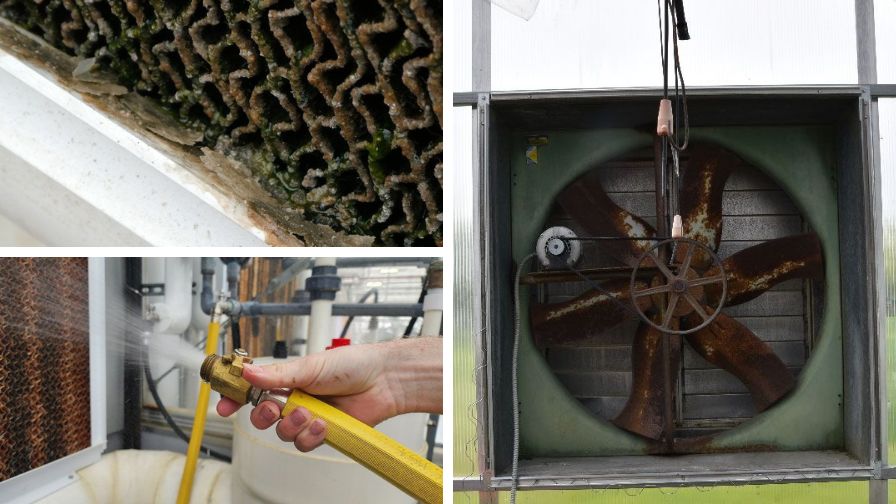
(Clockwise from top left) Mineral deposits accumulating on a cooling pad surface, the installation of a new exhaust fan belt, and rinsing pads with algaecides and disinfectants administered through a hose. | Olivia J. Liebing and Dr. W. Garrett Owen, The Ohio State University
In a recent e-Gro Alert, Olivia J. Liebing and W. Garrett Owen of The Ohio State University covered maintenance checks and tips that growers should employ on their operation’s cooling equipment, such as cooling pads and fans, before the summer heat comes in full. Without such climate management measures, high air temperature can bring about heat stress symptoms, affecting the overall quality, and therefore marketability, of the product. Here are the steps Liebing and Owen recommend to ensure your cooling system is running at peak efficiency to ensure optimal plant health.
1. Pad Saturation
According to Liebing and Owen, “Proper pad saturation is fundamental for consistent evaporative cooling,” and cooling pads “must be uniformly wet to maximize the cooling effect as air passes through.” Therefore, it’s critical to ensure that the reservoir sump pump connected to the pad(s) is delivering enough water, and on a consistent basis. If possible, depending on system controls, this process can be automated so that “the pump operates when the exhaust fans reach a certain power usage or temperature setpoint.”
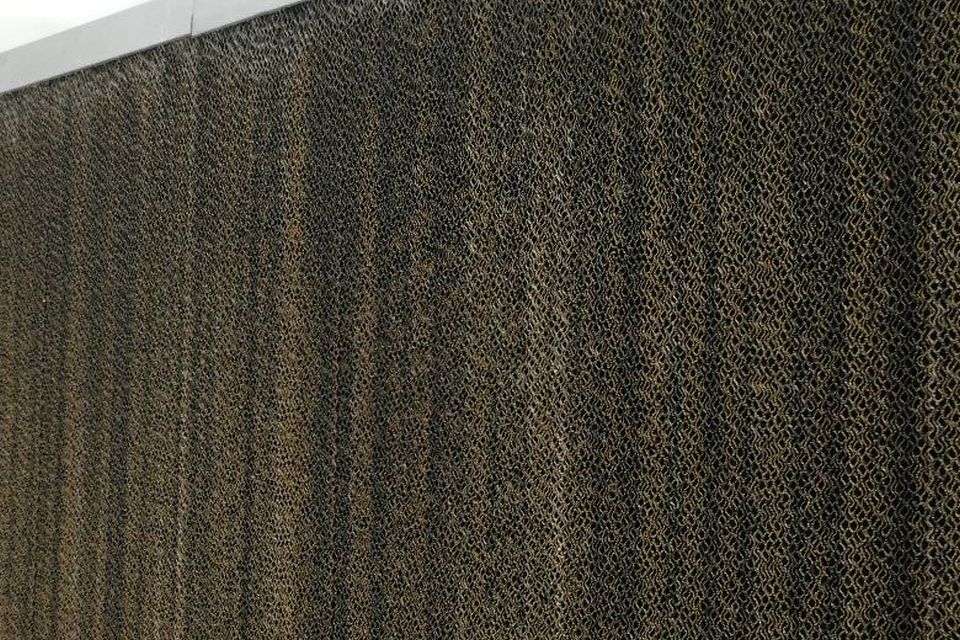
An example of dry spots of an aged cooling pad which were caused by blocked gutter emitters. | Dr. W. Garrett Owen, The Ohio State University
Regular inspections should be performed on the gutter and pad to see if there are any dry spots. The presence of dry spots likely indicates either a “blocked gutter emitter or insufficient water volume.” Make sure any blockages or pump problems are addressed swiftly to maintain pad saturation uniformity and, by extension, ideal cooling performance.


2. Build-Up on Cooling Pads
Constant moisture in a greenhouse creates a conducive environment for algae, which can then lead to numerous problems in your operation, including uneven plant growth, worker safety hazards, and the infestation of pests and diseases. As cooling pads need to be consistently and uniformly wet, they run a large risk of developing algae, “identified as green or brown slimy patches,” on the pad’s surface. In addition to the problems listed above, algae can degrade pad material and reduce cooling efficiency by restricting airflow, costing you in a number of ways.
For the control and removal of algae, Liebing and Owen recommend applying “greenhouse-safe algaecides or disinfectants directly to the pad of the reservoir,” and to ensure that any products you’re using are not toxic to crops within your operation.
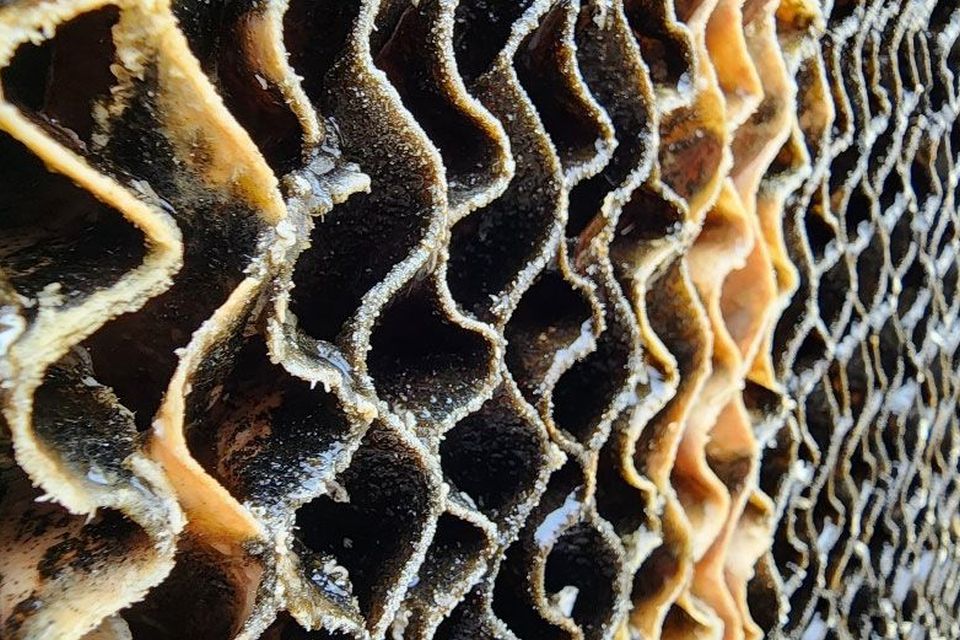
Algae build-up on cooling pads can greatly reduce pad efficiency and life span. | Olivia J. Liebing, The Ohio State University
Additionally, beyond algae, mineral deposits can also accumulate on pads when “water evaporates and leaves particulates behind.” Like algae, these deposits, usually salt and calcium, are corrosive to cooling system components and will block airflow, detrimentally affecting airflow efficiency and cooling capacity.
To minimize and clean up excessive mineral build-up, pads should be regularly rinsed, and water pH can be adjusted with acidification.
3. Leaks
Leaks, in both fans and pads as part of the cooling system, “are often the result of poorly connected or aging fittings in the pad gutters of cycling pipes.” Leaks, even small ones, can lead to an enormous amount of water waste over time, in addition to affecting the effectiveness of water treatment applications, such as algaecides and disinfectants. Additionally, leaks can create slippery surfaces and puddles that lead to greenhouse hazards, including employee falls and equipment degradation.
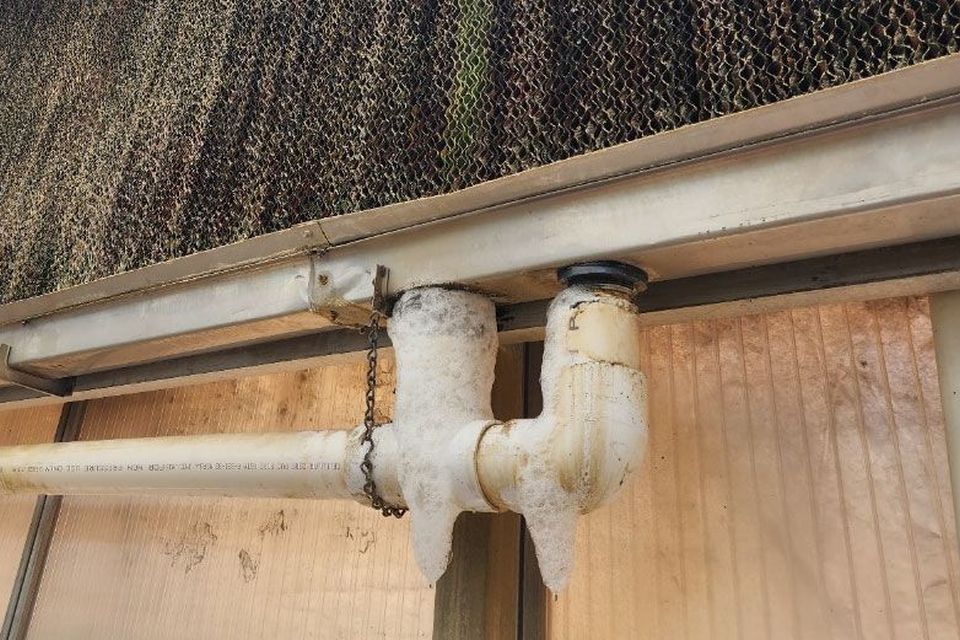
Water is leaking out of the return pipe from this pad-and-fan system, not only reducing efficiency but creating a puddle below in a busy walkway. | Olivia J. Liebing, The Ohio State University
To prevent these risks and more, all connections within the operation’s cooling system should be inspected, with loose fittings tightened and worn or damaged parts replaced.
4. Fan Belt Inspection and Maintenance
Specific to cooling fan maintenance is the inspection of drive belts, as “over time, fan belts can become loose, cracked, or worn.” These problems lead to slippage “that reduces airflow and forces the motor to work harder, increasing energy costs and the risk of premature motor failure.”
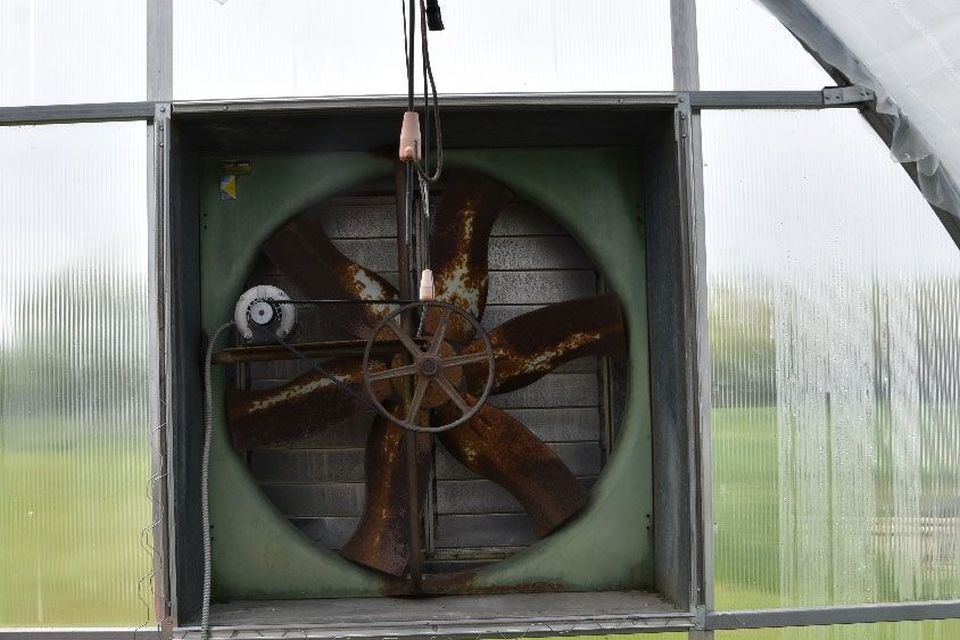
Installation of a new exhaust fan belt. | Dr. W. Garrett Owen, The Ohio State University
Sings of slippage or a failing belt include:
- A burning odor
- A high-pitched whining sound
- Visible slack or shaking
To prevent the decreased functionality of the cooling system, fan belts should be checked frequently, and either tightened or replaced depending on their condition.
5. Wire Screen Cleaning for Optimal Air Intake
Wire screens are often installed over cooling pads, fans, and other ventilators, both for worker safety and to prevent equipment damage from large debris and pests. However, much like the surface of pads, these screens can become clogged if left unchecked for too long. In addition to algae, wire screens can accumulate dust and lost plant material, creating blockages that obstruct airflow.
To remove said blockages, wire screens should be treated with soft brushes and compressed air, ensuring efficient air delivery.
For the final two steps, and additional insights into cooling and climate system maintenance, please read the full e-Gro (Electronic Grower Resources Online) alert “Keep Your Cool: Maintenance Essentials for Fan-and-Pad Cooling.” Additional and current e-Gro alert pieces from Volume 14 (2025) can be found online.
Subscribe to eNewsletter
