



Scouting and Planning for Healthy Greenhouse Ornamentals
 July 9, 2025
 As growers seek strategies for successful mum, rose, and poinsettia production, effective scouting and agronomic planning remain the most important tools for protecting plant health, especially during summer production.
Ornamental crops in greenhouses are vulnerable to a wide variety of diseases and insects, including Botrytis, Pythium spp., Fusarium spp., and whiteflies. These pressures can significantly reduce crop quality if not detected early, and conditions like high heat and humidity can increase the likelihood of infection. With a deeper understanding of these environmental pressures, growers can implement and improve strategies to support healthy, attractive plants throughout the season.
Botrytis

Botrytis on poinsettia stem. | Nancy Rechigl, Syngenta
Botrytis blight, also known as gray mold, is one of the most common and damaging diseases affecting ornamental plants. It typically appears as light-brown spots or small flecks on flowers, and V-shaped, tan-brown lesions on foliage. Botrytis can also cause a lower stem rot when conditions are cool and damp. In severe cases, plants may collapse, and infected tissue becomes covered in fuzzy gray mold. Once established, gray mold can spread quickly through the crop and production area.
Botrytis most commonly develops during prolonged cloudy, damp weather, when temperatures range from 62–75°F and leaf surfaces remain wet for four hours or more. Post-harvest environments such as coolers and shipping boxes also accelerate Botrytis development because they retain moisture and limit airflow. Taking preventive measures like applying fungicides is essential ahead of these vulnerable conditions.




Pythium spp.

Pythium root rot on poinsettia. | Nancy Rechigl, Syngenta
Root and stem diseases caused by Pythium spp. thrive under warm, wet conditions. Repeated wetting and drying can damage roots, creating entry points for infection.
Plants affected by Pythium spp. often appear pale green and wilt during the warmest parts of the day, but recover in the evening. As the disease progresses, however, plants become stunted and may eventually fail to recover.
When scouting, look for:
- Pale green or yellowing foliage
- Wilting during the day, even in moist soil
- Stunted growth
- Water-soaked tissue at the base of stems
- Brown, soft, or decayed roots
Pythium spp. infections are more common in southern regions, particularly in outdoor production, where frequent, heavy rain and high temperatures are typical. In northern production regions, Pythium can be more problematic later in production when cloudy, cool conditions allow the potting media to stay wet longer. These conditions support oospore germination and infection of wounded or tender tissue, increasing the risk of disease spread.
Fusarium spp.
Summer production, whether indoors or uncovered greenhouses, can be stressful for garden mums and may create ideal conditions for Fusarium spp. infections. High temperatures, direct sun on containers, and oversaturated soil from heavy summer rains all contribute to plant stress and disease risk.
When scouting, look for:
- One-sided or partial plant wilt
- Foliage that appears pale or off-color in sections of the canopy
- Wilting that starts from the bottom and moves upward
- Discolored or compromised roots
Consistent crop monitoring throughout the season is essential, especially as you near the end of production. Early detection allows for timely intervention and helps prevent widespread losses.
Whiteflies
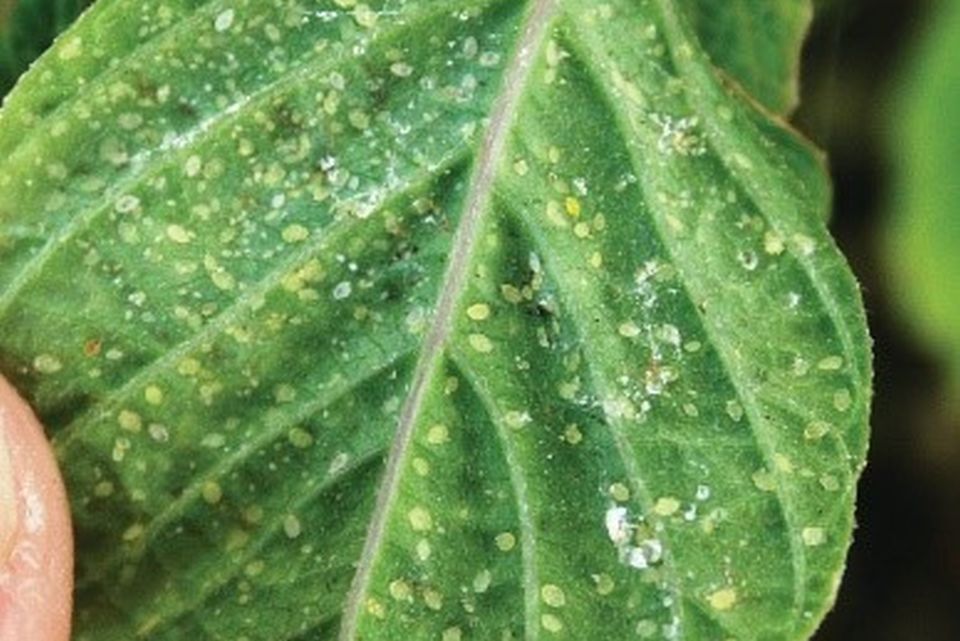
Whitefly damage on poinsettia. | Nancy Rechigl, Syngenta
As poinsettia production begins, consistent scouting and proactive pest management are the first line of defense against whiteflies. These insects are especially attracted to poinsettias and can quickly build large populations that significantly impact plant health.
Whiteflies feed by inserting their piercing, sucking mouthparts into the phloem, extracting sap and weakening plants. Feeding injury can result in:
- Reduced leaf expansion
- Yellowing spots on leaf surfaces
- Lead silvering or discoloration
- Leaf drop
- Sticky, honeydew secretions, which can lead to black sooty mold
Focus scouting on the undersides of leaves where whitefly eggs, nymphs, and adults are typically found. A hand lens is helpful for identifying early-stage infestations before damage becomes visible.
Establish an Agronomic Program
A strong agronomic program combines cultural and chemical strategies. To support plant health, reinforce your scouting efforts with sound practices:
- Maintain a clean growing environment
- Inspect all incoming plant material
- Use greenhouse screens to prevent pests
- Promote air movement to lower humidity
- Irrigate early in the day
- Promptly remove damaged or diseased plants
Consider applying products with systemic activity early in the crop cycle to keep insect populations from establishing. Mainspring GNL or Mainspring Xtra insecticides applied as a drench once the plants are well rooted can protect the crop from these troubling insects for eight weeks or more.
Additionally, fungicides can help provide long-lasting protection against difficult ornamental diseases, like Fusarium spp. and Botrytis. Postiva fungicide utilizes a unique combination of active ingredients to provide greater disease control and support overall plant health.
Learn more about the Syngenta ornamental insecticide portfolio here. Additionally, find complete agronomic programs for mums, poinsettias, and more at GreenCastOnline.com/Solutions.
Subscribe to eNewsletter
