




Protecting Poinsettias Early
Fall will be here before we know it and with that comes poinsettia production. From propagation to finish, it is important to monitor regularly for common insect pests like whiteflies. Poinsettias attract several different pests, but are particularly susceptible to whiteflies, which can produce large populations quickly.
Whitefly Damage
Adult and immature whiteflies have piercing, sucking mouthparts that they insert into the phloem to extract plant sap, which affects plant vigor. Feeding injury also results in:
- Reduced leaf expansion
- Chlorotic spots on the top sides of leaves
- Leaf discoloration or silvering
- Leaf loss
- Presence of honeydew secretions on leaves that can cause black sooty mold on leaf surfaces
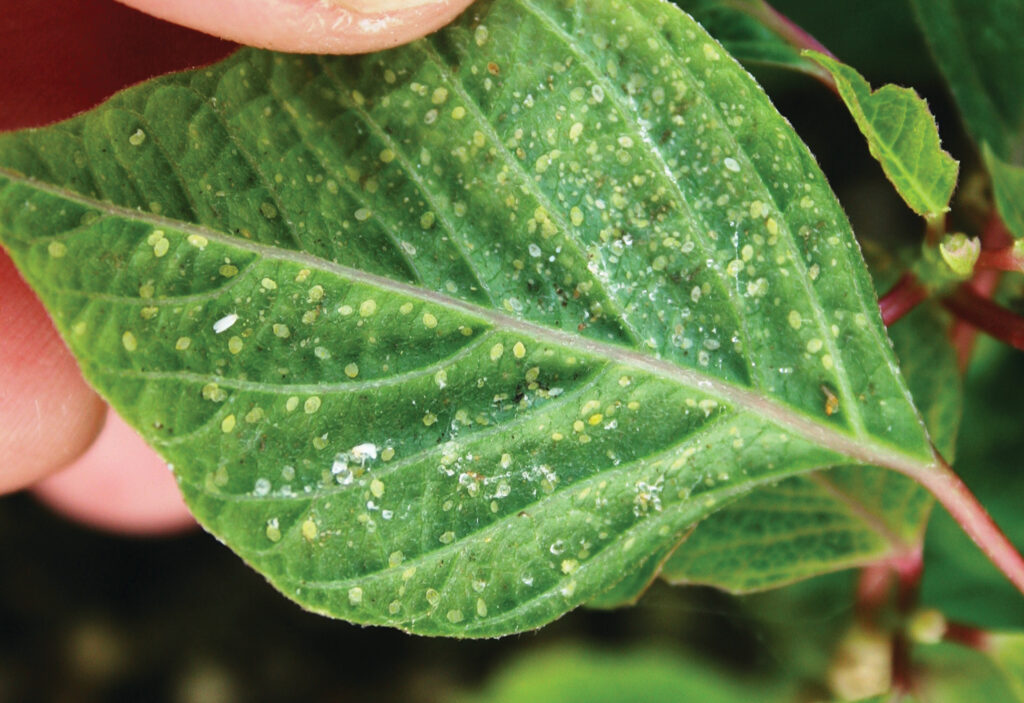 Whitefly damage on poinsettia, Syngenta.
Whitefly Prevention
A successful whitefly management strategy includes weekly inspection of the crop coupled with the use of effective products for controlling the adult and immature stages of this pest. When scouting, it is important to examine the underside of the leaves for the presence of eggs, nymphs and adults. A 10-20x hand lens can be helpful for this inspection.
Along with diligent scouting, incorporating applications of a proven insecticide, such as Mainspring® GNL, into your pest management program will help protect against whiteflies and prevent resistance.
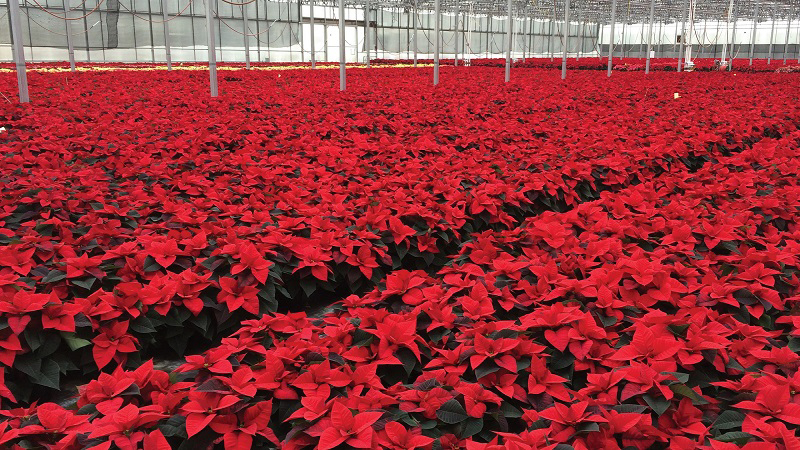 Poinsettia production, Syngenta.
Applying Mainspring GNL as a Drench
Mainspring GNL is the trusted choice to control whiteflies and more with a drench application. In a 2021 survey of U.S. greenhouse and nursery growers, 96% of respondents agreed that they trust Mainspring GNL insecticide to protect crops from a wide range of key chewing and sucking pests.*
A drench application of Mainspring GNL will provide systemic protection against whiteflies during production and after shipping. Drench applications should be applied 2-3 weeks after poinsettias have been pinched, once the plants have rooted in their container. When applied as a drench, Mainspring GNL is taken up through the roots into the plant canopy, providing 10 weeks or more of protection. For best results, make sure the drench solution wets three-fourths of the potting media and apply no later than the first week of October.
Download our poinsettia agronomic program to learn more about shielding poinsettias from whiteflies and other pests.
*Survey of 110 nursery and greenhouse growers in the U.S. conducted via TechValidate in Dec. 2021.
All photos are either property of Syngenta or are used with permission.
© 2024 Syngenta. Important: Always read and follow label instructions. Some products may not be registered for sale or use in all states or counties and/or may have state-specific use requirements. Please check with your local extension service to ensure registration and proper use. Mainspring® and the Syngenta logo are trademarks of a Syngenta Group Company.