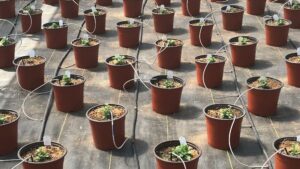
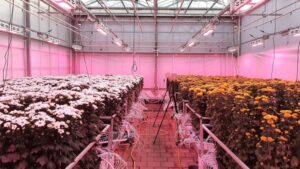
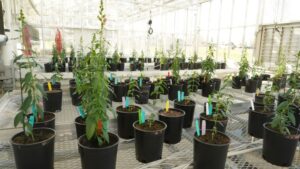
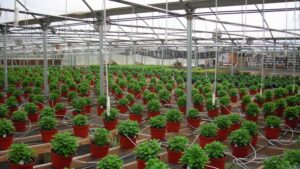
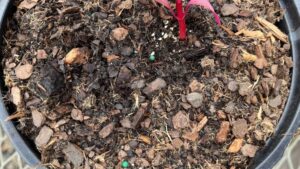
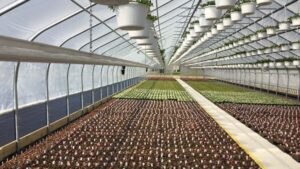
The Greenhouse Horticulture unit of WUR is gaining valuable sensor information through chrysanthemum irrigation trials.
Growing Produce takes a look at how biostimulants can contribute to plant health regarding water use and other environmental stresses.
The knowledge and experience that growers bring to irrigation practices is key, rather than just guessing what is best for your crop.
Here are five of the best ways to adapt, upgrade, and optimize your greenhouse irrigation system design for efficiency and sustainability.
With more growers utilizing wood-based substrates for production, there comes a need to change the way one manages growth and irrigation.
The CE-Line system schedules testing of different sources throughout the day, measuring both macro and micronutrients, with accurate data provided within an hour.
The Resource Innovation Institute will be hosting a webinar on “Getting Started in Water Circularity: How To Really Achieve 90% Water Savings” on Feb. 28.
Check out five questions that should be answered during a grower’s irrigation filter selection process and more.
Traditional greenhouse irrigation strategies were primarily established on radiometric units stemming from sunlight and HPS lamps, but the advent of dynamic LED lighting, has posed challenges.
Growers looking to reduce water usage can quickly get overwhelmed. Here’s how you can start thinking about your next upgrade project.
Learn how this operation that grows in 2 million square feet of production space turned to its long-time partner when it came time to upgrade the facility.

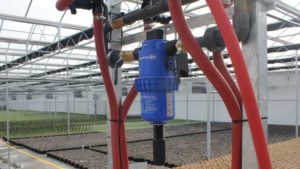
Regular inspection of proper functioning is needed to ensure that injectors are delivering the intended concentration of fertilizer to the crop.
How Speeding Up Hand Watering Can Help Save on Labor