How Greenhouse Ventilation Impacts Customer Comfort and Sales
January 9, 2026
Industry leaders discuss how to take advantage of what environmental control systems have to offer, regardless of your operation size.
Here’s a look at the role that dehumidification plays in the process of efficient and sustainable flower cultivation.
Depending on the size of your growing operation, you have multiple heating and cooling energy options to choose from.
Choosing the right heater for your greenhouse can help to ensure stable plant health and growth without increasing energy costs.
LLK covers the importance of proper environmental control systems choice in greenhouses and what to consider when making a decision.
Dr. Nadia Sabeh, the President and Founder of Dr. Greenhouse Inc., answers this question in a recent conversation.
The acquisition, which comes after years of partnering together, will expand availability of the ClimaFlow technology.
Dr. Nadia Sabeh, also known as “Dr. Greenhouse,” is hosting a workshop this May on HVAC fundamentals for indoor plant environments.
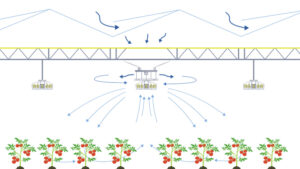
The new technology combines multiples systems to help keep the greenhouse climate not only homogenous but also compliant with light pollution regulations.
Humidity in a greenhouse is necessary, but controlling it is crucial to preventing plant stress and negative side effects like fungus, mold, or mildew.
Heating, cooling, and ventilation manufacturers have introduced a variety of products aimed at helping you maximize air movement and avoid costly plant losses.
High humidity levels in the greenhouse can lead to favorable conditions for fungi. Installing dehumidification technology is one way to better protect your crop.
Researchers at McGill University in Quebec have developed an alternative evaporative cooling solution for greenhouses in warm climates, and are now seeking commercial partners.