



Improving Yield, Quality, and Efficiency with Multi-Zone Greenhouse Lighting
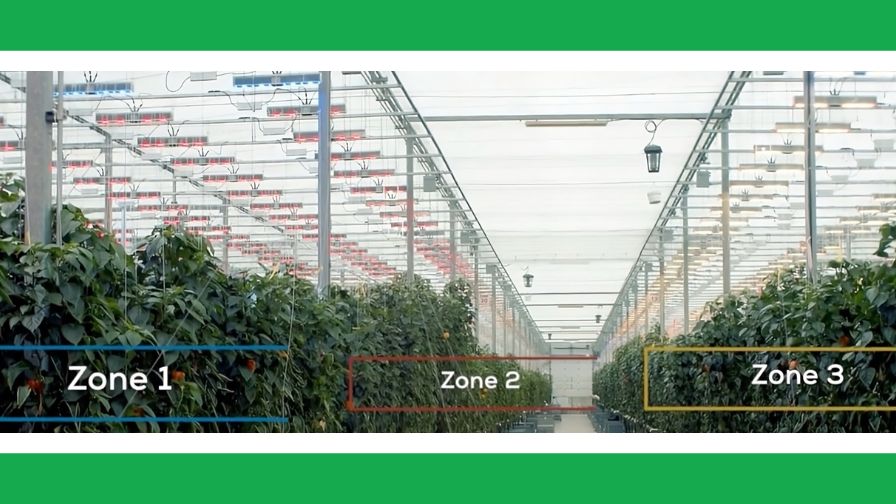
Multi-zone greenhouse lighting using advanced dynamic LED solutions. | Sollum Technologies
Within the same greenhouse, there are differences between sections. The crops’ requirements change based on factors such as the cultivar, the season, and even the angle at which the sunlight enters the greenhouse.
Multi-zone lighting lets growers apply a different lighting treatment in each area, so they can grow what they want, when they want, without compromise.
What Is Multi-Zone Greenhouse Lighting?
When splitting a greenhouse into zones, growers stop forcing one recipe on every plant. Each zone runs its own recipe, so they can match the light to the physiology and market timing of their crops. This includes:
- Spectrum: Fine-tuning ratios of red, blue, green, and far-red.
- Intensity: Adjusting PPDF/DLI targets.
- Photoperiod: Setting start/stop times and ramping schedules.
- Season strategy: Providing a specific report for winter vs. summer.
Think of it as multiple greenhouses under one roof, all coordinated by a single platform.

Why Single-Zone Systems Fall Short
Growers who have had to sacrifice one crop to keep another happy have experienced the limitations of a single lighting setup. Over time, the trade-offs result in wasted energy, uneven growth, and compromised production.
- One setting can’t serve different cultivars or growth stages.
- Some areas are over-lit while others are under-lit, wasting energy and yield.
- Growers are locked into crops with similar light needs.
- The system cannot adapt to seasonal variability.
Multi-Zone Design Strategies for Commercial Greenhouse Lighting
Strategic zone allocation maximizes the benefits of multi-zone lighting design.
Zone by Crop Type
Organizing zones by crop type creates optimal growing conditions for plants with similar lighting requirements.
Zone by Growth Stage
Match light to physiology at each step.
Zone by Production Schedule
Stage production to hit markets year-round.
- Peak production zone for high output.
- Winter support zones to extend short days.
- R&D zone to test cultivars or recipes without risking main production.
Implementation Checklist
A bit of planning up front keeps day-to-day operations calm later on. Start with infrastructure, followed by boundaries, then climate integration.
- Infrastructure: Independent circuits per zone; networked control for fixtures and sensors. Light, temperature, humidity, and CO₂ sensors in representative locations. Proper mounting heights and spacing per bay/crop.
- Zone boundaries: Use walls, curtains, or distance to limit light spill. Keep access corridors clear and design for reconfiguration.
- Climate integration: Coordinate with heating, as LEDs add less heat than legacy lighting. Different intensities can change transpiration and humidity, so ensure airflow and dehumidification are appropriately sized. High-intensity zones may require additional CO₂.
Why Zoning Pays Off: Energy and Operations
Energy becomes a tool when growers target the right amount of light to the right square footage. Zoning allocates watts where needed and reduces them where they are not needed.
- Targeted delivery: Each zone gets exactly what it needs, eliminating over-lighting of low-value areas.
- Demand-based operation: Dim or turn it off in empty zones while optimizing active ones.
- Peak demand management: Stagger schedules to soften peaks and reduce charges.
- Seasonal optimization: Increase support in winter; lean on sunlight in summer.
- Actionable data: View energy and performance data on the dashboard to enable continuous optimization
For additional information on multi-zone greenhouse lighting, including additional benefits from using advanced dynamic LED solutions, please read the original article found on the Sollum Technologies website.
Subscribe to eNewsletter