



Inside the Mind of American Flower Shoppers
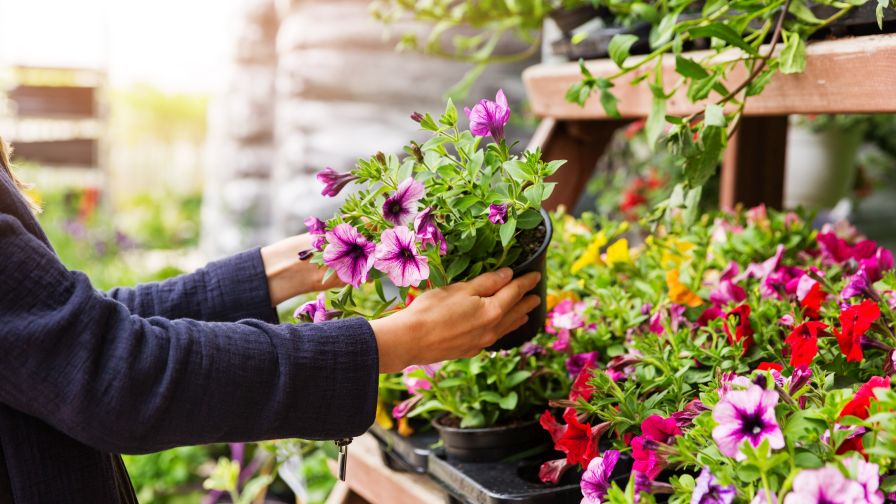
A woman shopper choosing petunia flowers at a garden plant nursery store. | ronstik via Adobe Stocck
As fresh flowers become a more familiar feature in a variety of retail spaces, their role in everyday life is evolving — and so are the people who buy them.
To understand this trend, a team of researchers at the University of Georgia’s College of Agricultural and Environmental Sciences (CAES) combined horticulture and agricultural economics to explore not just what flowers people buy, but why, how often, and what those habits say about broader consumer behavior.
One Flower Doesn’t Fit All
What started as a project for Assistant Professor Julie Campbell’s floral design class in the Department of Horticulture grew into a nationally representative study of more than 8,500 consumers.
The result: There is no such thing as a “typical” flower buyer.
Using cluster analysis, a statistical method common in marketing, the team identified 13 distinct types of flower consumers. There is the Valentine’s Day segment (mostly male, big on roses), the anniversary-only givers, the home-use-only shoppers who buy for themselves, and the everything cluster (shoppers who purchase flowers for all types of occasions and spend the most).
“Everyone’s not your customer,” says Julie Campbell. “Different people behave differently. Once you know their patterns, it’s much easier to market to them.”
Beyond the Bouquet: Emotional Value
The study didn’t just ask what people bought; it also asked why. Through open-ended responses analyzed with word clouds, researchers uncovered that consumers associated flowers with everything from “beauty” and “smell” to “waste” and “expensive.”
Still, the benefits were clear: People who had purchased flowers in the past year were more likely to report feeling better at home and at work. They experienced improved mood, reduced stress, and even better overall morale. The perception of the psychological benefits was especially strong for those who had made recent purchases.
“There’s a perceived benefit — whether it’s real or not. People feel they’re getting something valuable from the experience,” says Ben Campbell, co-author of the study and a professor in the Department of Agricultural and Applied Economics at CAES.
From Farm to Florist to Front Porch
While the emotional pull of flowers is strong, the supply chain behind them is global — and complicated. Imports, particularly roses from Colombia, still dominate the U.S. market. But the domestic industry is growing.
The onset of the COVID-19 pandemic was a turning point. Events like weddings and funerals plummeted, leaving the floral industry scrambling. Flower farms were bulldozing entire crops.
But then something unexpected happened. With everyone stuck at home, people began buying flowers to brighten their spaces. Grocery stores and even convenience stores started stocking up. Cut flowers became a kind of self-care.
“It became almost like therapy,” says Julie. “The habit stuck around.”
That shift also sparked new growth. Open-field flower acreage in the U.S. more than doubled between 2017 and 2022, thanks in part to local farms growing flowers that don’t ship well, like zinnias and dahlias.
These farms aren’t trying to compete with mass-produced roses from Colombia. Instead, they’re carving out space in the growing market for local, seasonal varieties.
For additional information on the study’s results, including a companion study that explored the effect of social media flower ads on consumers, please read the original article written by Maria Lameiras and found on the University of Georgia‘s CAES website.
Subscribe to eNewsletter